
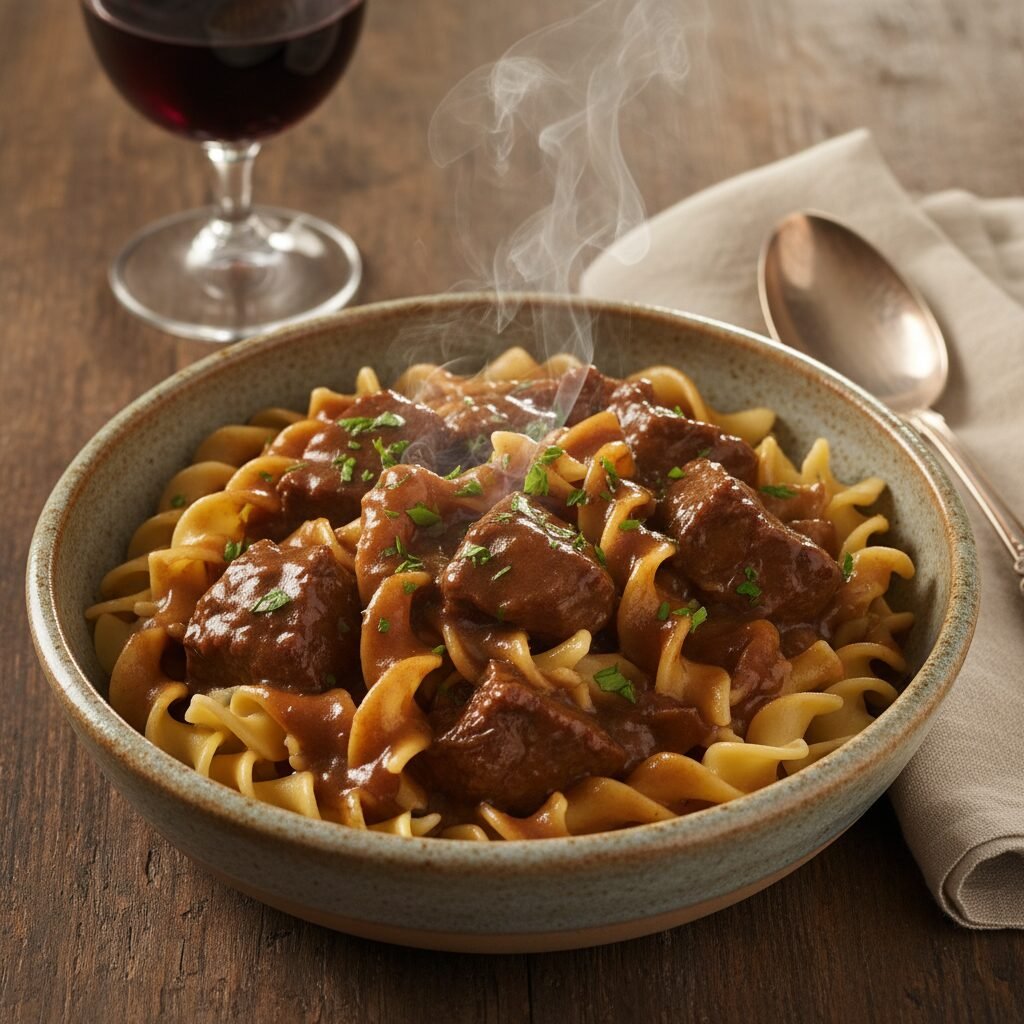

Beef And Noodles
If you are looking for a meal that feels like a warm hug, this is it! Tender chunks of beef and thick egg noodles swimming in a savory gravy make this the perfect dinner for chilly nights.
20 minutes
3 hours
3 hours 20 minutes
8 Servings
Dinner
Braising
American (Midwestern)
Omnivore
Hey friends! Welcome back to my kitchen. Today, we are diving deep into one of my all-time favorite childhood memories: Old Fashioned Beef and Noodles. You know those recipes that just transport you back in time? The ones where the smell alone makes you feel safe, warm, and totally loved? That is exactly what this dish is for me.
Growing up, Sunday dinners were a non-negotiable event. The table was always set, the house smelled incredible, and more often than not, there was a giant pot of beef and noodles bubbling away on the stove. This isn’t your average pasta night, folks. We are talking about slow-cooked, fall-apart tender beef chuck roast that creates its own rich broth, paired with those thick, chewy frozen egg noodles that hold onto the sauce like a dream.
As a busy mom myself now, I realize why my Grandma loved making this. It is hearty, it feeds a crowd, and it uses simple, budget-friendly ingredients that you probably already have in your pantry. It is the kind of stick-to-your-ribs meal that my husband and kiddos absolutely devour after a long day of school and sports. Whether you serve it over mashed potatoes (yes, the Midwestern way!) or just in a big bowl with a side of green beans, this recipe is pure comfort in a bowl.
So, grab your Dutch oven and let’s get cooking! I promise, once you try this method, you will never go back to canned soups or quick fixes again. This is the real deal, made with love and a little bit of patience.
History & Origins
Beef and Noodles is a quintessential American comfort food, with deep roots in the Midwest and Amish communities. While pasta and meat combinations exist in almost every culture, this specific style—thick egg noodles, chunks of beef, and a gravy-like broth—is heavily influenced by German immigrants who settled in Ohio, Indiana, and Pennsylvania.
Historically, this dish was born out of necessity and frugality. During harder times, like the Great Depression, home cooks needed to stretch expensive cuts of meat to feed large families. By slow-cooking tougher, cheaper cuts of beef until they were tender and adding homemade flour-and-egg noodles, they could create a massive pot of filling food for very little money. In many parts of the Midwest, you will still see this served at church potlucks and family reunions, often ladled right over mashed potatoes for a carb-heavy feast known as a ‘commercial’ in some diners!
Why This Recipe Works
The magic of this recipe lies in the braising process. We aren’t just boiling meat here; we are building layers of flavor. By searing the chuck roast first, we develop a deep, caramelized crust (thanks to the Maillard reaction) that forms the base of our gravy. Then, by simmering the meat slowly in liquid, the tough collagen in the chuck roast breaks down into gelatin. This not only makes the meat fork-tender but also gives the broth a silky, rich mouthfeel that you just can’t get from a bouillon cube.
Furthermore, cooking the noodles directly in the beef broth towards the end allows the starch from the pasta to release into the liquid. This acts as a natural thickener, turning the broth into a luscious gravy that coats every single noodle. It is a one-pot symbiosis where every ingredient makes the other better!
Why You’ll Love This Recipe
- ✓Budget-friendly meal that feeds a crowd
- ✓Freezer-friendly for easy meal prep
- ✓Uses simple pantry staples
- ✓The ultimate ‘stick-to-your-ribs’ comfort food
- ✓Kid-approved and picky eater friendly
- ✓Can be made in a Dutch oven or Slow Cooker
Equipment You’ll Need
- ✓Large Dutch Oven or Heavy Bottomed Pot
- ✓Sharp Chef’s Knife
- ✓Cutting Board
- ✓Tongs
- ✓Wooden Spoon
Ingredients
- ✓3 lbs Chuck Roast, trimmed of excess fat and cut into 1.5-inch cubes
- ✓2 tablespoons Olive Oil or Vegetable Oil
- ✓1 large Yellow Onion, diced
- ✓3 cloves Garlic, minced
- ✓6 cups Beef Broth (low sodium is best so you can control the salt)
- ✓2 tablespoons Worcestershire Sauce
- ✓1 teaspoon Dried Thyme
- ✓1 teaspoon Salt (plus more to taste)
- ✓1 teaspoon Black Pepper
- ✓1 bay leaf
- ✓24 oz Frozen Egg Noodles (like Reames brand) – highly recommended over dried pasta!
- ✓2 tablespoons Cornstarch + 2 tablespoons cold water (optional, for thickening)
- ✓Fresh parsley for garnish
Instructions
- Prep the Beef: Start by patting your cubed chuck roast dry with paper towels. This is crucial for getting a good sear! Season the meat generously with salt and pepper.
- Sear the Meat: Heat the olive oil in your large Dutch oven over medium-high heat. Working in batches (don’t crowd the pan!), sear the beef cubes on all sides until they are nice and brown. Remove the seared meat and set it aside on a plate.
- Sauté Aromatics: Lower the heat to medium. Toss in the diced onions into the same pot (don’t clean it!). Cook them for about 5 minutes until they soften and pick up the browned bits from the bottom of the pan. Add the minced garlic and cook for just 1 minute more until fragrant.
- Deglaze and Simmer: Pour in a little bit of the beef broth to deglaze the pan, scraping up all those delicious brown bits with a wooden spoon. Add the beef back into the pot along with any juices on the plate. Pour in the rest of the beef broth, Worcestershire sauce, dried thyme, and the bay leaf.
- The Long Cook: Bring the pot to a boil, then immediately reduce the heat to low. Cover the pot with a heavy lid and let it simmer gently for about 2 to 2.5 hours. You want the beef to be ‘fall-apart’ tender. Test a piece with a fork; if it offers resistance, keep cooking!
- Cook the Noodles: Once the beef is tender, increase the heat to bring the liquid back to a gentle boil. Stir in the frozen egg noodles. Cook uncovered for about 20-25 minutes (or according to package directions), stirring occasionally so they don’t stick.
- Thicken (Optional): The noodles will thicken the broth naturally, but if you like a really thick, gravy-like consistency, mix the cornstarch and cold water in a small cup. Stir this slurry into the boiling pot and let it cook for another 2-3 minutes until thickened.
- Serve: Remove the bay leaf. Taste and adjust salt and pepper if needed. Ladle into big bowls, garnish with fresh parsley, and serve hot!
Expert Cooking Tips
- ✓Don’t Rush the Beef: Chuck roast needs time to break down. If your meat is tough, it simply hasn’t cooked long enough. Be patient!
- ✓Use Frozen Noodles: For that authentic, chewy, dumpling-like texture, look for frozen egg noodles (usually found in the freezer aisle near the breads or veggies). Dried pasta works, but it won’t be the same.
- ✓Room Temperature Meat: Let your beef sit on the counter for 20 minutes before searing. Cold meat hits the hot pan and steams instead of searing.
- ✓Season in Layers: Season the meat, season the onions, and taste the broth at the end. Building flavor at every step makes a huge difference.
Substitutions and Variations
If you can’t find chuck roast, you can use pre-cut beef stew meat, though chuck roast tends to be more tender. If you want to lighten it up, you can use broth with less sodium. No frozen noodles? You can use wide egg noodles from the dry pasta aisle, but reduce the cooking time to about 7-10 minutes and be aware the broth might not be as thick. For a gluten-free version, use gluten-free beef broth, gluten-free flour for searing, and your favorite hearty gluten-free pasta.
Common Mistakes to Avoid
The biggest mistake people make is boiling the meat too hard. You want a gentle simmer. Boiling it rapidly will make the muscle fibers seize up and become tough. Another common error is skipping the sear. That brown crust on the meat adds a depth of flavor to the gravy that you just can’t replicate otherwise. Finally, don’t add the noodles too early! If they cook for 2 hours with the meat, they will dissolve into mush.
Serving Suggestions
In the Midwest, it is tradition to serve Beef and Noodles right on top of a scoop of buttery mashed potatoes. I know, carb-on-carb heaven! If that is too much for you, serve it with a side of roasted green beans, glazed carrots, or a crisp garden salad with vinaigrette to cut through the richness. Don’t forget some fluffy dinner rolls to sop up that gravy!
Storage and Reheating Tips
Refrigerator: Store leftovers in an airtight container in the fridge for up to 3-4 days. The noodles will absorb more liquid as they sit, so you might need to add a splash of broth or water when reheating.
Freezer: This meal freezes surprisingly well! Let it cool completely, then store in freezer-safe bags or containers for up to 3 months. Thaw overnight in the fridge before reheating on the stove.
Nutrition Facts (Estimated)
| Serving Size | 1.5 cups |
| Calories | 480 kcal |
| Fat | 22g |
| Saturated Fat | 9g |
| Unsaturated Fat | 11g |
| Trans Fat | 0g |
| Cholesterol | 110mg |
| Sodium | 850mg |
| Carbohydrates | 35g |
| Fiber | 2g |
| Sugar | 2g |
| Protein | 32g |
Frequently Asked Questions
Can I make this in a Slow Cooker?
Absolutely! Sear the meat and onions on the stove first (for flavor), then transfer everything except the noodles to the slow cooker. Cook on LOW for 7-8 hours or HIGH for 4 hours. Add the frozen noodles during the last 45-60 minutes of cooking.
Can I make this in an Instant Pot?
Yes! Use the Sauté function to brown the meat and onions. Add broth and seasonings, seal, and cook on High Pressure for 35 minutes with a natural release. Switch back to Sauté, add the noodles, and cook for about 6-8 minutes until tender.
Why is my meat tough?
Tough meat usually means it hasn’t been cooked long enough. Collagen-rich cuts like chuck roast need time to break down. Keep simmering; it will eventually get tender!
Do I have to use frozen noodles?
You don’t have to, but I highly recommend it for the authentic ‘grandma’ style texture. Dried egg noodles are thinner and cook much faster, resulting in a more soup-like consistency rather than a hearty stew.
Can I add vegetables to this?
Sure! Many people like to add sliced carrots and celery when they add the onions. Peas are also a nice addition; stir them in frozen right at the very end so they stay bright green.
How do I thicken the gravy without cornstarch?
You can make a ‘beurre manie’ by mashing equal parts softened butter and flour together, then whisking it into the simmering broth. Alternatively, just let it boil with the lid off for a bit longer to reduce.
What is the best cut of beef to use?
Boneless Beef Chuck Roast is the gold standard. It has the perfect marbling of fat to keep the meat moist during the long cooking process. Round roast can be used but is often drier.
Is this the same as Beef Stroganoff?
Not quite! Beef Stroganoff typically uses a sour cream base for a creamy, tangy sauce and often includes mushrooms. Beef and Noodles has a rich, brown, savory gravy without dairy.
Conclusion
I hope your family loves this Old Fashioned Beef and Noodles recipe as much as mine does. It really is the perfect way to slow down, enjoy the amazing aromas filling your kitchen, and gather everyone around the table for a hearty meal. There is no fancy technique here, just good, honest ingredients cooked with love. If you make this, please snap a picture and tag me! I love seeing your creations. Now, go get that pot simmering!