
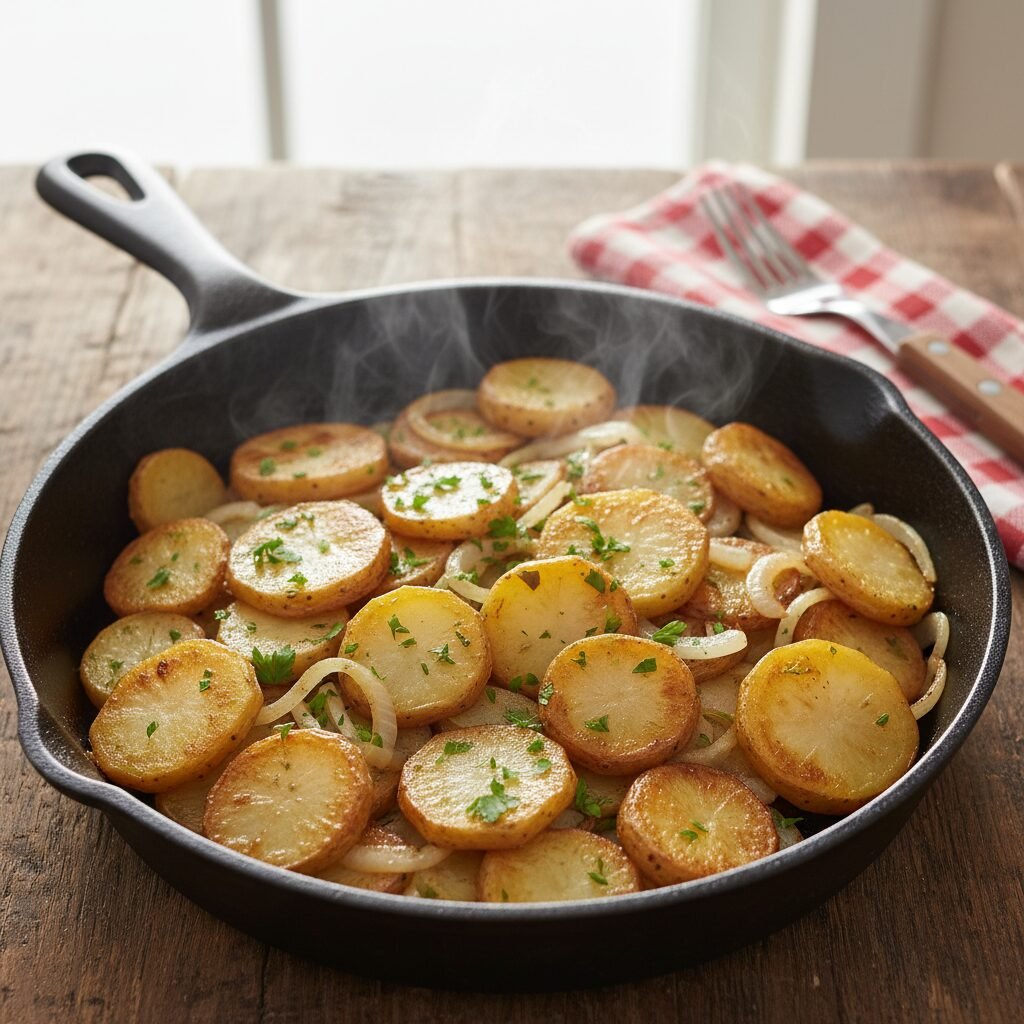

Fried Potatoes And Onions
There is nothing quite like the aroma of potatoes sizzling in a cast-iron skillet to bring everyone running to the kitchen. This classic recipe delivers perfectly crispy edges, sweet caramelized onions, and a whole lot of nostalgic comfort in every bite.
10 minutes
25 minutes
35 minutes
4 servings
Side Dish
Pan Fry
American / Southern
Gluten Free
Hey friends! Welcome back to my kitchen. Today, we are stripping things back to basics with a recipe that is near and dear to my heart: Southern Fried Potatoes and Onions. If you grew up in a home where dinner sometimes meant ‘breakfast for dinner,’ or if your grandma always had a skillet sitting on the stove, you know exactly the kind of magic I am talking about. It is simple, humble, and honest food, but oh my goodness, is it delicious.
I remember sitting at the kitchen counter watching my mom slice potatoes with a speed that seemed impossible, tossing them into a heavy black pan that had seen decades of family meals. There is a specific sound—a crackle and a pop—that happens when raw potatoes hit hot oil. That sound is the promise of something good. These potatoes are not just a side dish; they are a warm hug on a plate. Whether you serve them alongside sunny-side-up eggs on a lazy Sunday morning, or pair them with a juicy hamburger steak for a hearty weeknight dinner, they never disappoint.
The beauty of this recipe lies in its simplicity. You do not need fancy gadgets or expensive ingredients. Just a few russet potatoes, a sweet onion, and a little bit of patience. We are going for that perfect textural contrast: crispy, golden-brown skin on the outside and a soft, pillowy interior. Trust me, once you master this method, you will be making these at least once a week. My husband asks for them constantly, and even my pickiest eater cleans his plate!
History & Origins
Fried potatoes, often called ‘Home Fries,’ ‘Cottage Fries,’ or simply ‘Skillet Potatoes,’ have deep roots in American cooking, particularly in the South and rural Midwest. While potatoes themselves originated in the Andes, the concept of frying sliced potatoes in fat became a staple in European and American diets as a way to create a filling meal from inexpensive ingredients.
During the Great Depression and times of rationing, recipes like this were absolute lifesavers. Potatoes were cheap, easy to grow, and stored well through the winter. By frying them in bacon grease (which was saved religiously in a jar by the sink) or lard, home cooks could add flavor and calories to sustain hardworking families. Adding onions wasn’t just for flavor; it was a way to stretch the dish further. Over the decades, this dish transitioned from a necessity of survival to a beloved comfort food staple found in diners and farmhouse kitchens across the country. It is a testament to the idea that you don’t need much to make something wonderful.
Why This Recipe Works
You might think frying potatoes is straightforward, but there is actually a little bit of culinary science happening in that skillet! The secret to why this recipe works so well is the Maillard reaction. This is the chemical reaction between amino acids and reducing sugars that gives browned food its distinctive flavor. By cooking the potatoes in hot oil over medium-high heat, we encourage this browning, creating that irresistible savory crust.
We also use a specific technique regarding the onions. If you throw the onions in at the very beginning with the raw potatoes, the onions will burn before the potatoes are tender. Onions have a higher sugar content and cook much faster. By adding them halfway through the cooking process, we allow the potatoes to get a head start. The onions then have just enough time to soften and caramelize, becoming sweet and translucent right as the potatoes finish cooking. Furthermore, using a cast-iron skillet is crucial because of its superior heat retention. It keeps the temperature steady even when you add cold potatoes, preventing them from steaming in their own juices and ensuring they actually fry.
Why You’ll Love This Recipe
- ✓One-pan wonder for easy cleanup
- ✓Naturally gluten-free and vegan-friendly options
- ✓Budget-friendly ingredients you likely have on hand
- ✓Perfect balance of crispy and tender textures
- ✓Versatile side dish for breakfast, lunch, or dinner
- ✓Kid-approved comfort food
Equipment You’ll Need
- ✓Large Cast Iron Skillet (10 or 12 inch)
- ✓Sharp Chef’s Knife
- ✓Cutting Board
- ✓Sturdy Metal Spatula / Turner
- ✓Paper Towels
Ingredients
- ✓4 large Russet potatoes (about 2 lbs), peeled or unpeeled depending on preference
- ✓1 large yellow or sweet onion, roughly chopped or sliced
- ✓3 tablespoons vegetable oil (or canola oil/bacon grease)
- ✓1 tablespoon unsalted butter
- ✓1 teaspoon sea salt (plus more to taste)
- ✓1/2 teaspoon freshly cracked black pepper
- ✓1/2 teaspoon garlic powder (optional)
- ✓1/2 teaspoon paprika (for color)
- ✓Fresh parsley, chopped (for garnish)
Instructions
- Prep the Potatoes: Wash the potatoes thoroughly. You can peel them if you like creamy centers, but leaving the skin on adds great texture and nutrients. Slice the potatoes into 1/4-inch thick rounds or cubes. Try to keep them uniform so they cook evenly. Pat them dry with paper towels to remove excess moisture (this is key for crispiness!).
- Heat the Skillet: Place your large cast-iron skillet over medium-high heat. Add the vegetable oil (or bacon grease if you are feeling indulgent). Let the oil get shimmering hot but not smoking.
- First Fry: Carefully add the potatoes to the skillet in a single layer if possible (you may need to do this in batches or just be patient with a fuller pan). Season with half of the salt, pepper, and paprika. Let them cook undisturbed for about 5-6 minutes. Do not touch them! Let that crust form.
- Flip and Continue: Once the bottom layer is golden brown, use your metal spatula to flip and toss the potatoes. Reduce the heat slightly to medium.
- Add the Onions: Push the potatoes slightly to the side or just layer the chopped onions right on top. Add the tablespoon of butter now—this adds a rich flavor and helps the onions caramelize. Toss everything together gently.
- Cook to Perfection: Continue cooking for another 10-15 minutes, stirring occasionally (every 3-4 minutes) to prevent burning. You want the onions to be soft and brown and the potatoes to be fork-tender.
- Final Seasoning: Taste a potato (careful, it’s hot!). Add the garlic powder and more salt or pepper if needed. Stir well.
- Serve: Remove from heat. Garnish with fresh chopped parsley for a pop of color and serve immediately while piping hot.
Expert Cooking Tips
- ✓Dry your potatoes: Moisture is the enemy of crispiness. After washing and slicing, pat those potatoes bone-dry with a paper towel.
- ✓Don’t overcrowd too much: If the pan is packed to the brim, the potatoes will steam instead of fry. Use a large skillet (12-inch is best) or cook in two batches.
- ✓Be patient: Resist the urge to stir constantly. The potatoes need contact with the hot pan to develop that golden crust.
- ✓The right fat: A mix of oil (for high heat) and butter (for flavor) is my favorite combination. Bacon grease is the traditional Southern choice and adds incredible smoky flavor.
- ✓Cast iron is King: While you can use a non-stick pan, a seasoned cast-iron skillet provides the best heat distribution and crust.
Substitutions and Variations
Cooking is all about using what you have! If you don’t have Russet potatoes, Yukon Golds are a fantastic substitute; they are naturally buttery and hold their shape well. Red potatoes work too, though they are waxier and won’t get quite as crisp. For the onions, a white onion offers a sharper bite, while a sweet Vidalia onion adds a lovely sugary contrast. If you are out of vegetable oil, you can use avocado oil, lard, or strictly butter (just watch the heat so the butter solids don’t burn). Want a kick? Add some diced jalapeños or a sprinkle of cayenne pepper!
Common Mistakes to Avoid
The biggest mistake I see is stirring too often. I know it’s tempting to keep things moving, but that just breaks the potatoes apart and turns them into mush. Let them sit! Another common issue is slicing the potatoes too thin or too thick. If they are paper-thin, they will burn; if they are huge chunks, the middle will be raw while the outside burns. Aim for a consistent 1/4 inch. Finally, putting the onions in too early usually results in burnt, black onion bits. Wait until the potatoes are halfway done.
Serving Suggestions
These potatoes are incredibly versatile! For breakfast, serve them alongside scrambled eggs, crispy bacon, and toast. They are essentially homemade diner home fries. For dinner, they make a perfect side for meatloaf, grilled steak, or pork chops. I also love using leftovers in a breakfast burrito the next morning. And honestly? Sometimes I just eat a bowl of them with a little ketchup or hot sauce for a quick lunch!
Storage and Reheating Tips
If you have leftovers (which is rare in my house!), store them in an airtight container in the refrigerator for up to 3-4 days. To reheat, do not use the microwave if you want them crispy! The microwave will make them soggy. Instead, toss them back into a skillet with a little bit of oil over medium heat until they are hot and crispy again, or pop them in an air fryer at 375°F for about 5 minutes.
Nutrition Facts (Estimated)
| Serving Size | 1 cup |
| Calories | 245 kcal |
| Fat | 11g |
| Saturated Fat | 2g |
| Unsaturated Fat | 8g |
| Trans Fat | 0g |
| Cholesterol | 5mg |
| Sodium | 320mg |
| Carbohydrates | 34g |
| Fiber | 4g |
| Sugar | 3g |
| Protein | 4g |
Frequently Asked Questions
Why are my fried potatoes mushy?
Mushy potatoes usually happen for two reasons: you overcrowded the pan, causing them to steam, or you stirred them too vigorously and broke them down. Give them space and let them sit!
Do I need to boil the potatoes before frying?
No, you do not need to boil them for this recipe. slicing them about 1/4 inch thick ensures they cook through in the pan. However, par-boiling can speed up the frying time if you prefer.
What is the best potato for frying?
Russet potatoes are the classic choice because their high starch content yields the fluffiest interior and crispiest exterior. Yukon Golds are a close second for a creamier texture.
Can I freeze fried potatoes?
I don’t recommend freezing fully cooked fried potatoes as the texture changes significantly upon thawing. They tend to become watery and grainy.
Why do my onions burn before the potatoes are done?
This happens if you add them at the same time as the raw potatoes. Potatoes take longer to cook. Always add the onions about halfway through the cooking process.
Can I make this in a non-stick pan?
Yes, absolutely. While cast iron is traditional and gives a better crust, a heavy-bottomed non-stick pan works fine. You may need slightly less oil.
Is this recipe gluten-free?
Yes! As long as you use gluten-free spices and avoid cross-contamination, potatoes and onions are naturally gluten-free.
How do I cut the potatoes for the best result?
You can do cubes or rounds (slices). Rounds tend to fry up faster and get crispier edges, while cubes offer more soft, fluffy potato inside. Just keep the size consistent.
Conclusion
I really hope you give these Southern Fried Potatoes and Onions a try. It is recipes like this that remind us that good food doesn’t have to be complicated. It just needs to be made with love (and maybe a little bit of butter!). If you make this for your family, I would love to hear about it! Snap a picture and tag me on Instagram or Pinterest, or leave a comment below letting me know how it turned out. Happy cooking, mamas!