
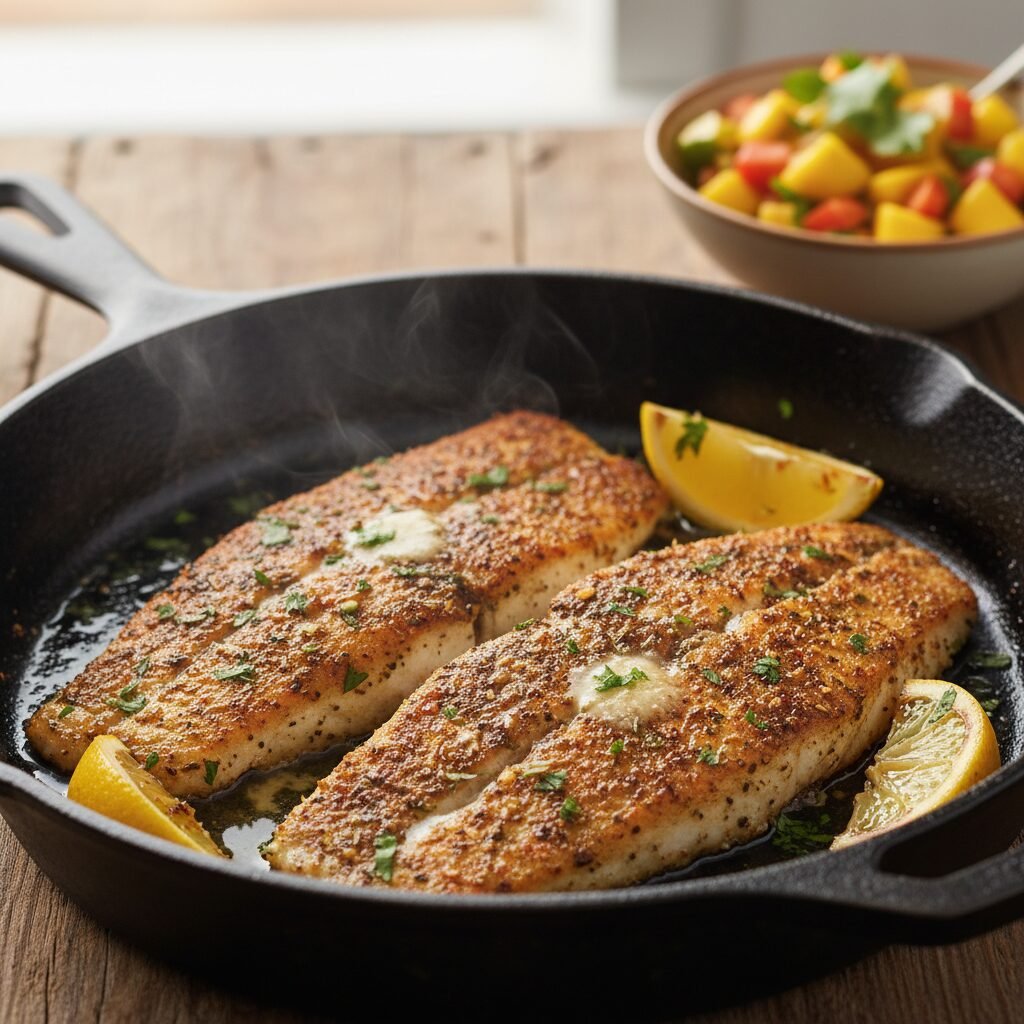

Blackened Mahi Mahi
If you are looking for a healthy dinner that feels fancy but takes zero effort, this is it! My Blackened Mahi Mahi is spicy, smoky, buttery perfection, and it’s on the table in less than 20 minutes.
10 minutes
6 minutes
16 minutes
4 servings
Dinner
Stovetop / Pan-Sear
American / Cajun
Gluten Free
Hey mamas! Let’s talk about the weeknight dinner struggle for a second. We all want something that is healthy, quick, and actually tastes like we put effort into it, right? But usually, we have to pick two out of the three. Well, not today! This Blackened Mahi Mahi recipe is my absolute secret weapon for those nights when I want a restaurant-quality meal without the price tag or the wait time.
There is something magical about the combination of cool, fresh fish and warm, smoky spices. If you have ever been intimidated by cooking fish at home, Mahi Mahi is the perfect place to start. It is a firm fish that holds up well in the pan, so it won’t fall apart on you like tilapia might. Plus, the flavor is mild and slightly sweet, which makes it the perfect canvas for this bold, homemade blackening seasoning.
I started making this years ago when we were trying to cut back on carbs but didn’t want to eat boring, steamed chicken every night. The result? My husband is obsessed, and even the kids love it (I just go a little lighter on the cayenne for them). Whether you serve this over a bed of dirty rice, alongside some roasted asparagus, or flaked into the most incredible fish tacos of your life, this recipe is a total winner. So, grab your cast-iron skillet, and let’s get cooking!
History & Origins
While “blackened” fish feels like a timeless classic, it actually has a very specific birthplace: New Orleans in the early 1980s. The technique was popularized by the legendary Chef Paul Prudhomme at his restaurant, K-Paul’s Louisiana Kitchen. Originally, he used Redfish, dipping it in butter, coating it in spices, and searing it in a screaming hot cast-iron skillet.
The dish became so incredibly popular that Redfish was actually fished to near extinction in the Gulf of Mexico, forcing regulators to step in! Because of this, chefs started applying the blackening technique to other firm, white fish like Mahi Mahi, Grouper, and Snapper. The method creates a dark, flavorful crust that looks burnt (hence “blackened”) but is actually a caramelized blend of milk solids from the butter and toasted spices.
Why This Recipe Works
You might be wondering, “How do I get that crust without actually burning the fish?” The science behind this recipe is all about the interaction between the butter, the spices, and the heat. When you dip the fish in melted butter and then dredge it in the spice rub, you are creating a protective barrier.
When that fish hits the hot cast iron, the milk solids in the butter brown rapidly (the Maillard reaction) and the spices toast instantly. This creates that signature dark crust that seals in the moisture of the fish. Because Mahi Mahi is a leaner fish, this method prevents it from drying out, leaving you with a fillet that is crispy and spicy on the outside, but incredibly moist and tender on the inside.
Why You’ll Love This Recipe
- ✓Ready in under 20 minutes from start to finish.
- ✓High protein and low carb (Keto and Paleo friendly).
- ✓Uses a homemade spice blend—no hidden preservatives.
- ✓Restaurant-quality flavor at a fraction of the cost.
- ✓Incredibly versatile: perfect for tacos, salads, or main courses.
- ✓Firm texture that is easy for beginners to cook.
Equipment You’ll Need
- ✓Large Cast Iron Skillet (highly recommended)
- ✓Fish Spatula (thin metal spatula)
- ✓Small mixing bowls
- ✓Measuring spoons
- ✓Paper towels
Ingredients
- ✓4 Mahi Mahi fillets (about 6oz each), skin removed
- ✓4 tablespoons unsalted butter, melted
- ✓1 tablespoon smoked paprika (regular paprika works too)
- ✓2 teaspoons onion powder
- ✓1 teaspoon garlic powder
- ✓1 teaspoon dried thyme
- ✓1 teaspoon dried oregano
- ✓1/2 teaspoon cayenne pepper (adjust for heat preference)
- ✓1 teaspoon salt
- ✓1 teaspoon ground black pepper
- ✓Lemon wedges (for serving)
- ✓Fresh chopped parsley (for garnish)
Instructions
- Prep the Fish: Remove your Mahi Mahi fillets from the fridge about 10-15 minutes before cooking. Pat them extremely dry with paper towels. This is crucial for getting a good crust!
- Make the Spice Rub: In a small bowl, combine the smoked paprika, onion powder, garlic powder, dried thyme, dried oregano, cayenne pepper, salt, and black pepper. Stir well to mix.
- Butter and Season: Pour the melted butter into a shallow dish. Dip each fillet into the butter, coating both sides, and then sprinkle the seasoning mix generously over the fish, pressing it gently with your fingers to adhere. You want a heavy coating!
- Heat the Skillet: Place your cast iron skillet over medium-high heat. Let it get very hot—you should see wisps of smoke starting to rise. Turn on your kitchen exhaust fan or open a window (trust me on this!).
- Sear the Fish: Carefully place the fillets into the hot skillet. Do not crowd the pan; cook in batches if necessary. Cook for 3 to 4 minutes without moving the fish. You want that crust to form undisturbed.
- Flip and Finish: Carefully flip the fish using a thin metal spatula. Cook for another 2 to 3 minutes on the second side. The fish is done when it is opaque and flakes easily with a fork.
- Rest and Serve: Remove the fish from the pan and let it rest for a minute or two. Squeeze fresh lemon juice over the top and garnish with parsley before serving.
Expert Cooking Tips
- ✓Ventilation is Key: Authentic blackening creates smoke. It’s part of the process! Make sure your hood fan is on high and maybe crack a window.
- ✓Don’t Move the Fish: Once you put the fish in the pan, resist the urge to peek or slide it around. It will release from the pan naturally when the crust is formed.
- ✓Cast Iron is Best: A heavy cast-iron skillet retains heat better than non-stick pans, which is essential for that hard sear.
- ✓Check the Thickness: If your fillets are very thick (over 1 inch), you may need an extra minute per side, or you can finish them in a 350°F oven for 5 minutes after searing.
Substitutions and Variations
Butter Alternative: If you are dairy-free or doing Whole30, you can swap the melted butter for avocado oil or ghee. Ghee is actually excellent because it has a higher smoke point!
Fish Swaps: Can’t find Mahi Mahi? This recipe works beautifully with other firm white fish like Grouper, Snapper, Cod, or even Halibut. It is also delicious on Salmon, though the flavor profile changes slightly.
Spice Level: If you are cooking for kiddos who hate spice, simply omit the cayenne pepper. You will still get plenty of flavor from the paprika and herbs without the heat.
Common Mistakes to Avoid
Wet Fish: The biggest mistake people make is not drying the fish enough. If the fish is wet, it steams instead of searing, and the spices will slide right off.
Burning the Butter: If your pan is too hot, regular butter can burn and taste bitter. This is why dipping the fish in butter and then the spices helps—the spices hit the pan first. However, working quickly is key!
Overcrowding the Pan: If you put too many fillets in at once, the temperature of the pan drops drastically. This leads to soggy fish. Give them plenty of personal space!
Serving Suggestions
This Blackened Mahi Mahi is incredibly versatile! My absolute favorite way to serve it is with a fresh Mango Avocado Salsa on top—the sweetness cuts through the spicy heat perfectly.
For a hearty dinner, serve it alongside Dirty Rice or Cilantro Lime Rice and some steamed broccoli. If you are keeping it low-carb, a big crisp Caesar salad or roasted zucchini makes a wonderful side. And of course, you can flake the fish apart and serve it in warm corn tortillas with slaw for the ultimate Fish Tacos.
Storage and Reheating Tips
To Store: Leftover blackened fish can be stored in an airtight container in the refrigerator for up to 3 days. It makes for excellent meal prep!
To Reheat: Avoid the microwave if you can, as it tends to make fish rubbery and smell up the kitchen. Instead, reheat it gently in a skillet over low heat with a splash of water or a tiny pat of butter, just until warmed through. You can also use an air fryer at 350°F for 2-3 minutes.
Nutrition Facts (Estimated)
| Serving Size | 1 fillet (approx 6oz) |
| Calories | 240 |
| Fat | 12g |
| Saturated Fat | 6g |
| Unsaturated Fat | 5g |
| Trans Fat | 0g |
| Cholesterol | 120mg |
| Sodium | 450mg |
| Carbohydrates | 2g |
| Fiber | 1g |
| Sugar | 1g |
| Protein | 32g |
Frequently Asked Questions
Is Blackened Mahi Mahi spicy?
It does have a kick due to the cayenne pepper. However, you are in total control! Reduce or omit the cayenne to make it family-friendly without losing the savory flavor.
Can I bake this instead of pan-searing?
Yes, you can, although you won’t get the same crispy crust. Bake at 400°F for about 12-15 minutes. For a better result, try broiling it for the last 2 minutes.
Can I use frozen Mahi Mahi?
Absolutely! Just make sure to thaw it completely in the refrigerator overnight. Frozen fish tends to hold more water, so be extra diligent about patting it dry with paper towels.
Is the black part burnt?
No! While it looks burnt, it is actually ‘charred’ spices and browned butter solids. It should taste smoky and savory, not bitter like burnt food.
What does Mahi Mahi taste like?
Mahi Mahi is a mild, sweet fish with a firm texture. It is not overly ‘fishy,’ making it a great choice for people who are on the fence about seafood.
Can I use store-bought blackened seasoning?
Sure! If you are in a rush, a pre-made blend like Old Bay Blackened or Zatarain’s works great. Just watch the salt content, as some store blends are very salty.
How do I stop the smoke alarm from going off?
Blackening creates smoke; it’s unavoidable! Open a window before you start, turn on your hood fan to the highest setting, and maybe have a fan blowing air away from the detector.
Is this recipe Keto friendly?
Yes! This recipe is naturally low carb, gluten-free, and keto-friendly. It’s packed with healthy fats and protein.
Conclusion
I hope you love this Blackened Mahi Mahi recipe as much as my family does! It truly is a lifesaver for busy weeknights when you want something flavorful and nutritious. The contrast between the spicy crust and the sweet, tender fish is just unbeatable.
If you try this recipe, please leave a comment below and let me know how it turned out! Did you make the tacos or serve it with salsa? I love hearing your variations. And don’t forget to pin this to your Healthy Dinner Ideas board on Pinterest so you can find it later!