
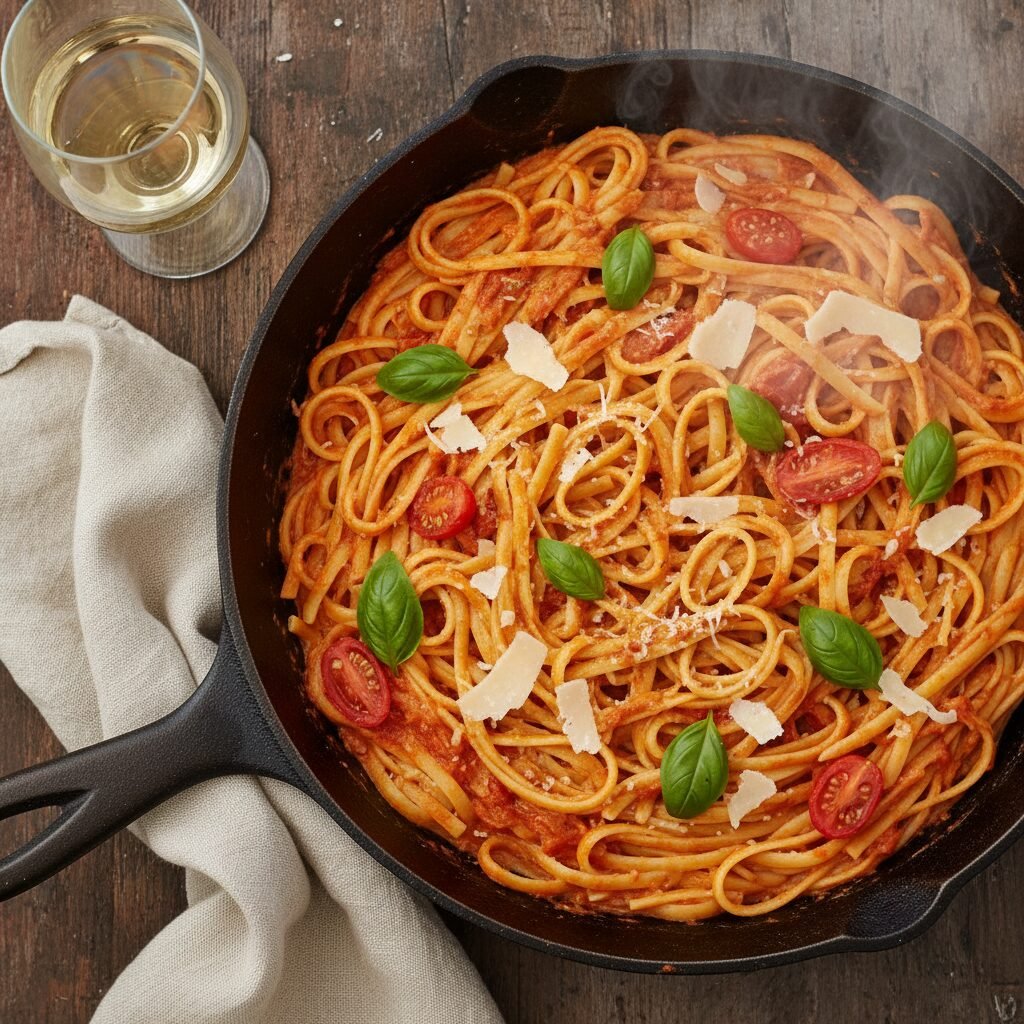

One Pot Pasta
Imagine a dinner where the starch, sauce, and veggies all cook together in magical harmony, leaving you with just one single pan to clean at the end of the night. This One Pot Pasta is my absolute secret weapon for those chaotic school nights—it is creamy, comforting, and ready before the kids can even ask ‘what’s for dinner?’
5 minutes
12 minutes
17 minutes
4 Servings
Dinner
Stovetop
Italian-American
Vegetarian
Let’s be real for a second, friends. The 5:00 PM panic is a very real thing. You know the feeling: the kids are hungry and cranky, homework is spread all over the table, the laundry pile is staring you down, and you have absolutely zero energy to tackle a mountain of dishes after cooking. Enter the holy grail of weeknight cooking: One Pot Pasta.
When I first heard about cooking pasta in the sauce, I was skeptical. As someone who was taught that pasta needs a gallon of boiling salted water and a separate pot for sauce, this felt like breaking all the culinary rules. But let me tell you, one bite of this creamy tomato basil masterpiece changed my life forever. It is not just about saving time (though, saving 20 minutes is amazing); it is about the flavor and texture. Because the pasta releases its starch directly into the small amount of cooking liquid, it creates a luxurious, glossy emulsion that coats the noodles in a way that boiled-and-drained pasta just never can.
This recipe is my go-to ‘I can’t believe I have to cook’ dinner. It requires minimal chopping, zero draining, and only one skillet to wash. Plus, it is incredibly versatile. You can toss in whatever wilting veggies are in your crisper drawer, add leftover rotisserie chicken, or keep it strictly vegetarian. It is warm, comforting, and honestly feels like a hug in a bowl.
History & Origins
While the internet went absolutely wild for One Pot Pasta around 2013—thanks to a viral recipe from the queen herself, Martha Stewart—the concept actually has deep roots in traditional Italian cooking. It is very similar to the method used for risotto, and in Italy, there is a technique known as pasta risottata.
Historically, in the region of Puglia, there is a dish called ‘Assassina Spaghetti’ (Killer Spaghetti) where raw pasta is cooked directly in a spicy tomato broth in a skillet until the broth is absorbed and the pasta even gets a little crispy. The modern American ‘dump-and-cook’ version simplifies this even further. Martha’s team discovered the technique from a chef in Puglia, brought it back to the test kitchens, and simplified the process by throwing onions, garlic, tomatoes, basil, and pasta into a pot with cold water all at once. It defied logic, but the results were undeniable. Since then, food bloggers and busy moms everywhere have adapted the method to include everything from Alfredo to Taco Pasta, proving that sometimes the shortcuts are actually better than the long way home.
Why This Recipe Works
There is some fascinating food science happening in your skillet when you make this dish. In traditional pasta boiling, you use a large volume of water to wash away the exterior starch of the noodle so they don’t stick together. You then drain that water down the sink—literally pouring flavor and texture down the drain!
With the One Pot method, we use a calculated, limited amount of liquid (usually a mix of broth and water). As the pasta cooks, it releases amylose (starch) into the liquid. Because the water is reducing rather than being drained, that starch concentrates. When mixed with the olive oil and the fats from the cheese added at the end, that starchy water emulsifies into a creamy, velvety sauce without needing any heavy cream. The pasta also absorbs the flavor of the onions, garlic, and basil as it rehydrates, meaning the noodle itself is seasoned from the inside out, rather than just being coated in sauce. It is efficiency at its most delicious.
Why You’ll Love This Recipe
- ✓Only one pan to clean—literally just one!
- ✓Ready in under 20 minutes from start to finish.
- ✓Naturally creamy sauce due to the pasta starch.
- ✓Budget-friendly ingredients you likely have in the pantry.
- ✓Kid-approved and easily customizable with protein.
Equipment You’ll Need
- ✓Large high-sided skillet or Dutch oven (12-inch is ideal)
- ✓Tongs or a pasta fork
- ✓Chef’s knife
- ✓Cutting board
- ✓Measuring cups
Ingredients
- ✓12 ounces linguine or spaghetti (dry)
- ✓12 ounces cherry tomatoes, halved (or grape tomatoes)
- ✓1 small onion, thinly sliced (yellow or white)
- ✓4 cloves garlic, thinly sliced
- ✓1/2 teaspoon red pepper flakes (optional, for a little kick)
- ✓2 sprigs fresh basil, plus more for garnish
- ✓2 tablespoons extra virgin olive oil
- ✓4 1/2 cups vegetable broth (or water, but broth adds more flavor)
- ✓Salt and freshly cracked black pepper to taste
- ✓1/2 cup Parmesan cheese, freshly grated
Instructions
- Prep the Veggies: Wash your tomatoes and slice them in half. Slice your onions and garlic thinly. This rustic chop adds great texture to the final dish.
- Combine Ingredients: Grab your large skillet or Dutch oven. Place the dry pasta flat in the pan (break in half if necessary to fit). Arrange the tomatoes, onions, garlic, red pepper flakes, and fresh basil sprigs around the pasta.
- Add Liquid: Drizzle the olive oil over the ingredients. Pour in the vegetable broth (or water). Season generously with salt and pepper.
- Bring to Boil: Turn the heat to high and bring the mixture to a rolling boil. This usually takes about 2-3 minutes.
- Simmer and Stir: Once boiling, reduce the heat slightly to keep a strong simmer. Cook for about 9-11 minutes, stirring frequently with tongs. Crucial Step: You must move the pasta around to prevent it from sticking to the bottom and to help the sauce emulsify.
- Finish the Sauce: Cook until the pasta is al dente and the liquid has reduced to a thick, glossy sauce. If it looks too dry before the pasta is cooked, add a splash more water.
- Garnish and Serve: Remove the pan from heat. Discard the wilted basil sprigs. Stir in the parmesan cheese immediately—this thickens the sauce further. Garnish with fresh chopped basil and serve warm!
Expert Cooking Tips
- ✓Don’t Skimp on Stirring: Unlike boiling pasta the traditional way, you need to babysit this pot a little. Stirring every minute ensures the noodles don’t clump and helps release that magical starch.
- ✓Watch the Liquid: Different pasta brands absorb water differently. If your pan is looking dry but the pasta is still crunchy, add 1/4 cup of hot water at a time.
- ✓Use the Right Pan: A wide skillet (12-inch) allows for faster evaporation, creating a concentrated sauce. A deep soup pot might leave you with soupy pasta.
- ✓Fresh is Best: Use fresh basil and fresh garlic if possible. Since the ingredient list is short, the quality of the fresh produce really shines through.
Substitutions and Variations
This recipe is incredibly forgiving! If you don’t have linguine, you can use spaghetti or fettuccine (adjust cooking time slightly). For a gluten-free version, use your favorite GF pasta blend, but be aware that gluten-free pasta releases more starch, so you might need a little extra liquid and careful stirring to prevent gumminess. If you are out of cherry tomatoes, a can of diced tomatoes (drained) works in a pinch, though the flavor will be more acidic. Vegan? Simply swap the Parmesan for nutritional yeast or a vegan cheese alternative.
Common Mistakes to Avoid
The biggest mistake people make is walking away from the stove. Because the water volume is low, it can evaporate quickly and burn the bottom if you aren’t tossing the noodles. Another common error is using a pot that is too small; the pasta needs room to bathe in the liquid. Lastly, don’t be afraid of salt! Since you aren’t draining the water, you don’t need to salt it like the ocean, but you do need enough to season the sheer volume of food in the pan.
Serving Suggestions
This pasta is hearty enough to stand alone, but I love serving it with a side of crusty garlic bread to sop up any extra sauce. A simple green salad with a lemon vinaigrette cuts through the richness of the starchy sauce beautifully. For the adults, a crisp glass of Pinot Grigio or a light Chianti pairs perfectly with the tomato-basil profile.
Storage and Reheating Tips
One Pot Pasta is best served immediately because the sauce thickens as it cools. However, leftovers can be stored in an airtight container in the fridge for up to 3 days. When reheating (microwave or stovetop), you must add a splash of water or broth to loosen the sauce up again, or it will be a bit dry. I don’t recommend freezing this dish, as the pasta tends to get mushy upon thawing.
Nutrition Facts (Estimated)
| Serving Size | 1 bowl |
| Calories | 480 kcal |
| Fat | 14g |
| Saturated Fat | 4g |
| Unsaturated Fat | 9g |
| Trans Fat | 0g |
| Cholesterol | 10mg |
| Sodium | 650mg |
| Carbohydrates | 72g |
| Fiber | 5g |
| Sugar | 6g |
| Protein | 16g |
Frequently Asked Questions
Can I add protein to this recipe?
Absolutely! I love adding cooked rotisserie chicken or sliced sausage at the very end just to warm it through. If you want to use raw ground beef or chicken, brown it in the skillet first, remove it, and then proceed with the recipe, adding the meat back in at the end.
Why is my pasta gummy?
Gumminess usually happens if the heat was too low (so the pasta sat in water too long without cooking) or if it wasn’t stirred enough. Make sure you maintain a vigorous simmer, not a low soak.
Can I use whole wheat pasta?
Yes, but whole wheat pasta often requires a little more liquid and a minute or two longer to cook. Keep an eye on the texture and add water as needed.
My sauce is too watery, what do I do?
Just keep cooking! If the pasta is done but the sauce is thin, remove the pasta with tongs and let the sauce boil down rapidly for another minute, then toss the pasta back in. Adding the cheese also helps thicken it instantly.
Do I have to use broth?
No, water works fine! However, vegetable or chicken broth adds a depth of flavor that water lacks. If using water, make sure to taste and season aggressively with salt and herbs.
Can I make this with short pasta like penne?
You sure can. Penne or Rotini work great. The liquid ratio is usually about the same, but keep an eye on it. Short pasta is easier to stir, which is a bonus!
Is this spicy?
Only if you add the red pepper flakes! Without them, it is a mild, kid-friendly tomato flavor. I usually leave the flakes out for the kids and sprinkle them on my own bowl.
Can I use dried basil instead of fresh?
Fresh is definitely superior here for that bright, aromatic finish. But in a pinch, use 1 teaspoon of dried basil added at the beginning with the liquid. Don’t use dried basil for the garnish.
Conclusion
There you have it, mamas—the dinner that is going to save your sanity on Tuesdays (and Thursdays, and honestly, maybe Saturdays too). This Creamy Tomato Basil One Pot Pasta proves that you don’t need a culinary degree or hours in the kitchen to put a wholesome, delicious meal on the table. It is minimal mess, maximum flavor, and pure comfort. Give it a try this week, and don’t forget to tag me in your photos—I love seeing your creations! Now, go enjoy that extra time you saved not washing dishes!