
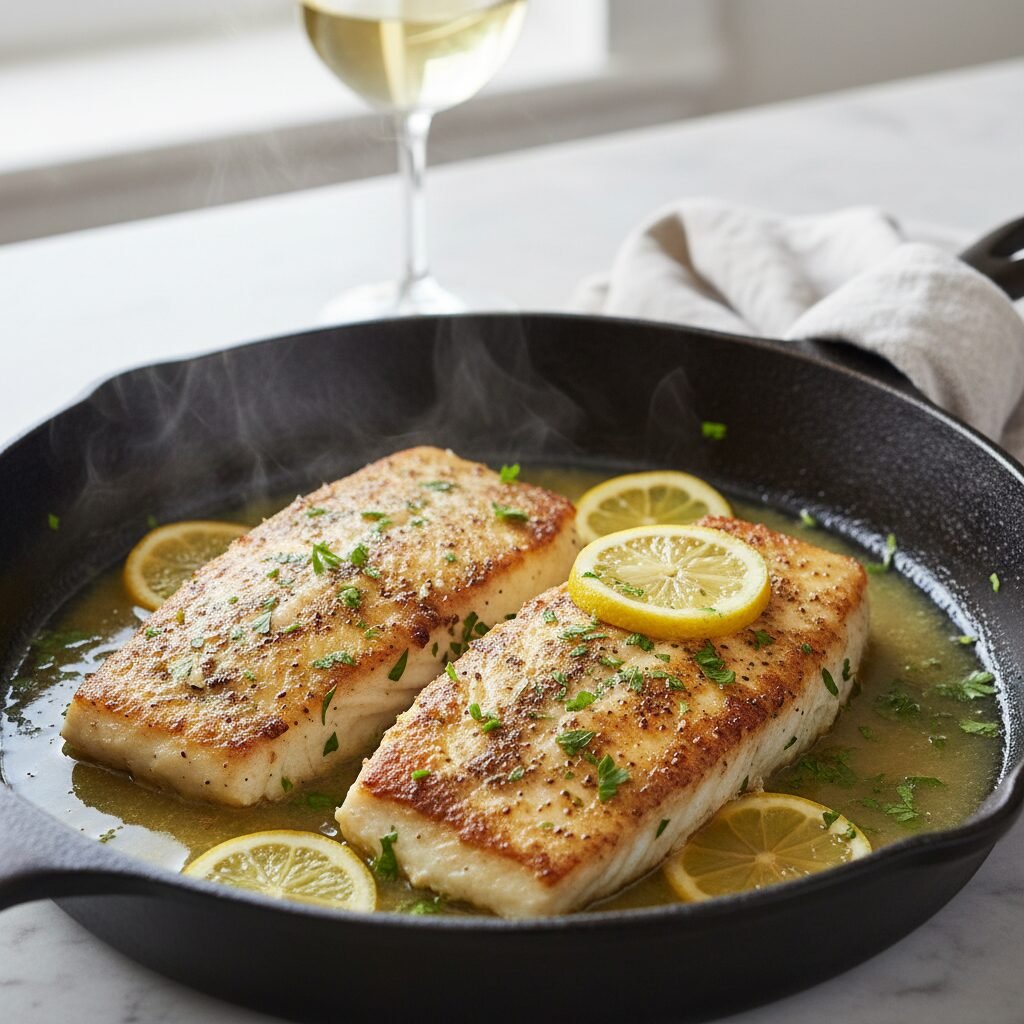

Pan Seared Mahi Mahi
Need a dinner win that feels fancy but takes zero effort? This Pan Seared Mahi Mahi is your answer! With a golden crust and a zesty lemon butter sauce, it goes from fridge to plate in just 15 minutes.
5 minutes
10 minutes
15 minutes
4 servings
Dinner
Pan Sear
American / Seafood
Gluten Free
Hey there, busy mamas! Let’s talk about the 5:00 PM panic. You know the one—where you stare into the fridge hoping a gourmet meal will magically appear, but all you see are leftovers and condiments? We have all been there. As much as I love a slow-simmered Sunday roast, my Tuesday nights are absolute chaos between soccer practice, homework help, and trying to keep the house from looking like a tornado hit it.
That is exactly why this Pan Seared Mahi Mahi has become a staple in my rotation. For the longest time, I was actually intimidated by cooking fish at home. I was terrified of overcooking it, making the house smell, or worse—having it stick to the pan and turn into a sad, scrambled mess. But let me tell you, once I cracked the code on this recipe, it was a total game-changer!
Mahi Mahi is the perfect fish for families. It is firm, not mushy, and has such a mild, sweet flavor that it doesn’t scream “fishy” to the little ones. Plus, this recipe uses the “sear and baste” method that fancy steakhouses use, but it is laughably easy to do in your own kitchen. We are talking crispy, golden edges and a sauce made of pure liquid gold (aka garlic butter). Serve this up with some steamed veggies or rice, and you look like a culinary rockstar without breaking a sweat.
History & Origins
If you have ever been on a tropical vacation to Hawaii or Florida, you have likely seen Mahi Mahi on the menu everywhere. Historically known as Coryphaena hippurus, the name “Mahi-Mahi” actually comes from the Hawaiian language and means “strong-strong.” This is a nod to the fish’s incredible swimming speed and fighting spirit when being caught!
Don’t worry though—despite its older confusing nickname “Dolphinfish,” it has absolutely no relation to Flipper! It is purely a fish. While island cultures have been grilling and searing this fish for centuries, often pairing it with fruit salsas or coconut flavors, the technique of pan-searing with a French-style meunière sauce (brown butter and lemon) brings a continental elegance to this tropical favorite. It bridges the gap between a beachside grill and a fine dining bistro.
Why This Recipe Works
There is a little bit of kitchen science that makes this recipe foolproof. First, Mahi Mahi is a lean fish with a firm texture. This structural integrity allows it to withstand high heat without falling apart, which is why it is perfect for pan-searing. The goal here is the Maillard reaction—that chemical reaction between amino acids and reducing sugars that gives browned food its distinctive flavor and crispy texture.
By patting the fish bone-dry before cooking (a crucial step!), we remove surface moisture that would otherwise create steam. Steam is the enemy of a good crust! Once we get that golden sear, we lower the heat and add cold butter. As the butter melts and foams, it emulsifies with the lemon juice and garlic, creating a sauce that clings to the fish rather than sliding right off. The acidity of the lemon cuts through the richness of the butter, balancing the dish perfectly.
Why You’ll Love This Recipe
- ✓Ready in under 15 minutes
- ✓High protein and low carb
- ✓Mild flavor perfect for kids
- ✓One-pan cleanup
- ✓Restaurant-quality crust
- ✓Gluten-free and Keto friendly
Equipment You’ll Need
- ✓Large Cast Iron Skillet or Stainless Steel Pan
- ✓Fish Spatula (thin metal turner)
- ✓Paper Towels
- ✓Tongs
- ✓Measuring Spoons
Ingredients
- ✓4 Mahi Mahi fillets (about 6oz each), fresh or thawed
- ✓2 tablespoons olive oil (or avocado oil)
- ✓3 tablespoons unsalted butter, divided
- ✓3 cloves garlic, minced
- ✓1 tablespoon fresh lemon juice
- ✓1 teaspoon paprika (for color)
- ✓1/2 teaspoon garlic powder
- ✓Salt and freshly cracked black pepper to taste
- ✓Fresh parsley, chopped (for garnish)
- ✓Lemon wedges (for serving)
Instructions
- Step 1: Prep the Fish. Remove your Mahi Mahi fillets from the fridge about 10-15 minutes before cooking. Using paper towels, pat them remarkably dry on all sides. This is the secret to a good crust! Season both sides generously with salt, pepper, garlic powder, and paprika.
- Step 2: Heat the Pan. Place your large skillet over medium-high heat. Add the olive oil and let it get shimmering hot. You want it hot enough that the fish sizzles immediately upon contact, but not smoking heavily.
- Step 3: The Sear. Carefully place the fillets into the pan. Do not crowd them; do it in two batches if necessary. Press down gently with your spatula for 10 seconds to ensure good contact. Now, stop touching it! Let it sear undisturbed for about 3-4 minutes until a golden crust forms and the fish releases easily from the pan.
- Step 4: Flip and Butter Baste. Flip the fillets over. Reduce the heat to medium. Add the butter and minced garlic to the pan between the fillets. As the butter melts and foams, tilt the pan slightly and use a spoon to scoop that garlicky butter over the fish repeatedly. Cook for another 2-4 minutes depending on thickness, until the fish is opaque and flakes easily with a fork.
- Step 5: Finish and Serve. Remove the pan from heat. Squeeze the fresh lemon juice over the fish and into the sauce. Garnish with fresh parsley. Serve immediately, spooning the extra pan sauce over the top!
Expert Cooking Tips
- ✓Dry it out: I cannot stress this enough—wet fish will steam, not sear. Use extra paper towels!
- ✓Don’t force the flip: If the fish is sticking to the pan, it means the crust hasn’t formed yet. Give it another 30 seconds, and it should release naturally.
- ✓Watch the garlic: We add the garlic after the flip so it doesn’t burn during the high-heat searing phase.
- ✓Room temp is best: Cold fish hitting a hot pan causes the temperature to drop and can lead to uneven cooking. Let it sit out for 10 minutes first.
Substitutions and Variations
No Mahi Mahi at the grocery store today? No problem! This method works beautifully with other firm white fish. Halibut is a fantastic, slightly more upscale alternative. Cod works well too, though it is a bit more delicate, so be gentle when flipping. If you are dairy-free, you can swap the butter for Ghee or a high-quality vegan butter block. For a different flavor profile, try using lime juice and cilantro instead of lemon and parsley for a Baja-inspired twist!
Common Mistakes to Avoid
The biggest mistake I see is overcooking the fish. Mahi Mahi is lean, so if you cook it too long, it turns into rubber. It is done when the internal temp hits 145°F, or usually just as soon as the center looks opaque rather than translucent pink. Another common oopsie is overcrowding the pan. If the fillets are touching, they trap steam, and you lose that beautiful crust we worked so hard for.
Serving Suggestions
This fish is so versatile! For a light, low-carb dinner, I love serving this over a bed of zucchini noodles or alongside some roasted asparagus. If you need something heartier for the hungry teenagers, it pairs perfectly with rice pilaf or garlic mashed potatoes. My personal favorite? Flaking the leftovers into corn tortillas with some mango salsa for incredible fish tacos the next day!
Storage and Reheating Tips
Seafood is always best enjoyed fresh, but if you have leftovers, store them in an airtight container in the refrigerator for up to 3 days. To reheat, do not use the microwave if you can help it—it makes fish tough and smelly! Instead, place the fillets on a baking sheet, cover loosely with foil (add a splash of water or broth to keep it moist), and warm in a 275°F oven for about 10-15 minutes.
Nutrition Facts (Estimated)
| Serving Size | 1 fillet (approx 6oz) |
| Calories | 285 kcal |
| Fat | 16g |
| Saturated Fat | 8g |
| Unsaturated Fat | 7g |
| Trans Fat | 0g |
| Cholesterol | 125mg |
| Sodium | 320mg |
| Carbohydrates | 2g |
| Fiber | 0g |
| Sugar | 0g |
| Protein | 32g |
Frequently Asked Questions
Is Mahi Mahi actually dolphin meat?
No! This is a very common misconception because of its historical name ‘Dolphinfish.’ Mahi Mahi is a fish, completely unrelated to the marine mammal (porpoise) Flipper. You are 100% safe!
Can I use frozen fillets?
Absolutely. I often buy the frozen bags from Costco. Just make sure to thaw them completely in the fridge overnight and pat them extremely dry before cooking.
How do I know when the fish is done?
The fish should flake easily with a fork. If you have a meat thermometer, you are looking for an internal temperature of 145°F (63°C).
Is this recipe spicy?
Not at all. The paprika is mostly for color and a tiny bit of warmth. If you want heat, feel free to add a pinch of cayenne pepper or red pepper flakes.
Why did my fish stick to the pan?
Usually, this happens because the pan wasn’t hot enough, or you tried to flip it too soon. Let the crust form fully, and it should release itself.
Can I bake this instead?
Yes, you can! Bake at 400°F for about 12-15 minutes. You won’t get the same crispy crust, but it will still be delicious.
Is Mahi Mahi healthy?
Very! It is a fantastic source of lean protein, B vitamins, and potassium, while being low in saturated fat.
What wine pairs well with this?
A crisp white wine cuts through the butter sauce beautifully. Try a Sauvignon Blanc, Pinot Grigio, or a dry Chardonnay.
Conclusion
There you have it, friends! A dinner that looks like you spent hours in the kitchen but actually took less time than an episode of Bluey. I hope this Pan Seared Mahi Mahi makes it onto your meal plan this week. It is fresh, flavorful, and totally doable on a busy Tuesday. If you try it, please snap a picture and tag me—I love seeing your creations! Now, go pour yourself a glass of wine; you’ve got dinner handled.