
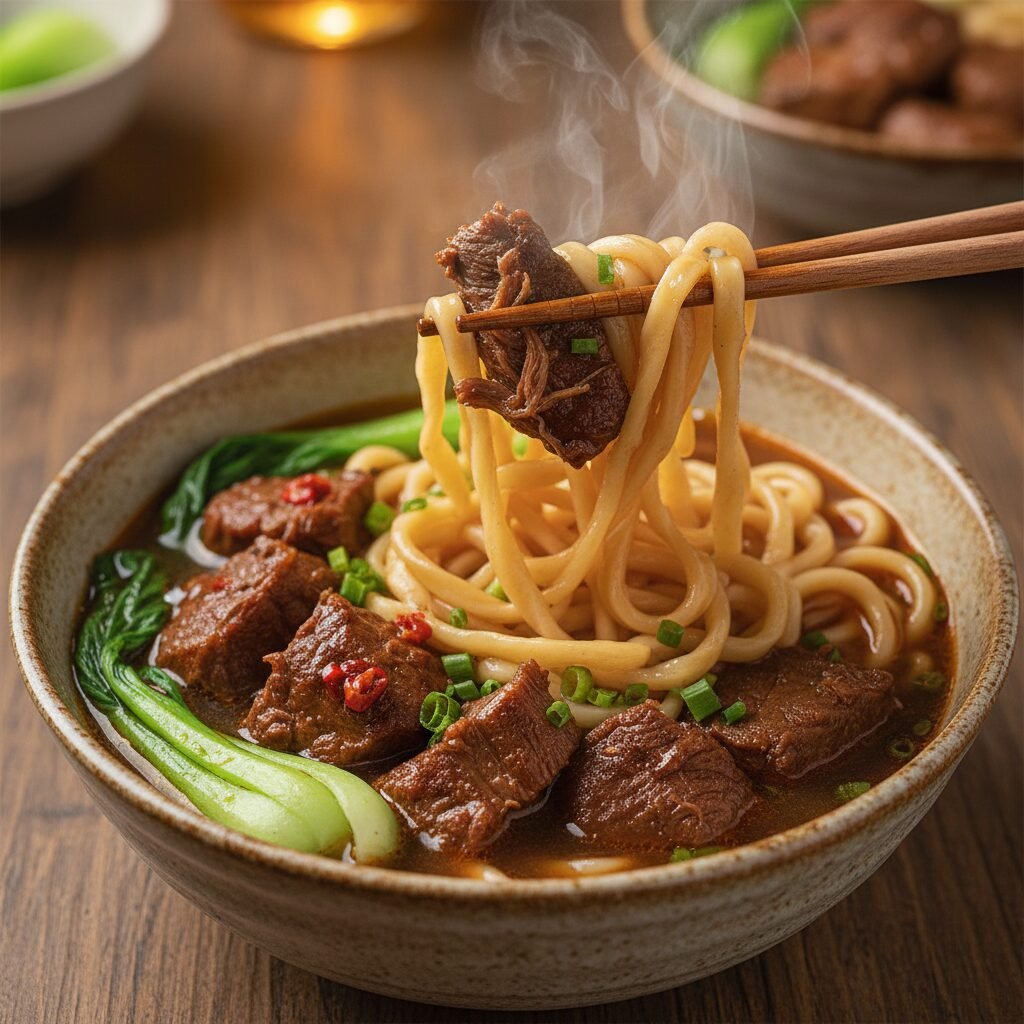

Beef Noodle Soup
If you are looking for a big bowl of comfort, you have found it! This homemade Beef Noodle Soup is loaded with tender beef chunks, chewy noodles, and a broth so rich it tastes like it simmered for days.
30 mins
2 hrs 30 mins
3 hrs
4-6 Servings
Soup
Stovetop / Dutch Oven
Asian Fusion
Dairy Free
Hey there, friends! Welcome back to my kitchen. Today, we are diving into something truly special and incredibly cozy. You know those days when the rain is tapping against the window, the house feels a little chilly, and you just crave something warm, savory, and soul-soothing? That is exactly what this Beef Noodle Soup is all about. It is like a warm hug in a bowl!
I used to be so intimidated by making noodle soups from scratch. I always thought, ‘Oh, I’ll just order takeout,’ because getting that deep, complex broth flavor seemed like some kind of chef magic. But let me tell you, once I started making this at home, there was no going back. The smell alone that wafts through your house while this simmers—think star anise, ginger, and garlic—is enough to bring the whole family running to the table.
This recipe is inspired by the classic Taiwanese Beef Noodle Soup (Niu Rou Mian), which is famous for its dark, robust broth and melt-in-your-mouth beef shank. I have tweaked it just a bit to make it super friendly for busy moms and home cooks without losing that authentic depth of flavor. It is hearty enough to be a full meal, and my kiddos absolutely love slurping up the noodles. Trust me, this is going to be a new staple in your meal rotation!
History & Origins
Beef Noodle Soup is a dish with a fascinating history that travels across borders. While there are many variations across Asia, the version we are channeling today has roots deep in Taiwanese culture, known as Niu Rou Mian. It is often considered the national dish of Taiwan!
Interestingly, the origins are a bit of a melting pot. It is believed to have been created by the Hui people (Chinese Muslims) who were experts in beef preparation, and later popularized in Taiwan by veterans from the Sichuan province who fled there after the Chinese Civil War. They brought with them the love for spicy bean paste and rich, hearty stews. Over decades, it evolved from a simple street food into a culinary masterpiece with annual festivals dedicated to finding the best bowl. It is a beautiful example of how food tells the story of migration, adaptation, and the universal love for a good, hot meal.
Why This Recipe Works
So, why is this recipe a total winner? It all comes down to the layering of flavors. We do not just throw everything in a pot and hope for the best. We start by searing the aromatics—ginger, garlic, scallions, and onions—until they are fragrant. This releases their natural oils and creates a flavor base that is absolutely unshakeable.
The real secret, however, is the Doubanjiang (spicy broad bean paste) and the soy sauce combination. The bean paste adds a savory, fermented umami kick that you just cannot get from salt alone. Additionally, we use a specific cut of beef: the shank or chuck. These cuts are rich in connective tissue. As they simmer slowly, that tissue breaks down into gelatin, which gives the soup a luxurious, silky mouthfeel that coats your tongue. It is not just watery broth; it is liquid gold!
Why You’ll Love This Recipe
- ✓Melt-in-your-mouth tender beef chunks
- ✓Rich, complex broth without all the effort
- ✓Perfect for meal prepping and freezing
- ✓Customizable spice levels for the kids
- ✓A complete meal in one bowl
- ✓Fills your home with incredible aromas
Equipment You’ll Need
- ✓Large Dutch Oven or Heavy-Bottomed Pot
- ✓Sharp Chef’s Knife
- ✓Cutting Board
- ✓Tongs
- ✓Fine Mesh Strainer (optional)
- ✓Soup Ladle
Ingredients
- ✓2 lbs Beef Shank or Beef Chuck Roast, cut into 2-inch chunks
- ✓2 tbsp Vegetable Oil
- ✓2-inch piece Ginger, sliced into coins (no need to peel)
- ✓6 cloves Garlic, smashed
- ✓4 stalks Scallions, cut into 3-inch segments
- ✓1 medium Yellow Onion, quartered
- ✓2 tbsp Doubanjiang (Spicy Broad Bean Paste) – adjust for spice preference
- ✓1/2 cup Soy Sauce
- ✓1/4 cup Dark Soy Sauce (for color)
- ✓1/4 cup Shaoxing Wine (or dry sherry)
- ✓2 tbsp Rock Sugar (or brown sugar)
- ✓2 Star Anise pods
- ✓1 Cinnamon Stick
- ✓1 tsp Sichuan Peppercorns (optional for a tingly kick)
- ✓3 Dried Bay Leaves
- ✓1/2 tsp Five Spice Powder
- ✓8 cups Beef Bone Broth or Water
- ✓1 lb Wheat Noodles (fresh or dried)
- ✓4 heads Baby Bok Choy, halved
- ✓Fresh Cilantro and chopped Scallions for garnish
Instructions
- Blanch the Beef: In a large pot of boiling water, add the beef chunks. Boil for about 2-3 minutes until the scum rises to the top. Drain and rinse the beef thoroughly with cold water. This ensures a clean, clear tasting broth!
- Sauté Aromatics: Heat the oil in your Dutch oven over medium heat. Add the ginger, garlic, scallions, and onion. Stir-fry for 3-4 minutes until the edges start to brown and it smells amazing.
- Bloom the Spices: Push the aromatics to the side and add the Doubanjiang (bean paste). Fry it in the oil for 1 minute to release the red oil and flavor. Add the star anise, cinnamon, bay leaves, and peppercorns.
- Combine and Simmer: Add the cleaned beef back into the pot. Pour in the Shaoxing wine, soy sauce, dark soy sauce, and sugar. Stir to coat the beef. Pour in the beef broth (or water). Bring to a boil.
- The Slow Cook: Once boiling, reduce the heat to low. Cover the pot and let it simmer gently for 2 to 2.5 hours. You want the beef to be fork-tender but not falling apart completely.
- Cook the Noodles & Veggies: In a separate pot of boiling water, cook your noodles according to package instructions. In the last minute of cooking, toss in the bok choy to blanch them. Drain everything well.
- Assemble: Place a portion of noodles and bok choy into a bowl. Ladle the hot soup and generous chunks of beef over the top. Garnish with fresh cilantro and chopped scallions. Enjoy immediately!
Expert Cooking Tips
- ✓Don’t skip the blanching: It might seem like an extra step, but boiling the raw beef first removes impurities and blood, resulting in a much cleaner and more appetizing soup flavor.
- ✓Rock Sugar is key: If you can find yellow rock sugar at your Asian grocer, use it! It gives a glossy sheen to the soup and a mellow sweetness that balances the salty soy sauce perfectly.
- ✓Make it ahead: This soup actually tastes better the next day. The flavors have more time to meld together. Just store the noodles separately so they don’t get soggy.
- ✓Adjusting the heat: If you are feeding little ones, you can reduce or omit the spicy bean paste and Sichuan peppercorns, then just add chili oil to your own bowl at the table.
Substitutions and Variations
If you cannot find Doubanjiang, you can use a mix of chili garlic sauce and a little miso paste for that fermented kick. No Shaoxing wine? Dry sherry or even a splash of apple cider vinegar works in a pinch. For a gluten-free version, swap the soy sauce for Tamari or coconut aminos and use rice noodles instead of wheat noodles.
Common Mistakes to Avoid
The biggest mistake is boiling the soup too hard. You want a gentle simmer. Boiling it rapidly can make the meat tough and the broth cloudy. Another mistake is cooking the noodles directly in the soup pot. The starch from the noodles will thicken your beautiful broth and make it gloopy. Always cook noodles in a separate pot of water!
Serving Suggestions
This soup is a meal in itself, but I love serving it with a side of pickled cucumbers or some steamed dumplings if we are feeling extra hungry. A little dish of chili oil on the table is a must for the adults who like it hot!
Storage and Reheating Tips
Store the soup (broth and beef) in an airtight container in the refrigerator for up to 4 days. It freezes beautifully for up to 3 months. Always store noodles separately! Reheat the broth on the stove and boil fresh noodles when you are ready to eat for the best texture.
Nutrition Facts (Estimated)
| Serving Size | 1 large bowl |
| Calories | 650 kcal |
| Fat | 28g |
| Saturated Fat | 9g |
| Unsaturated Fat | 15g |
| Trans Fat | 0g |
| Cholesterol | 85mg |
| Sodium | 1200mg |
| Carbohydrates | 65g |
| Fiber | 4g |
| Sugar | 8g |
| Protein | 42g |
Frequently Asked Questions
Can I make this in a Slow Cooker?
Absolutely! Follow the steps to sauté the aromatics and beef on the stove first (to get that flavor), then transfer everything to your slow cooker. Cook on LOW for 6-8 hours or until the beef is tender.
What is the best cut of beef to use?
Beef Shank is traditional because the tendon breaks down into gelatin, making the soup silky. However, Beef Chuck Roast is easier to find and works wonderfully because it has great marbling.
Is this soup very spicy?
It depends on the Doubanjiang you use. You can buy ‘mild’ versions or reduce the amount. The Sichuan peppercorns add a numbing sensation, not heat, but you can leave them out for kids.
Can I use chicken instead?
You can, but the flavor profile is designed for red meat. If you use chicken, use thighs and reduce the cooking time to about 45 minutes so the meat doesn’t dry out.
Where can I find these ingredients?
Most regular grocery stores carry soy sauce, ginger, and star anise. For the Doubanjiang, Shaoxing wine, and Rock Sugar, check the international aisle or visit a local Asian market. Amazon is also a great option!
Why is my broth bitter?
This usually happens if the garlic or spices were burned during the sauté step. Be careful not to overheat them before adding the liquid.
Can I add other vegetables?
Yes! Carrots and daikon radish are popular additions. Add them into the pot about 30-40 minutes before the soup is done so they don’t turn to mush.
How do I eat this with chopsticks?
The fun part! Use chopsticks to lift the noodles and beef to your mouth, and use a soup spoon in your other hand to sip the broth. Slurping is encouraged!
Conclusion
There you have it, my friends—the secret to making the most incredible Beef Noodle Soup right in your own kitchen. It is a labor of love, but one that pays off with every single spoonful. I hope this recipe brings a little warmth and joy to your family table just like it does to ours.
If you try this recipe, please snap a photo and tag me on Instagram or leave a comment below! I love seeing your creations. Happy cooking!