
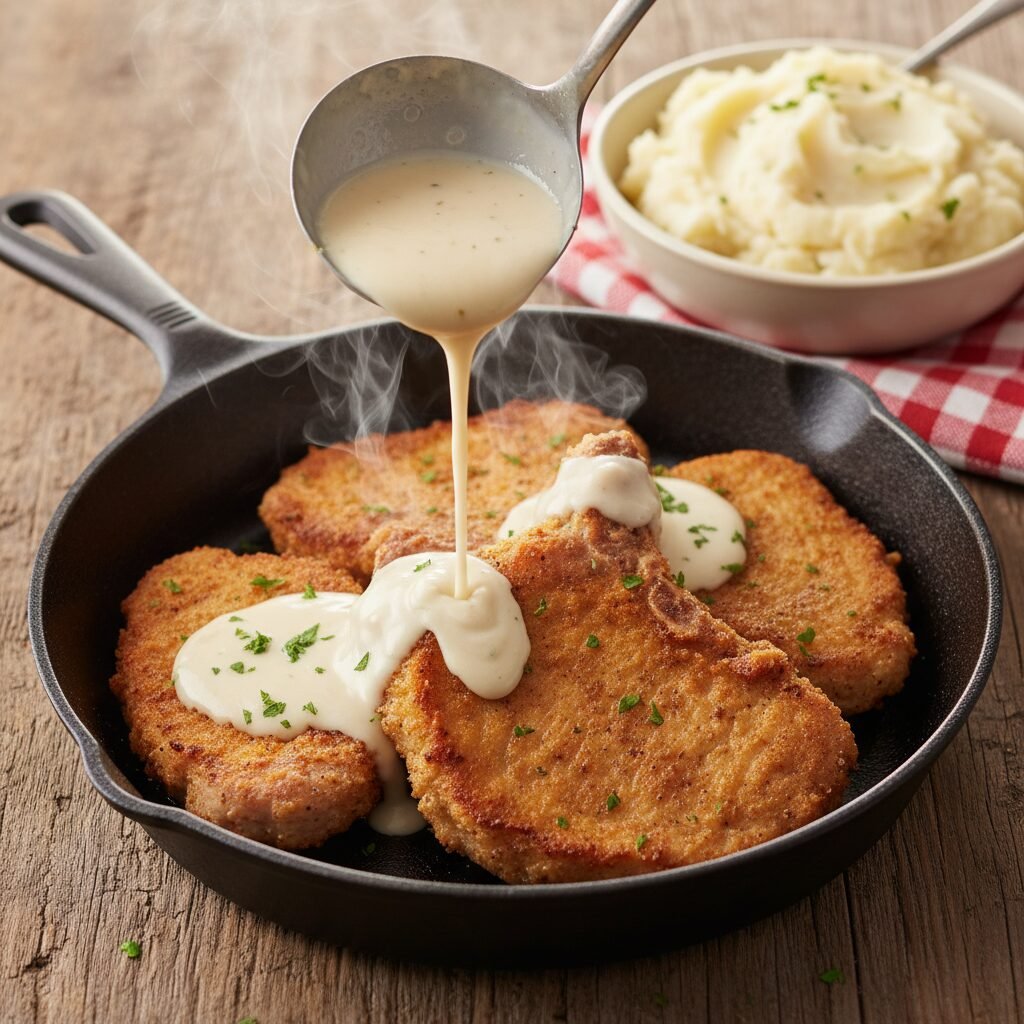

Breaded Pork Chops And Gravy
There is nothing quite like the sound of pork chops sizzling in a cast-iron skillet to bring the family running to the table. These juicy chops are coated in a seasoned breading and fried to golden perfection, then drowned in the most incredible milk gravy made from the flavorful pan drippings.
10 minutes
20 minutes
30 minutes
4 Servings
Dinner
Pan Fry
Southern American
Omnivore
Hey friends! Welcome back to my kitchen. Today, we are diving deep into the world of pure, unadulterated comfort food. I am talking about the kind of meal that feels like a warm hug after a long, chaotic week of school drop-offs, soccer practice, and endless laundry mountains. We are making Breaded Pork Chops and Gravy.
If you grew up in the South—or just in a house that appreciated hearty cooking—you know that pork chops are a staple. But we aren’t just tossing them in the oven to dry out today. No, ma’am! We are doing this the old-fashioned way. We are talking about a crispy, seasoned crust that shatters when you bite into it, revealing tender, juicy meat inside. And the gravy? Oh, the gravy! It is liquid gold.
This recipe is one of my absolute go-to dinners when I need something budget-friendly but impressive. Pork is usually much more affordable than steak, and when you treat it right with a little flour and love, it tastes like a million bucks. Plus, this whole meal comes together in about 30 minutes, which is a lifesaver on busy weeknights. My husband literally scrapes the plate clean every time I make this, and even my picky eaters ask for seconds of the "sauce" (gravy) for their mashed potatoes.
So, grab your favorite apron and your trusty skillet, and let’s make a dinner that will have your family thinking you spent hours by the stove!
History & Origins
The concept of breading and frying meat is a culinary tradition that spans centuries and continents. While we often associate this specific dish with the American South, its roots can be traced back to European classics like the Austrian Wiener Schnitzel or the Italian Cotoletta alla Milanese. German and Austrian immigrants brought these techniques of pounding meat thin (tenderizing) and coating it in breadcrumbs or flour to the United States in the 19th century.
In the American South, particularly in Texas and the Deep South, this technique evolved. Beef was abundant in Texas, leading to Chicken Fried Steak, but in other areas, pork was the primary protein. The "gravy" component is distinctly American, born out of frugality. Cooks would never dream of wasting the flavorful fat and browned bits (fond) left in the pan after frying meat. By adding a little flour and milk, they created a calorie-dense, rich sauce to stretch the meal further and soften the breading slightly. Over time, "Smothered Pork Chops" became a Sunday supper icon, representing hospitality and home cooking at its finest.
Why This Recipe Works
This recipe works so beautifully because of the contrast in textures and the layering of flavors. First, let’s talk about the breading. By dredging the pork in flour and seasonings, we create a barrier. This barrier does two things: it creates a delicious, crispy crust via the Maillard reaction (browning), and it insulates the meat, helping to keep the juices locked inside so the pork remains tender rather than turning into shoe leather.
The gravy is the second piece of the puzzle. It utilizes the fond—those sticky, caramelized brown bits stuck to the bottom of your pan after frying the chops. That stuff is concentrated flavor! By making a roux with the leftover cooking oil and those drippings, we build a savory base that bouillon cubes just can’t replicate. Adding milk creates a creamy emulsion that coats the tongue and balances the saltiness of the fried breading. It is simple science, but it tastes like magic.
Why You’ll Love This Recipe
- ✓Ready in under 30 minutes
- ✓Uses economical pork loin chops
- ✓Homemade gravy from scratch (no packets!)
- ✓Kid-friendly mild flavors
- ✓Perfect for cast iron skillets
Equipment You’ll Need
- ✓Large Cast Iron Skillet or Heavy Bottomed Pan
- ✓Meat Mallet (for pounding chops)
- ✓Shallow Bowls (for dredging)
- ✓Whisk
- ✓Tongs
- ✓Wire Rack
Ingredients
- ✓4 boneless pork chops (about 1-inch thick)
- ✓1 cup all-purpose flour (divided use)
- ✓1 teaspoon garlic powder
- ✓1 teaspoon onion powder
- ✓1 teaspoon paprika (smoked or sweet)
- ✓1/2 teaspoon salt
- ✓1/2 teaspoon black pepper
- ✓1/4 cup vegetable oil or canola oil (for frying)
- ✓2 tablespoons butter
- ✓2 cups whole milk
- ✓Salt and extra black pepper to taste for gravy
Instructions
- Prep the Pork: Pat the pork chops dry with paper towels. This is crucial for a good crust! Place the chops between two sheets of plastic wrap and use a meat mallet to pound them to an even 1/2-inch thickness. This ensures they cook evenly and quickly.
- Create the Breading Station: In a shallow bowl or pie plate, combine 3/4 cup of the flour, garlic powder, onion powder, paprika, salt, and pepper. Mix well.
- Dredge: Press each pork chop into the seasoned flour mixture. Make sure to coat both sides thoroughly and shake off any excess loose flour. Set the coated chops aside on a plate.
- Heat the Pan: In a large cast-iron skillet, heat the vegetable oil over medium-high heat until it shimmers but is not smoking. You want it hot enough to sizzle immediately.
- Fry the Chops: Place the pork chops in the hot skillet. Do not overcrowd the pan; cook in batches if necessary. Fry for 4-5 minutes per side until golden brown and crispy. The internal temperature should reach 145°F. Remove chops and place them on a wire rack to keep them crisp while you make the gravy.
- Make the Roux: Lower the heat to medium. You should have about 2 tablespoons of oil/drippings left in the pan. If the pan is dry, add the butter now. If there is too much oil, drain a little off. Add the remaining 1/4 cup of flour to the drippings.
- Cook the Flour: Whisk the flour into the fat continuously for about 1-2 minutes. You want the flour to turn a light golden color and cook out that raw flour taste. Scrape up those brown bits from the bottom of the pan!
- Add the Milk: Slowly pour in the milk while whisking constantly to prevent lumps. The mixture will bubble and thicken rapidly.
- Simmer: Reduce heat to low and let the gravy simmer for 2-3 minutes until it coats the back of a spoon. Season generously with plenty of black pepper and salt to taste. If it gets too thick, splash in a little more milk or water.
- Serve: You can either return the pork chops to the pan to smother them in the gravy (this softens the crust slightly) or serve the chops on a plate and ladle that hot, creamy gravy right over the top. Enjoy immediately!
Expert Cooking Tips
- ✓Don’t skip the pounding: Even if you buy thin chops, pounding them breaks down fibers and makes them tender.
- ✓Room temperature meat: Let your pork chops sit on the counter for 15 minutes before cooking. Cold meat hits hot oil and lowers the temp too fast, leading to greasy chops.
- ✓Heavy pepper: A true Southern white gravy relies heavily on black pepper. Don’t be shy with it!
- ✓Keep it crispy: If you aren’t serving immediately, keep the fried chops in a warm oven (200°F) on a wire rack so the bottom doesn’t get soggy.
Substitutions and Variations
We all have those moments where we open the pantry and realize we are missing something! Here are some easy swaps:
- Meat: This exact recipe works wonders with chicken breasts (pounded thin) or even cube steak.
- Dairy-Free: You can make the gravy with unsweetened almond milk or oat milk, though it won’t be quite as rich. You may need to add a little extra fat (like vegan butter) to help the texture.
- Gluten-Free: Use a 1:1 Gluten-Free flour blend for both the dredging and the gravy. It works surprisingly well!
- Seasoning: Feel free to add a pinch of cayenne pepper if you like a little kick, or dried sage for a more autumnal flavor.
Common Mistakes to Avoid
The biggest mistake people make with pork chops is overcooking them. Pork does not need to be cooked until it is gray and dry! Using a meat thermometer to pull them at 145°F is the secret to juicy meat. Another common issue is burnt garlic. Because we put garlic powder in the flour, if your heat is too high, the garlic will burn before the meat is cooked. Keep the heat at medium-high, not scorching high. Lastly, lumpy gravy happens when you add the milk too fast or don’t whisk enough. Pour slow, whisk fast!
Serving Suggestions
This meal is practically begging for mashed potatoes. The gravy acts as the perfect bridge between the pork and the potatoes. I also love serving this with seasoned green beans (maybe with a little bacon?) or buttery corn on the cob. If you really want to go all out, add some homemade buttermilk biscuits to sop up every last drop of that gravy!
Storage and Reheating Tips
If you have leftovers (which is rare in my house!), store the pork chops and gravy in separate airtight containers in the refrigerator for up to 3 days. To reheat, I recommend putting the pork chops in an air fryer or oven at 350°F for about 10 minutes to crisp the breading back up. The gravy will solidify in the fridge; simply reheat it in a small saucepan with a splash of water or milk to loosen it up again. I do not recommend freezing the gravy as the dairy tends to separate when thawed.
Nutrition Facts (Estimated)
| Serving Size | 1 Pork Chop with Gravy |
| Calories | 485 kcal |
| Fat | 26g |
| Saturated Fat | 9g |
| Unsaturated Fat | 14g |
| Trans Fat | 0g |
| Cholesterol | 115mg |
| Sodium | 680mg |
| Carbohydrates | 24g |
| Fiber | 1g |
| Sugar | 3g |
| Protein | 36g |
Frequently Asked Questions
Why is my breading falling off the pork chops?
Breading usually falls off because the meat was too wet before dredging, or the oil wasn’t hot enough. Make sure to pat the chops extremely dry with paper towels before dipping them in the flour mixture.
Can I bake these instead of frying?
You can, but you won’t get the same pan drippings for the gravy. To bake, spray the breaded chops with cooking spray and bake at 400°F for 15-20 minutes, flipping halfway. You would then need to make the gravy separately using butter.
Can I use bone-in pork chops?
Absolutely! Bone-in chops often have more flavor. Just note that they might take a minute or two longer to cook near the bone.
My gravy is too salty, how do I fix it?
If you over-salted, the best fix is to add more liquid (milk or water) and a little more fat/flour roux to dilute the saltiness. A squeeze of lemon juice can also sometimes counteract salt.
How do I know when the oil is ready?
Stick the handle of a wooden spoon into the oil. If little bubbles form around the wood, the oil is ready. If it bubbles violently, it’s too hot.
Can I use panko breadcrumbs instead of flour?
Yes! For a crunchier chop, dip in flour, then egg wash, then panko. However, the traditional Southern style usually relies just on seasoned flour.
Why are my pork chops tough?
Tough chops are almost always a result of overcooking. Pork loin is very lean. Once it passes 145°F, the proteins tighten up rapidly. Pounding them thin also helps tenderize the meat physically.
What kind of milk is best for gravy?
Whole milk is best for the richest, creamiest flavor. 2% works fine, but skim milk will result in a thinner, less flavorful gravy.
Conclusion
There you have it, mamas! A dinner that is hearty, delicious, and guaranteed to bring smiles to the table. I hope this Breaded Pork Chops and Gravy recipe becomes a regular in your meal rotation just like it is in mine. It really is the simple things in life—like a good hot meal with family—that matter the most.
If you try this recipe, please leave a comment below and let me know how it turned out! Did you add any special twists? I love hearing from you. And don’t forget to pin this to your "Weeknight Dinners" board on Pinterest so you can find it easily next time!