
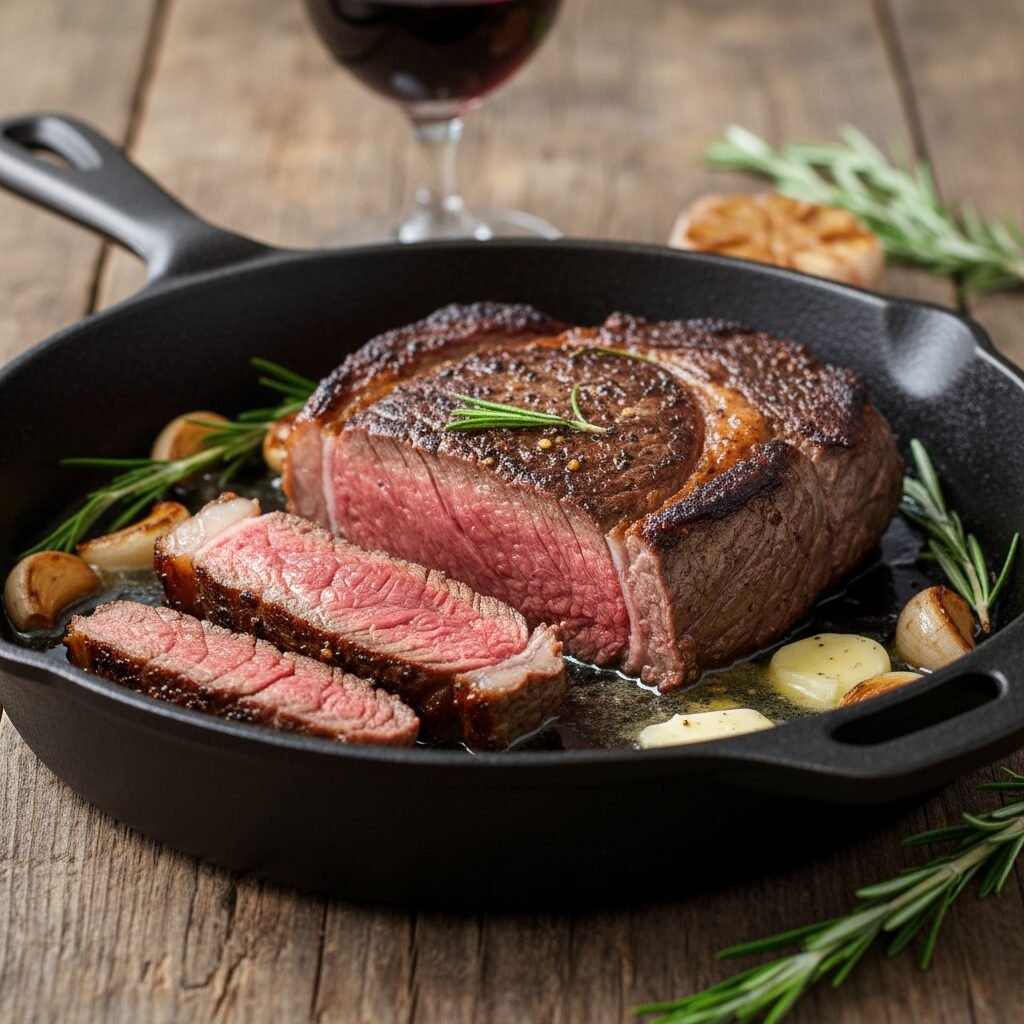

Cast Iron Steak
There is nothing quite like the sizzling sound of a steak hitting a hot cast iron skillet. This recipe is my secret weapon for date nights at home when I want to impress without spending hours in the kitchen.
10 minutes
15 minutes
25 minutes
2 Servings
Dinner
Stovetop / Pan Sear
American / Steakhouse
Gluten Free
Let’s be honest, getting a babysitter and heading out to a fancy steakhouse is a luxury that doesn’t happen nearly enough. But guess what? You absolutely do not need a professional chef or an industrial grill to make the best steak of your life. In fact, I’m going to go out on a limb and say that the steak you make in your own kitchen, in your trusty cast iron skillet, can actually be better than what you get at a restaurant.
For years, I was intimidated by cooking expensive cuts of meat. I was terrified I’d overcook it, turning a beautiful ribeye into a rubbery shoe sole. But once I discovered the magic of the cast iron sear and the butter baste, everything changed. The cast iron pan creates this incredible, golden-brown crust that locks in all the juices, while finishing it with garlic-herb butter adds a richness that is simply to die for.
This recipe is dedicated to all the busy moms who want to bring that 5-star dining experience to their own dining room table. Whether it’s Valentine’s Day, an anniversary, or just a Tuesday where you deserve a treat, this cast iron steak recipe is going to blow your mind. Pour yourself a glass of red wine, put on some jazz, and let’s get cooking!
History & Origins
Cooking meat on cast iron is a tradition that goes back centuries. Long before we had non-stick pans or fancy sous-vide machines, cast iron was the king of the kitchen. It was prized for its durability—literally lasting for generations—and its ability to hold heat like nothing else.
The technique we are using today, often called "pan-searing" or "butter-basting," is a classic French technique often found in high-end bistros. While grilling over an open flame is popular for backyard BBQs, most high-end steakhouses actually use flat-top griddles or heavy pans to get that uniform crust across the entire surface of the meat. By bringing this method into our homes with a cast iron skillet, we are tapping into a culinary history that prioritizes flavor and texture above all else. It connects us to a simpler time of cooking, where quality ingredients and the right tools were all you needed.
Why This Recipe Works
You might be wondering, "Why cast iron? Why not my regular non-stick pan?" The science here is actually pretty cool! Cast iron is a poor conductor of heat, but it is an excellent retainer of heat. This means that once it gets hot, it stays hot. When you drop a cold steak into a flimsy aluminum pan, the temperature of the pan drops instantly, and the meat ends up steaming in its own juices rather than searing. That is a tragedy.
With cast iron, the pan holds its temperature, allowing the Maillard Reaction to occur immediately. This is the chemical reaction between amino acids and reducing sugars that gives browned food its distinctive flavor. That dark, crusty exterior isn’t just for looks; it is pure flavor. Furthermore, the finishing step of adding butter, garlic, and herbs (also known as "arroser" in French cooking) allows the hot fat to cook the steak gently from all sides while infusing it with aromatics. It keeps the meat moist and adds a velvety finish that oil alone just cannot achieve.
Why You’ll Love This Recipe
- ✓Restaurant quality crust in minutes
- ✓Uses only one pan for easy cleanup
- ✓Butter-basting adds incredible richness
- ✓Saves money compared to dining out
- ✓Perfect for special occasions or date nights
- ✓High protein and keto-friendly
Equipment You’ll Need
- ✓10-inch or 12-inch Cast Iron Skillet
- ✓Long metal tongs
- ✓Instant-read meat thermometer
- ✓Paper towels
- ✓Plate for resting
- ✓Sharp chef’s knife
Ingredients
- ✓2 Ribeye or New York Strip steaks (at least 1.5 inches thick, well-marbled)
- ✓2 tablespoons high smoke point oil (Avocado oil or Grapeseed oil)
- ✓Kosher salt (generous amount)
- ✓Coarsely ground black pepper
- ✓4 tablespoons unsalted butter
- ✓4 cloves garlic (peeled and smashed)
- ✓4 sprigs fresh thyme
- ✓2 sprigs fresh rosemary
Instructions
- Step 1: Temper the Meat. Take your steaks out of the refrigerator at least 30 to 45 minutes before cooking. This brings them to room temperature and ensures they cook evenly. If you cook a cold steak, the outside will burn before the inside is done.
- Step 2: Dry and Season. Pat the steaks extremely dry with paper towels. Moisture is the enemy of a good sear! Season generously on all sides (including the edges) with kosher salt and black pepper.
- Step 3: Heat the Pan. Place your cast iron skillet over high heat. Let it get very hot—you want to see wisps of smoke coming off the pan. Add your oil and swirl to coat.
- Step 4: The Sear. Carefully lay the steaks into the hot pan away from you to avoid splashing oil. Sear undisturbed for about 2-3 minutes until a deep, golden-brown crust forms. Flip the steaks.
- Step 5: Butter Baste. Cook the second side for about 1 minute, then reduce heat to medium-high. Add the butter, smashed garlic, thyme, and rosemary to the pan. As the butter melts and foams, tilt the pan slightly and use a large spoon to continuously scoop the hot, flavored butter over the steaks. Do this for another 2-3 minutes.
- Step 6: Check Temperature. Use your instant-read thermometer to check for doneness. Aim for 120°F (49°C) for rare, 130°F (54°C) for medium-rare, or 140°F (60°C) for medium. Remember, the temp will rise about 5 degrees while resting.
- Step 7: Rest. Remove the steaks from the pan and transfer them to a warm plate or cutting board. Pour the remaining butter from the pan over the steaks. Let them rest for at least 5 to 10 minutes. This is crucial for juicy meat!
- Step 8: Serve. Slice against the grain and serve immediately.
Expert Cooking Tips
- ✓Don’t skimp on salt: Steak is a thick cut of meat, so surface salt is the only seasoning it gets. Be generous!
- ✓Use the right oil: Do not use Extra Virgin Olive Oil for searing; it has a low smoke point and will burn. Stick to Avocado or Grapeseed oil.
- ✓Ventilation is key: This process creates smoke. Turn on your kitchen fan and open a window before you start.
- ✓Garlic watch: Be careful not to burn the garlic during the basting phase. If it gets too dark, place it on top of the steak.
Substitutions and Variations
If you aren’t a fan of Ribeye, you can absolutely use New York Strip or Filet Mignon. Filet is leaner and won’t have as much fat to render, so the butter basting is extra important there. For a dairy-free option, you can use a high-quality plant-based butter, though the browning effect might differ slightly. If you don’t have fresh thyme or rosemary, you can use oregano, but fresh herbs are vastly superior to dried for this specific technique as dried herbs will burn instantly in the hot fat.
Common Mistakes to Avoid
The biggest mistake I see people make is moving the steak too much. Once you put it in the pan, leave it alone! If you keep lifting it to check, you interrupt the searing process. Another common error is cutting into the steak too soon. I know it smells amazing, but if you cut it right out of the pan, all those precious juices will run out onto the cutting board, leaving you with dry meat. Let it rest!
Serving Suggestions
To make this a complete steakhouse dinner at home, I love serving this with creamy garlic mashed potatoes or a loaded baked potato. For greens, sautéed spinach or roasted asparagus with lemon works beautifully to cut through the richness of the beef. And, of course, a bold Cabernet Sauvignon or Malbec is the perfect wine pairing to complement the fatty ribeye.
Storage and Reheating Tips
Steak is best enjoyed fresh, but leftovers can be stored in an airtight container in the fridge for up to 3 days. To reheat, do not use the microwave! It will turn your beautiful steak gray and chewy. Instead, slice it cold for salads or sandwiches, or gently reheat it in a skillet over low heat just until warm.
Nutrition Facts (Estimated)
| Serving Size | 1 Steak (approx 10oz) |
| Calories | 650 |
| Fat | 48g |
| Saturated Fat | 22g |
| Unsaturated Fat | 20g |
| Trans Fat | 0g |
| Cholesterol | 160mg |
| Sodium | 450mg |
| Carbohydrates | 2g |
| Fiber | 0g |
| Sugar | 0g |
| Protein | 52g |
Frequently Asked Questions
My cast iron is smoking a lot, is that normal?
Yes! To get a good crust, you need high heat. Make sure your exhaust fan is on high and maybe open a window. Using an oil with a high smoke point (like avocado oil) helps minimize this, but some smoke is part of the searing game.
How do I clean my cast iron skillet after cooking steak?
While the pan is still warm, rinse it with hot water and use a scraper or chainmail scrubber to remove stuck-on bits. Dry it immediately and thoroughly on the stove, then rub a thin layer of oil on it. Avoid soap if possible to maintain the seasoning.
Can I use frozen steak?
Definitely not for this recipe. Frozen steak will release too much water and won’t sear properly. Thaw it completely in the fridge overnight and let it come to room temperature before cooking.
What if my steak is really thick (over 2 inches)?
If you have a massive steak, the ‘reverse sear’ method or finishing it in the oven is best. Sear it on the stove as directed, then transfer the whole skillet into a 400°F oven for a few minutes until it reaches your desired internal temperature.
Why is my crust falling off?
This usually happens if the steak was too wet when it went into the pan. Ensure you pat it bone-dry with paper towels before seasoning.
Do I really need a meat thermometer?
I highly recommend it. The ‘touch test’ is unreliable. A thermometer is the only way to guarantee you don’t overcook an expensive cut of meat.
Can I use salted butter?
You can, but I prefer unsalted butter so I can control the sodium level. If you use salted butter, just go a little lighter on the initial salt seasoning.
What is the best cut of steak for cast iron?
Ribeye is king because the fat renders beautifully in the pan. New York Strip is a close second. Sirloin is okay but less forgiving.
Conclusion
There you have it, friends! The secret to the perfect steak isn’t a fancy grill or a culinary degree; it’s a heavy pan, some butter, and a little bit of patience. I hope this recipe gives you the confidence to tackle steak night at home. Once you master this method, you’ll find yourself looking for excuses to celebrate just so you can fire up the cast iron. Enjoy every bite!