
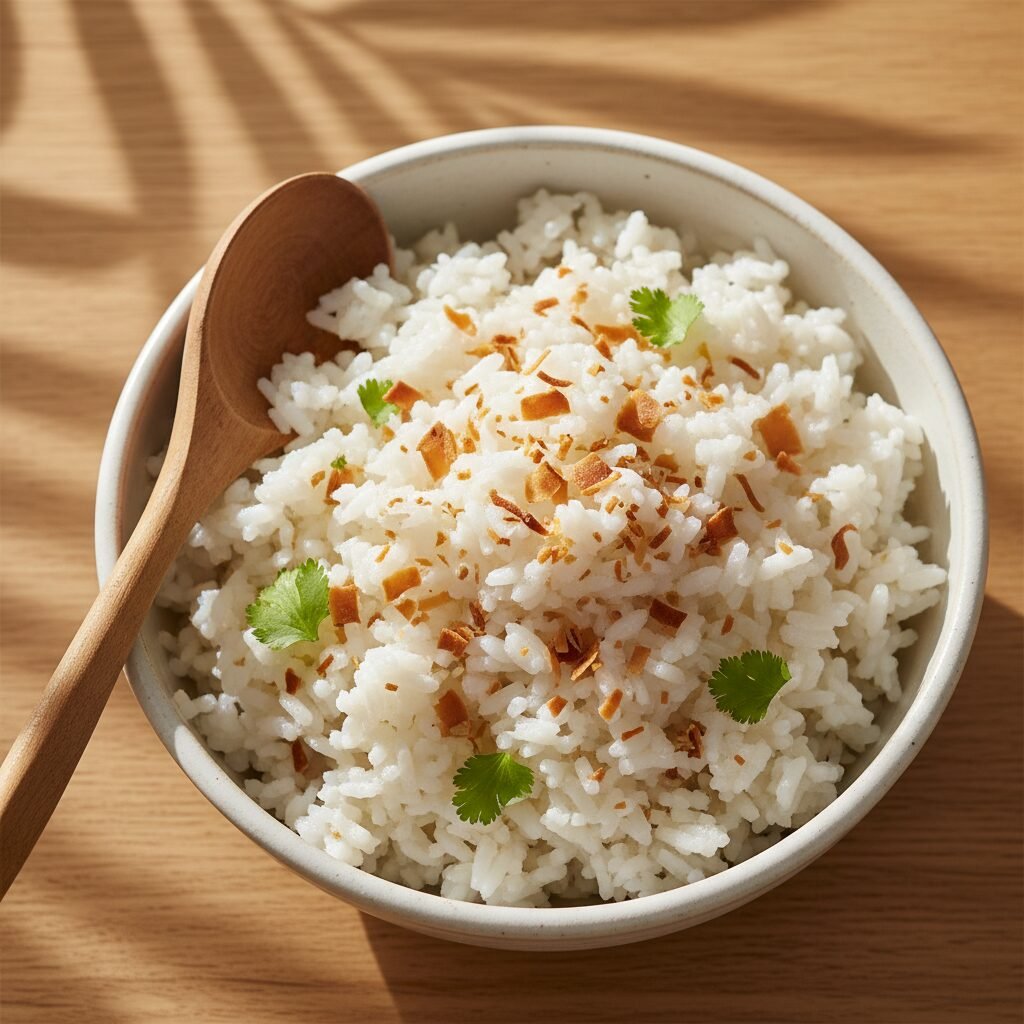

Coconut Rice
Transform your dinner routine with this incredibly aromatic and fluffy Coconut Rice. It is sweet, creamy, and salty all at once, and honestly, it is so good I sometimes eat it straight out of the pot!
5 minutes
20 minutes
25 minutes
4 servings
Side Dish
Stovetop
Thai / Fusion
Vegan
Hey friends! Welcome back to my kitchen. Today, we are elevating the humble side dish into something truly spectacular. If you have been stuck in a rut making the same old plain white rice for dinner every night, prepare to have your mind blown. We are making Coconut Rice!
There is something so magical about the smell of coconut milk simmering on the stove. It instantly transports me to a beachside vacation, even if I am just standing in my kitchen in yoga pants surrounded by laundry. This rice is rich, slightly sweet, perfectly salted, and has that restaurant-quality fluffiness that we all crave but struggle to replicate at home.
My kids absolutely devour this. It is mild enough for picky eaters but flavorful enough to stand up to spicy curries or zesty lime chicken. Plus, it is one of those “dump and go” recipes that looks impressive but takes zero extra effort compared to regular rice. Grab your favorite pot, and let’s get cooking!
History & Origins
While we might think of Coconut Rice as a fun tropical side dish, it actually has deep roots in many cultures around the world, particularly in Southeast Asia, India, and parts of South America and the Caribbean. You might recognize it as the base for the famous Malaysian dish Nasi Lemak, where it is cooked with pandan leaves and ginger, or as a staple in Thai cuisine served alongside spicy curries to cool down the palate.
Historically, coconut palms were abundant in tropical regions, making coconut milk a readily available source of fat and flavor long before dairy or imported oils were common. Cooking grains in coconut milk was a brilliant way to add calories, preservation qualities, and incredible taste to simple staples. Today, we are making a version that borrows from the Thai tradition using Jasmine rice, which provides that signature floral aroma and soft, sticky texture.
Why This Recipe Works
Have you ever wondered why restaurant rice tastes so much better than what we make at home? It usually comes down to two things: fat and salt. In this recipe, the fat comes from the coconut milk. When the rice grains cook in that rich, fatty liquid, each grain gets coated in oil. This prevents them from clumping together into a mushy block, resulting in distinct, fluffy grains.
Scientifically, the fat encapsulates the starch granules. Additionally, we use a specific ratio of liquid to rice. Coconut milk is thicker than water, so we have to account for that viscosity. By mixing water (or broth) with the coconut milk, we ensure there is enough free water to hydrate the rice kernel fully while the coconut cream reduces down to coat the outside. The addition of a little sugar isn’t to make it a dessert; it is there to balance the natural acidity of the rice and enhance the coconut flavor, much like salt brings out the flavor in chocolate.
Why You’ll Love This Recipe
- ✓Ready in under 25 minutes
- ✓Vegan and Gluten-Free naturally
- ✓Kid-friendly sweetness
- ✓Uses pantry staples
- ✓Perfect meal prep base
- ✓Restaurant quality texture
Equipment You’ll Need
- ✓Medium saucepan with a tight-fitting lid
- ✓Fine mesh sieve
- ✓Fork for fluffing
- ✓Measuring cups
Ingredients
- ✓2 cups Jasmine rice (high quality is best)
- ✓1 can (13.5 oz) full-fat coconut milk (unsweetened)
- ✓1.5 cups water (or coconut water for extra flavor)
- ✓1 teaspoon sea salt
- ✓2 tablespoons granulated sugar (can substitute agave or maple syrup)
- ✓Optional: 1 fresh pandan leaf (knotted)
- ✓Garnish: Toasted coconut flakes, chopped cilantro, or lime wedges
Instructions
- Rinse the Rice: Place the Jasmine rice in a fine-mesh sieve and rinse under cold running water. Keep rinsing until the water runs clear. This removes excess surface starch and prevents the rice from becoming gummy. Shake off excess water.
- Combine Ingredients: In a medium saucepan, combine the rinsed rice, the entire can of coconut milk, water, sugar, and salt. If using a pandan leaf, toss it in now. Stir everything gently to dissolve the sugar and salt.
- Bring to Boil: Place the pot over medium-high heat. Watch it closely! Coconut milk can boil over quickly. As soon as it reaches a rolling boil, give it one final stir to ensure rice isn’t sticking to the bottom.
- Simmer: Immediately reduce the heat to the lowest setting (low/simmer). Cover the pot with a tight-fitting lid. Do not lift the lid!
- Cook: Let it simmer undisturbed for 18 to 20 minutes. The liquid should be completely absorbed.
- Rest: Remove the pot from the heat (keep the lid on!) and let it sit for another 10 minutes. This steaming step is the secret to fluffy rice.
- Fluff and Serve: Remove the lid and discard the pandan leaf if used. Gently fluff the rice with a fork to mix the coconut cream (which sometimes settles on top) throughout the rice. Garnish with toasted coconut or cilantro and serve warm.
Expert Cooking Tips
- ✓Do Not Peek! Lifting the lid releases the steam needed to cook the top layer of rice. Trust the process.
- ✓Use Full-Fat Milk: Light coconut milk has too much water content and won’t give you that rich, creamy mouthfeel. Go for the full-fat canned version.
- ✓Rinsing is Non-Negotiable: If you skip rinsing, your rice will be gluey. The starch needs to go!
- ✓Pot Choice Matters: Use a heavy-bottomed pot to prevent scorching. Coconut milk contains sugar which burns easily if the heat is too high.
Substitutions and Variations
If you don’t have Jasmine rice, you can use Basmati rice, though the texture will be less sticky and more separate. I would avoid short-grain sushi rice unless you want a very sticky result, and definitely avoid brown rice as the liquid ratios and cook times are completely different.
For the sweetener, you can swap white sugar for coconut sugar for a deeper, caramel-like color and flavor, or maple syrup. If you are watching your sodium, feel free to reduce the salt, but don’t eliminate it entirely—rice needs salt to taste like anything!
Common Mistakes to Avoid
The biggest mistake I see is boiling it too vigorously. Once the lid is on, the heat must be on low. If it’s too high, the bottom will burn before the top is cooked. Another common issue is using sweetened coconut cream (like for piña coladas) instead of unsweetened coconut milk. This will result in a dessert rice that is way too sugary for dinner!
Serving Suggestions
This rice is the ultimate partner for flavor-packed dishes. I love serving it with:
- Spicy Thai Red Curry: The sweet rice cuts through the heat beautifully.
- Mango Salsa Salmon: A tropical match made in heaven.
- Garlic Lime Shrimp: Simple and zesty.
- Hawaiian Huli Huli Chicken: The perfect BBQ side.
You can also serve it simply with some fresh mango slices for a sweet sticky-rice style dessert!
Storage and Reheating Tips
Refrigerator: Store leftovers in an airtight container in the fridge for up to 4 days. Note that the coconut fat will harden when cold, making the rice seem firm.
Reheating: To reheat, sprinkle a teaspoon of water over the rice and microwave it covered for 60-90 seconds. This steams it back to life. You can also reheat it in a pan with a splash of water.
Freezing: Yes, you can freeze it! Portion it into freezer bags, squeeze out the air, and freeze for up to 2 months. Thaw overnight in the fridge before reheating.
Nutrition Facts (Estimated)
| Serving Size | 1 cup |
| Calories | 380 |
| Fat | 14g |
| Saturated Fat | 12g |
| Unsaturated Fat | 2g |
| Trans Fat | 0g |
| Cholesterol | 0mg |
| Sodium | 320mg |
| Carbohydrates | 58g |
| Fiber | 2g |
| Sugar | 3g |
| Protein | 5g |
Frequently Asked Questions
Can I use brown rice for this recipe?
You can, but you will need to increase the liquid (about 1/2 cup more water) and the cooking time (usually 40-45 minutes). The texture will be nuttier and chewier.
Why is my rice mushy?
This usually happens if you didn’t rinse the rice enough, added too much water, or stirred it while it was simmering. Remember, stir once at the boil, then hands off!
Can I make this in a rice cooker?
Absolutely! Just add the ingredients to your rice cooker bowl in the same order. Stir to dissolve sugar/salt, and run the standard ‘White Rice’ cycle. It works perfectly.
Is coconut rice sweet or savory?
It is a balance of both, but leans savory. Think of it like a sweet dinner roll or cornbread—it has sweetness, but it’s meant to be eaten with savory main courses.
Can I use coconut water instead of plain water?
Yes! This maximizes the coconut flavor. It makes the rice slightly sweeter, so you might want to reduce the added sugar by a teaspoon.
My rice is hard in the middle. What do I do?
This means it ran out of water before cooking through. Add 2-3 tablespoons of hot water, cover the lid tightly, and cook on very low for another 5 minutes.
What is the best brand of coconut milk?
I prefer brands like Chaokoh or Aroy-D. Look for cans that say ‘Coconut Milk’ and not ‘Coconut Cream’ or ‘Lite Coconut Milk’.
Can I use carton coconut milk (the kind for drinking)?
No, please don’t! The carton milk is diluted and often flavored with vanilla. You need the thick, canned culinary coconut milk for the fat content and texture.
Conclusion
And there you have it, busy mamas! A restaurant-quality side dish that takes barely any effort but tastes like a million bucks. I promise, once you try this Coconut Rice, you will have a hard time going back to plain water-boiled rice. It adds such a special touch to weeknight dinners and makes even simple grilled chicken feel like a tropical feast.
If you make this recipe, please snap a photo and tag me on Instagram or leave a comment below! I love seeing your creations. Happy cooking!