
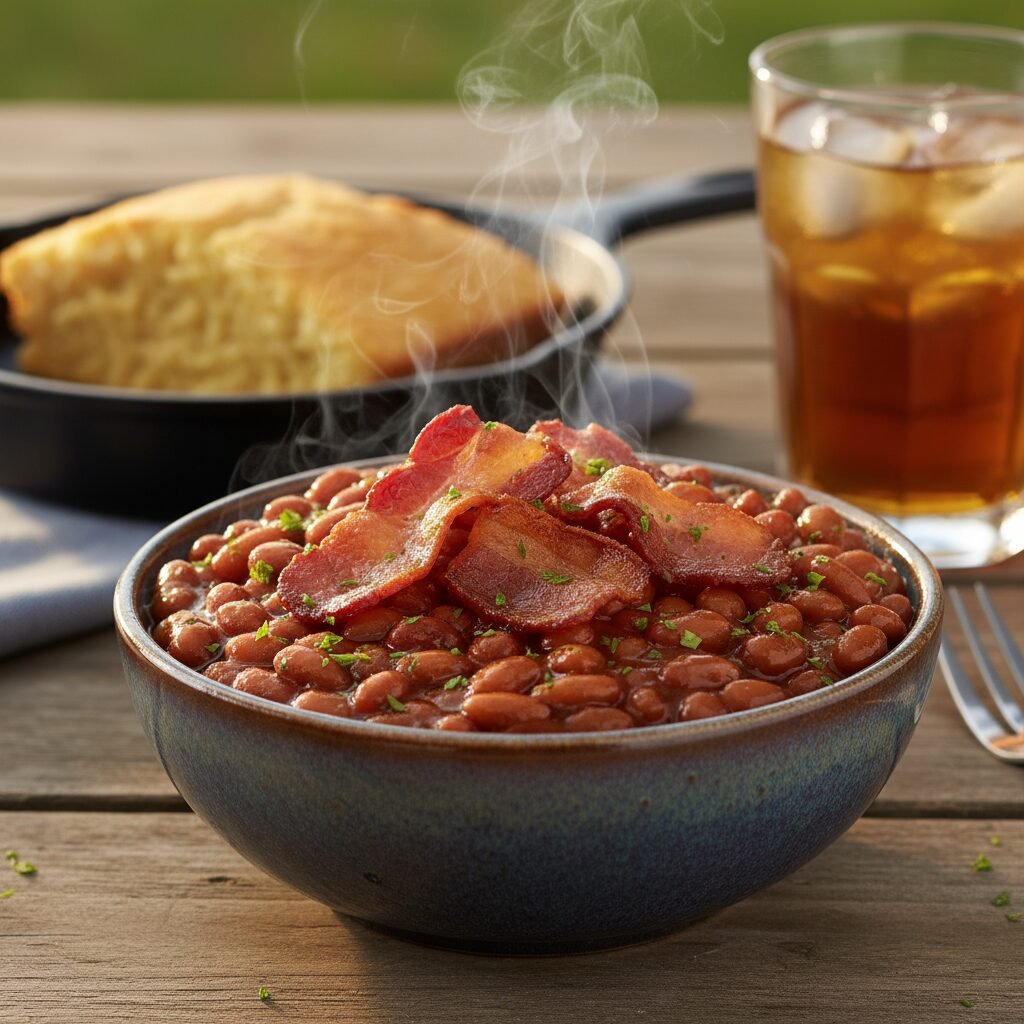

Crockpot Baked Beans
If you are looking for that quintessential side dish that screams summer comfort, look no further. These Crockpot Baked Beans are miles better than anything you will find in a can—creamy, tender, and packed with smoky bacon flavor.
15 minutes
8 hours
8 hours 15 minutes (plus soaking time)
10 Servings
Side Dish
Slow Cooker
American
Gluten Free
Let’s be honest, is it really a summer barbecue without a big, bubbling pot of baked beans on the table? I don’t think so! Growing up, baked beans were always a staple at our family reunions and church potlucks. But for years, I admit, I just grabbed the can off the shelf, doctored it up with a little extra ketchup, and called it a day. That was until I discovered the absolute magic of making them from scratch in the slow cooker. Friends, this is a total game-changer.
There is something incredibly nostalgic and comforting about the smell of beans slow-cooking in a rich, molasses-based sauce all day long. The aroma fills the entire house, promising a dinner that is going to be hearty and soul-satisfying. Unlike canned beans, which can sometimes be mushy or overly sweet with high-fructose corn syrup, these homemade crockpot beans have the perfect texture—tender but with a slight bite—and a depth of flavor that you just can’t fake.
This recipe is my “secret weapon” for hosting. Why? Because you toss everything into the Crockpot in the morning, and by dinner time, you have a gourmet side dish that tastes like you spent hours slaving over a hot stove. The combination of salty bacon, sweet brown sugar, tangy mustard, and deep, earthy molasses creates a sauce that is thick, glossy, and absolutely finger-licking good. Whether you are serving them alongside pulled pork sandwiches, grilled burgers, or just a simple hot dog, these beans steal the show every single time.
History & Origins
Baked beans are as American as apple pie, but their roots go back much further than the 4th of July cookouts we associate them with today. The origins of this dish can be traced back to Native American cuisine, specifically in the Northeast region. Indigenous peoples would cook beans with maple syrup and bear fat in earthenware pots, burying them in “bean holes” lined with hot stones to cook slowly over a long period. It was the original slow cooking method!
When English colonists arrived in the 17th century, they adapted this method. However, due to the triangular trade, molasses and salt pork became more readily available than maple syrup and bear fat, leading to the creation of the famous “Boston Baked Beans.” Boston became so synonymous with the dish that it earned the nickname “Beantown.”
Over the centuries, the recipe evolved. In the 19th century, the canning industry exploded, and baked beans became one of the first convenience foods, solidifying their place in American pantries. However, the revival of the slow cooker (Crockpot) in the 1970s brought us full circle, allowing home cooks to return to the traditional “low and slow” method without digging a hole in the backyard. This recipe honors that tradition, blending the convenience of modern appliances with the heritage of slow-simmered flavor.
Why This Recipe Works
You might be wondering, “Why go through the trouble of soaking dried beans when I can just open a can?” The answer lies in the culinary science of texture and flavor absorption. Canned beans are already fully cooked, meaning they can’t absorb much more flavor without turning into mush. When you start with dried beans (specifically Navy beans), you control the texture from start to finish.
The magic happens during the long, low-temperature simmer in the Crockpot. This allows the starches in the beans to break down gently, thickening the sauce naturally without the need for excessive cornstarch. The lengthy cooking time also allows the sugars from the molasses and brown sugar to caramelize and penetrate the bean skins, rather than just sitting on top.
Furthermore, the acidity balance in this recipe is key. We add ketchup, mustard, and vinegar. While acid can sometimes prevent beans from softening if added too early, the long soak and the specific ratio used here ensures the beans become tender while retaining their shape. The bacon fat renders out slowly, infusing every single bean with a smoky richness that liquid smoke just can’t replicate. It is the perfect marriage of chemistry and comfort food.
Why You’ll Love This Recipe
- ✓No mushy texture—perfectly tender beans every time
- ✓Deep, complex flavor profile with real bacon and molasses
- ✓Set-it-and-forget-it convenience for busy moms
- ✓Budget-friendly way to feed a large crowd
- ✓Fills your home with the most amazing aroma
- ✓Freezes beautifully for future meals
Equipment You’ll Need
- ✓6-quart or larger Slow Cooker (Crockpot)
- ✓Large mixing bowl (for soaking)
- ✓Skillet or Frying Pan
- ✓Colander
- ✓Measuring cups and spoons
- ✓Sharp knife and cutting board
Ingredients
- ✓1 lb dried Navy beans (picked over and rinsed)
- ✓6 strips of thick-cut bacon, chopped into 1-inch pieces
- ✓1 medium yellow onion, finely diced
- ✓1/2 green bell pepper, diced (optional, but adds great flavor)
- ✓3 cups water (hot)
- ✓1/2 cup molasses (unsulfured is best)
- ✓1/2 cup dark brown sugar, packed
- ✓1/2 cup ketchup
- ✓2 tablespoons apple cider vinegar
- ✓2 tablespoons Dijon mustard or spicy brown mustard
- ✓1 teaspoon salt (adjust to taste)
- ✓1/2 teaspoon black pepper
- ✓1/4 teaspoon smoked paprika
Instructions
- Step 1: The Soak. Place the dried navy beans in a large bowl and cover with 3-4 inches of cold water. Let them soak overnight (at least 8 hours). If you are in a rush, you can use the ‘quick soak’ method: boil them for 2 minutes, turn off the heat, cover, and let sit for 1 hour. Drain and rinse the beans thoroughly after soaking.
- Step 2: Crisp the Bacon. In a skillet over medium heat, cook the chopped bacon until it is crispy and the fat has rendered. Remove the bacon with a slotted spoon and place it in the bottom of your slow cooker. Keep about 1 tablespoon of bacon grease in the skillet.
- Step 3: Sauté Aromatics. Add the diced onion and green pepper to the skillet with the reserved bacon grease. Sauté for 3-5 minutes until the onion is translucent and fragrant. Transfer this mixture to the slow cooker.
- Step 4: Mix the Sauce. In a medium bowl, whisk together the hot water, molasses, brown sugar, ketchup, apple cider vinegar, mustard, salt, pepper, and smoked paprika until smooth.
- Step 5: Combine. Add the drained, soaked beans to the slow cooker on top of the bacon and onions. Pour the sauce mixture over everything. Stir gently to combine.
- Step 6: Slow Cook. Cover and cook on LOW for 8 to 10 hours, or until the beans are tender and the sauce has thickened. (I do not recommend cooking on High for beans, as it can split the skins).
- Step 7: Final Touch. Taste the beans. If you want them sweeter, add a touch more brown sugar. If you want more tang, add a splash of vinegar. Serve warm and enjoy the compliments!
Expert Cooking Tips
- ✓Bean Freshness Matters: Believe it or not, dried beans can get ‘old.’ If they have been sitting in your pantry for 2 years, they might never soften properly. Buy a fresh bag for the best results.
- ✓Don’t Skip the Soak: Soaking not only drastically reduces cooking time but also helps remove some of the complex sugars that cause digestion issues (gas). Your tummy will thank you!
- ✓Thickening the Sauce: If your beans are tender but the sauce is still too thin for your liking, remove the lid for the last 30-60 minutes of cooking to let some liquid evaporate. Alternatively, mash a few beans against the side of the pot to naturally thicken it.
- ✓Vegetarian Option: You can omit the bacon and use a tablespoon of olive oil or butter to sauté the onions. Add a teaspoon of liquid smoke or extra smoked paprika to mimic the bacon flavor.
Substitutions and Variations
Flexibility is the name of the game for us busy moms! If you can’t find Navy beans, Great Northern beans or Pinto beans are excellent substitutes, though Pinto beans will change the flavor profile slightly to be more ‘western.’ If you are out of molasses, you can swap it for maple syrup, though the flavor will be lighter and less earthy. No apple cider vinegar? White vinegar works in a pinch, but reduce the amount slightly as it is sharper. And for the bacon, you can easily swap in salt pork or even leftover ham bone if you have one from a holiday dinner!
Common Mistakes to Avoid
The biggest mistake people make with homemade baked beans is adding salt or acidic ingredients (like vinegar and ketchup) too early if the beans haven’t been soaked properly. Acid can toughen the bean skins, keeping them hard indefinitely. However, with the long overnight soak directed in this recipe, this is rarely an issue. Another common pitfall is cooking on HIGH. Beans need a gentle simmer to become creamy; boiling them furiously on High often results in blown-out skins and a mealy texture. Patience is key here!
Serving Suggestions
These beans are the ultimate sidekick. They pair beautifully with grilled meats like ribs, brisket, or burgers. For a classic comfort meal, serve them alongside homemade cornbread (perfect for mopping up that sauce!) and a crisp coleslaw to cut through the richness. If you have leftovers, serve them on thick slices of toast for a British-inspired breakfast, or top a baked potato with them for a quick and filling lunch.
Storage and Reheating Tips
Refrigerator: Store leftovers in an airtight container in the fridge for up to 4-5 days. The flavors actually get better after sitting for a day!
Freezer: These beans freeze exceptionally well. Let them cool completely, then transfer to a freezer-safe bag or container. They will keep for up to 3 months. Thaw overnight in the fridge before reheating.
Reheating: Reheat in a saucepan over medium-low heat. You may need to add a splash of water or broth as the sauce tends to thicken significantly when cold.
Nutrition Facts (Estimated)
| Serving Size | 1 cup |
| Calories | 345 kcal |
| Fat | 6g |
| Saturated Fat | 2g |
| Unsaturated Fat | 3g |
| Trans Fat | 0g |
| Cholesterol | 15mg |
| Sodium | 450mg |
| Carbohydrates | 58g |
| Fiber | 14g |
| Sugar | 18g |
| Protein | 16g |
Frequently Asked Questions
Can I use canned beans instead of dried?
Yes, you can! If you want a faster version, rinse and drain 3 cans (15oz each) of navy beans. Sauté your bacon and onions, mix the sauce ingredients (reduce water to 1/2 cup), and cook on Low for 3-4 hours just to blend the flavors.
Why are my beans still hard after 8 hours?
This usually happens if the beans were very old or if you have hard water, which can slow down softening. If they are still hard, just keep cooking! Check liquid levels and add a bit more boiling water if needed.
Do I really have to soak the beans?
Technically, you can cook dried beans without soaking, but it takes much longer and the beans cook unevenly. Soaking ensures a creamy, uniform texture and helps with digestion. I highly recommend it.
Is this recipe gluten-free?
Yes, naturally! Just double-check your BBQ sauce or ketchup labels to ensure no hidden wheat-based thickeners are used, but generally, these ingredients are safe.
Can I make this in an Instant Pot?
Absolutely. Sauté the bacon and onion in the pot, add soaked beans and sauce ingredients (reduce water to 2 cups). Cook on High Pressure for 25-30 minutes with a natural release for 15 minutes.
Can I prep this the night before?
Yes! You can mix the sauce and sauté the bacon/veggies the night before and store them in the fridge. In the morning, just dump the soaked beans and the mixture into the crockpot and turn it on.
What kind of molasses should I use?
Stick to ‘Unsulfured’ or ‘Original’ molasses (like Grandma’s brand). Avoid ‘Blackstrap’ molasses for this recipe, as it is very bitter and can overpower the sweet, smoky balance we are aiming for.
Can I add ground beef?
Yes! If you add browned ground beef, this transforms into ‘Cowboy Beans.’ It makes the dish heartier and can almost serve as a main course.
Conclusion
There you have it, mamas! The only baked bean recipe you will ever need. Once you taste the difference between these slow-cooked beauties and the canned version, there is no going back. It’s the perfect dish to bring to a potluck if you want to be asked for the recipe about ten times before you leave. I hope your family loves these as much as mine does. Happy cooking!