
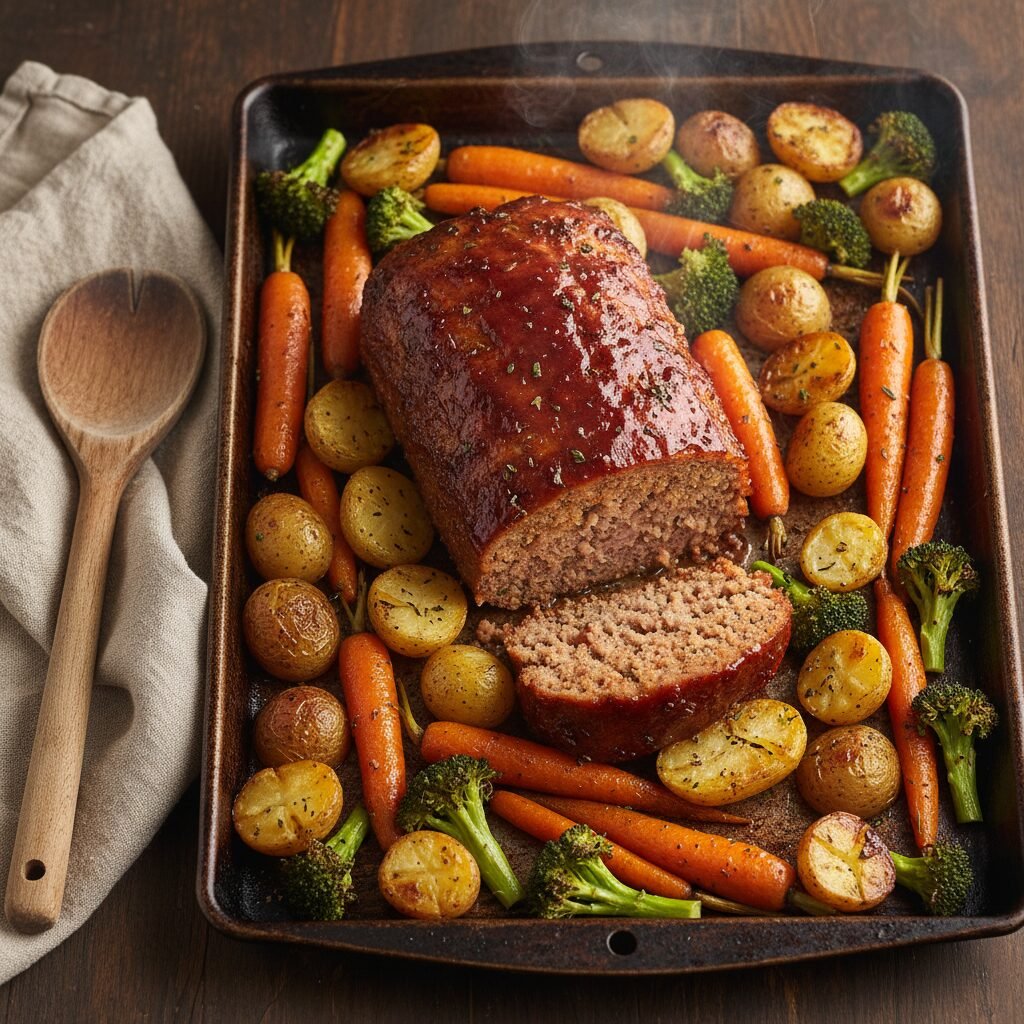

Easy Meatloaf And Vegetables
Say goodbye to the pile of dishes and hello to your new favorite comfort food! This sheet pan meatloaf is incredibly moist, topped with a sticky-sweet glaze, and roasted simultaneously with seasoned root vegetables for a complete meal that practically cooks itself.
20 minutes
55 minutes
1 hour 15 minutes
6 Servings
Dinner
Baking / Roasting
American
Omnivore
Let’s be real for a second, mamas—5:00 PM is often the most chaotic time of the day. The kids are home, homework is scattered on the table, and the looming question of "What’s for dinner?" starts to feel a little overwhelming. That is exactly why I am absolutely obsessed with this Easy Meatloaf and Vegetables recipe. It is not just a meal; it is a total weeknight savior that brings everyone to the table with a smile.
Forget the dry, flavorless bricks that gave meatloaf a bad rap in the past. We are talking about a succulent, tender loaf that is bursting with savory flavor and topped with a glaze so good you could eat it with a spoon. But the real magic? It cooks on a single sheet pan right alongside your potatoes and carrots. That means while the oven does all the heavy lifting, you can actually sit down for a moment (or tackle that laundry mountain).
This recipe creates that perfect nostalgic comfort food vibe but with a modern, convenient twist. The meat juices subtly flavor the roasting vegetables, and the veggies get those crispy, caramelized edges that even the picky eaters can’t resist. Whether you are meal prepping for a busy week or just need a wholesome Sunday supper, this one-pan wonder is about to become a permanent resident in your recipe binder.
History & Origins
Meatloaf has a surprisingly long and fascinating history that goes way beyond the 1950s American diner scene. Believe it or not, the concept of mixing minced meat with fillers and spices dates back to ancient Rome! A recipe for chopped meat patties mixed with bread soaked in wine appears in the famous Roman cookbook, Apicius, from the 5th century.
However, the meatloaf we know and love today really found its footing during the Great Depression. Ingenious home cooks needed a way to stretch expensive proteins to feed large families. By mixing ground meat with inexpensive fillers like breadcrumbs, crackers, or oats, they could create a hearty, filling meal on a budget. It became a symbol of American resilience and home cooking.
By the 1950s, meatloaf had solidified its place as a dinner staple, often serving as a canvas for the new convenient processed foods of the era, like ketchup and soup mixes. Today, we are elevating this classic by focusing on fresh ingredients and better techniques, turning a humble budget meal into a gourmet family feast.
Why This Recipe Works
There is a little bit of culinary science behind why this specific recipe works so well, and it all comes down to moisture retention and heat circulation. First, we use a technique called a panade—a paste made by soaking breadcrumbs in milk before mixing them into the meat. The starches in the bread gel with the liquid, coating the protein molecules in the meat and preventing them from tightening up too much during cooking. This guarantees a tender texture rather than a tough, rubbery loaf.
Secondly, cooking the meatloaf free-form on a sheet pan rather than in a loaf pan allows for better caramelization. In a traditional loaf pan, the meat steams in its own juices, often resulting in a grey, soggy exterior. On a sheet pan, hot air circulates around the entire loaf, roasting it and allowing that delicious glaze to become sticky and tacky. Simultaneously, the vegetables benefit from the rendered fat of the meatloaf, which adds a depth of savory richness that oil alone simply cannot achieve.
Why You’ll Love This Recipe
- ✓One-Pan Cleanup: Everything cooks on a single baking sheet, meaning fewer dishes for you to wash.
- ✓Moisture-Lock Method: Uses a milk and breadcrumb panade to ensure the meatloaf is never dry.
- ✓Kid-Friendly Veggies: Roasting brings out the natural sweetness in carrots and potatoes.
- ✓Budget-Friendly: Uses economical ground beef and root vegetables to feed a crowd.
- ✓Meal Prep Gold: Leftovers taste even better the next day in sandwiches.
Equipment You’ll Need
- ✓Large Rimmed Baking Sheet (Sheet Pan)
- ✓Large Mixing Bowl
- ✓Small Mixing Bowl (for glaze)
- ✓Chef’s Knife
- ✓Cutting Board
- ✓Parchment Paper or Aluminum Foil
- ✓Meat Thermometer
Ingredients
- ✓For the Meatloaf:
- ✓1.5 lbs Ground Beef (85% lean / 15% fat is ideal)
- ✓1 cup Panko breadcrumbs (or crushed crackers)
- ✓1/2 cup Whole milk
- ✓1 medium Onion, finely diced or grated
- ✓2 cloves Garlic, minced
- ✓1 large Egg, beaten
- ✓1 tbsp Worcestershire sauce
- ✓1 tsp Dried thyme
- ✓1 tsp Salt
- ✓1/2 tsp Black pepper
- ✓For the Glaze:
- ✓1/2 cup Ketchup
- ✓1 tbsp Brown sugar
- ✓1 tsp Dijon mustard
- ✓For the Vegetables:
- ✓1 lb Baby potatoes, halved (or quartered if large)
- ✓3 large Carrots, peeled and cut into 1-inch chunks
- ✓1 head Broccoli, cut into florets
- ✓2 tbsp Olive oil
- ✓1/2 tsp Garlic powder
- ✓Salt and Pepper to taste
Instructions
- Preheat and Prep: Preheat your oven to 400°F (200°C). Line a large rimmed baking sheet with parchment paper or foil for easy cleanup.
- Make the Panade: In a large mixing bowl, combine the breadcrumbs and milk. Let this sit for about 5 minutes until the milk is absorbed. This is the secret to moist meatloaf!
- Mix the Meatloaf: To the soaked breadcrumbs, add the ground beef, diced onion, garlic, egg, Worcestershire sauce, thyme, salt, and pepper. Gently mix with your hands just until combined. Do not overmix or the meatloaf will be tough.
- Shape the Loaf: Transfer the meat mixture to the center of your prepared baking sheet. Shape it into a loaf roughly 9×5 inches in size.
- Prep the Root Veggies: In a bowl, toss the potatoes and carrots with 1 tablespoon of olive oil, garlic powder, salt, and pepper. Arrange these hard vegetables around the meatloaf on the sheet pan.
- First Bake: Place the pan in the oven and bake for 25 minutes.
- Make the Glaze: While the meatloaf bakes, whisk together the ketchup, brown sugar, and Dijon mustard in a small bowl.
- Add Glaze and Soft Veggies: Remove the pan from the oven carefully. Brush the glaze generously over the meatloaf. Toss the broccoli florets with the remaining 1 tablespoon of olive oil and a pinch of salt, then add them to the pan (nestle them in with the other veggies).
- Final Bake: Return the pan to the oven and bake for another 20-30 minutes, or until the meatloaf reaches an internal temperature of 160°F (71°C) and the vegetables are tender and roasted.
- Rest and Serve: Let the meatloaf rest on the pan for at least 10 minutes before slicing. This locks the juices inside. Serve slices alongside the roasted veggies and enjoy!
Expert Cooking Tips
- ✓Grate the Onion: If you have picky eaters who hate chunks of onion, use a box grater to grate the onion into the meat mixture. It adds flavor and moisture without the texture.
- ✓Don’t Skip the Rest: Resting the meatloaf is crucial. If you cut it immediately, all the juices run out, and the loaf may crumble.
- ✓Uniform Veggie Cuts: Try to cut your potatoes and carrots into similar sizes so they cook at the same rate.
- ✓Check Temp Early: Ovens vary! Start checking the internal temperature around the 45-minute mark to ensure you don’t overcook it.
Substitutions and Variations
This recipe is incredibly versatile! If you are looking to lighten things up, you can substitute the ground beef with ground turkey or chicken. Just keep in mind that poultry has less fat, so you might want to add a tablespoon of olive oil to the mix to keep it moist. For a gluten-free version, simply swap the Panko breadcrumbs for gluten-free oats or gluten-free breadcrumbs and ensure your Worcestershire sauce is GF-certified.
As for the vegetables, use whatever is in your crisper drawer! Sweet potatoes, brussels sprouts, green beans, or bell peppers all work wonderfully. Just remember that softer vegetables (like peppers and beans) should be added later in the cooking process, while hard root vegetables need to go in at the beginning.
Common Mistakes to Avoid
The biggest mistake people make is overmixing the meat. When you squeeze and mash the meat too much, the proteins bind together too tightly, resulting in a dense, brick-like loaf. Mix with a light hand, just until the ingredients are incorporated. Another common pitfall is overcrowding the pan. If the vegetables are piled on top of each other, they will steam instead of roast. Make sure they are spread out in a single layer around the meatloaf.
Serving Suggestions
While this is a complete meal on one pan, I love serving it with a side of fluffy dinner rolls to soak up any extra sauce. A fresh green salad with a sharp vinaigrette also cuts through the richness of the meatloaf beautifully. If you are feeling extra indulgent, a side of creamy macaroni and cheese is always a hit with the kids!
Storage and Reheating Tips
Leftover meatloaf is a gift that keeps on giving! Store leftovers in an airtight container in the refrigerator for up to 3-4 days. To reheat, place slices on a baking sheet and warm in the oven at 350°F to keep the edges crispy, or microwave gently.
You can also freeze the cooked meatloaf. Slice it up, wrap individual slices in plastic wrap and then foil, and freeze for up to 3 months. Thaw overnight in the fridge for a quick lunch solution!
Nutrition Facts (Estimated)
| Serving Size | 1 slice meatloaf + 1 cup veggies |
| Calories | 485 |
| Fat | 22g |
| Saturated Fat | 8g |
| Unsaturated Fat | 12g |
| Trans Fat | 0g |
| Cholesterol | 110mg |
| Sodium | 850mg |
| Carbohydrates | 38g |
| Fiber | 5g |
| Sugar | 12g |
| Protein | 32g |
Frequently Asked Questions
Why does my meatloaf fall apart when I slice it?
This usually happens for two reasons: either it didn’t have enough binding agent (eggs/breadcrumbs) or, more likely, you didn’t let it rest long enough. Resting for 10-15 minutes allows the juices to redistribute and the structure to firm up.
Can I prep this ahead of time?
Absolutely! You can mix and shape the meatloaf and prep the veggies in the morning. Store the meatloaf covered in the fridge and the veggies in a bowl of water (drain and dry before roasting). When dinner time hits, just assemble and bake.
My meatloaf always comes out dry. What did I do wrong?
Using very lean meat (like 95% lean) can lead to dryness. Stick to 80/20 or 85/15 ground beef. Also, do not skip the milk and breadcrumb step—that added moisture is insurance against a dry loaf.
Can I use instant oats instead of breadcrumbs?
Yes, instant oats are a fantastic binder and add a nice texture. Use the same amount (1 cup) as you would breadcrumbs.
Do I need to cover the meatloaf while baking?
For this recipe, we bake it uncovered. This allows the glaze to caramelize and the vegetables to roast properly. If you notice the top browning too fast, you can loosely tent a piece of foil over the meatloaf halfway through.
Can I use fresh herbs instead of dried?
Fresh herbs are great! The general rule is to use 3 times the amount of fresh herbs as dried. So, use 1 tablespoon of fresh thyme leaves instead of 1 teaspoon dried.
What if my potatoes aren’t done when the meat is?
If the meat hits 160°F but potatoes are still hard, remove the meatloaf to a cutting board to rest, tent it with foil to keep warm, and pop the veggies back in the oven for another 10-15 minutes.
Is the glaze necessary?
While not strictly necessary for structure, the glaze adds a tangy sweetness that balances the savory meat. It also seals in moisture. I highly recommend it!
Conclusion
There you have it—a fuss-free, flavor-packed dinner that brings the family together without tearing the kitchen apart. This Easy Meatloaf and Vegetables recipe is proof that comfort food doesn’t have to be complicated or time-consuming. It captures the heart of home cooking: simple ingredients, love, and a warm meal shared with your favorite people.
I hope this becomes a regular in your rotation just like it is in mine. Don’t forget to snap a picture and tag me on Pinterest or Instagram before you dig in—I love seeing your beautiful creations! Happy cooking, friends!