
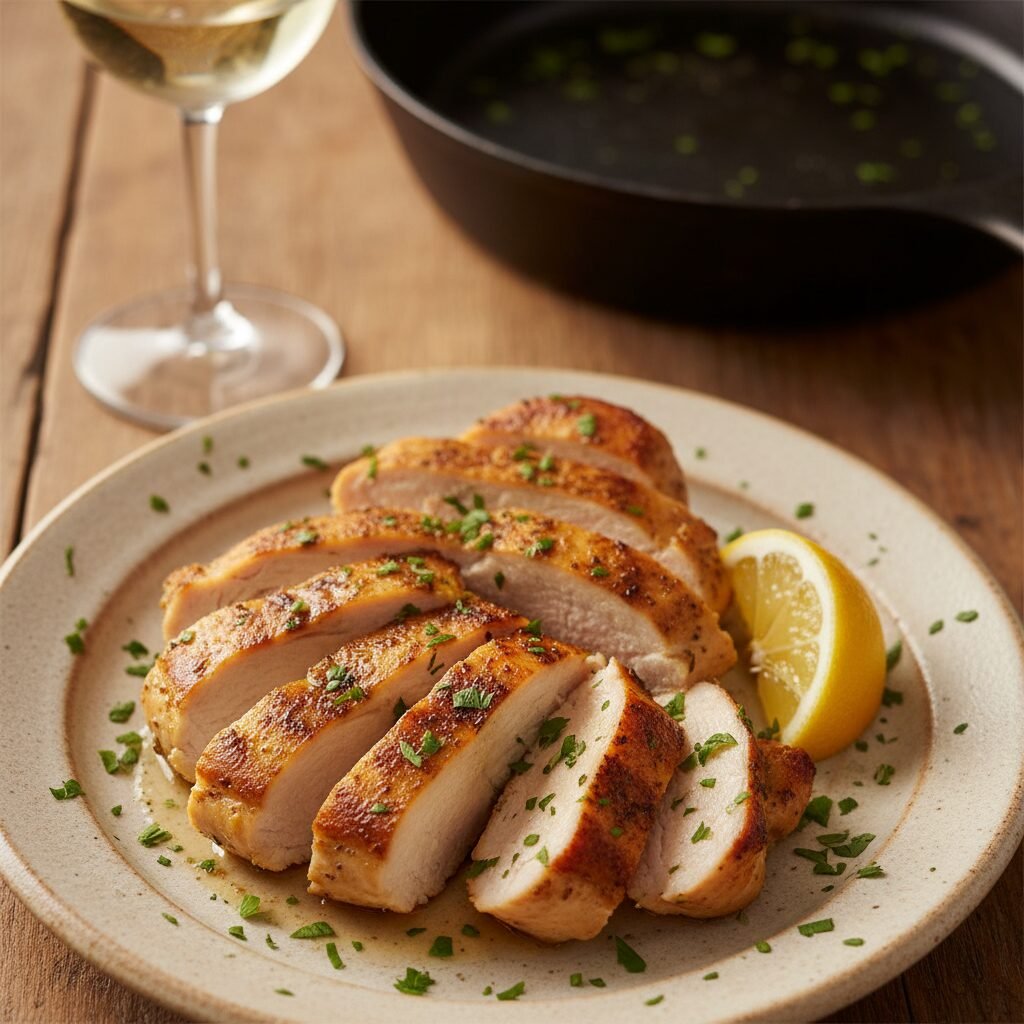

Easy Pan Seared Chicken Breasts
If you have ever suffered through dry, flavorless chicken, this recipe is going to change your life. This method guarantees a golden crust and a tender, juicy interior in under 20 minutes!
10 minutes
12 minutes
22 minutes
4 servings
Dinner
Stovetop
American
Gluten Free
Hey there, busy mamas! Let’s have a little heart-to-heart about chicken breasts. We all buy them, we all cook them, and let’s be honest, we have all ruined them at some point. Is there anything more disappointing than slicing into a beautiful-looking piece of chicken only to find it has the texture of a shoe sole? I have been there, and I know the struggle is real.
For years, I avoided cooking boneless, skinless chicken breasts on the stovetop because I was terrified of serving my family a dry, rubbery mess. I would bake them, slow cook them, or drown them in sauce just to hide the texture. But then, I discovered the magic of the pan sear with a few specific tricks, and it was a total game-changer for our weeknight dinner rotation.
This recipe is my holy grail. It is the method I use when I have zero energy, hungry kiddos, and about 20 minutes to get food on the table. The result is chicken that is golden brown and crispy on the outside, but incredibly moist and tender on the inside. It is versatile enough to toss into pasta, slice over a salad, or serve alongside some roasted veggies. Grab your skillet, ladies, because we are about to master the art of juicy chicken!
History & Origins
While pan-searing feels like a modern quick-fix, the technique is rooted in classic French culinary traditions. The term sauté comes from the French verb sauter, meaning “to jump,” which refers to the way food jumps in the pan when tossed in hot fat. Historically, whole birds were the norm, and roasting was the primary method of cooking poultry.
However, as convenience became king in the mid-20th century, the butchering of chickens into specific parts became more popular in American supermarkets. The boneless, skinless chicken breast emerged as the darling of the health-conscious movement in the 1980s and 90s due to its low fat and high protein content. The challenge has always been cooking this lean cut without drying it out, leading home cooks to adapt professional searing and resting techniques to their home kitchens.
Why This Recipe Works
There is actually a bit of science behind why this specific method works so well, but don’t worry, I will keep it simple! The biggest enemy of a juicy chicken breast is uneven thickness. Most breasts are thick at one end and thin at the other. If you cook it as-is, the thin end dries out before the thick end is safe to eat.
The Solution: Pounding the chicken to an even thickness. This ensures everything cooks at the exact same rate. Secondly, we use a two-step heat process. We start with medium-high heat to create the Maillard reaction (that delicious golden browning), and then we often lower the heat or cover the pan to finish cooking gently. Finally, resting the meat allows the juices to redistribute throughout the muscle fibers instead of spilling out onto your cutting board. Trust the process!
Why You’ll Love This Recipe
- ✓Ready in under 20 minutes
- ✓Uses simple pantry staples
- ✓High protein and low carb
- ✓Versatile for meal prep
- ✓Kid-friendly and mild
- ✓Zero marinating time required
Equipment You’ll Need
- ✓Large skillet (Cast Iron or Stainless Steel preferred)
- ✓Meat mallet or heavy rolling pin
- ✓Plastic wrap or gallon zip-top bag
- ✓Kitchen tongs
- ✓Meat thermometer
Ingredients
- ✓2 large boneless, skinless chicken breasts (sliced in half horizontally to make 4 cutlets, or pounded thin)
- ✓1 tablespoon olive oil (or avocado oil)
- ✓1 tablespoon unsalted butter
- ✓1 teaspoon salt
- ✓1/2 teaspoon black pepper
- ✓1 teaspoon garlic powder
- ✓1 teaspoon paprika (sweet or smoked)
- ✓1/2 teaspoon dried oregano or Italian seasoning
- ✓Fresh parsley for garnish (optional)
Instructions
- Prep the Chicken: Place your chicken breasts on a cutting board. If they are very large, slice them horizontally to create four thinner cutlets. If using whole breasts, place them inside a zip-top bag or between two sheets of plastic wrap. Use the flat side of a meat mallet to pound them to an even thickness, about 1/2 inch thick. This step is non-negotiable for juicy chicken!
- Season Generously: In a small bowl, mix the salt, pepper, garlic powder, paprika, and oregano. Pat the chicken dry with paper towels (moisture is the enemy of a good sear!). Rub the seasoning blend all over both sides of the chicken.
- Heat the Pan: Heat a large skillet over medium-high heat. Add the olive oil. You want the pan hot enough that the oil shimmers but doesn’t smoke.
- The Sear: Carefully place the chicken breasts in the pan. Do not overcrowd the pan; cook in batches if necessary. Do not touch the chicken for at least 4-5 minutes. Let it develop that golden crust. It will naturally release from the pan when it is ready to flip.
- Flip and Finish: Flip the chicken. Add the tablespoon of butter to the pan and let it melt, swirling it around the chicken. Cook for another 3-5 minutes on the second side, or until the internal temperature reaches 165°F (74°C).
- Rest: Remove the chicken from the pan immediately and place it on a clean plate or cutting board. Tent loosely with foil and let it rest for 5 minutes. This locks the juices inside.
- Serve: Garnish with fresh parsley and serve warm.
Expert Cooking Tips
- ✓Pat it dry: Always pat the chicken dry with paper towels before seasoning. If the chicken is wet, it will steam instead of sear, and you won’t get that beautiful golden color.
- ✓Room temperature: If you have time, let the chicken sit on the counter for 15 minutes to take the chill off before cooking. Cold meat in a hot pan can seize up and cook unevenly.
- ✓Don’t overcrowd: If your pan is too full, the temperature drops and the chicken steams. Cook in two batches if you need to.
- ✓Use a thermometer: It is the only way to be 100% sure you aren’t overcooking your bird. Pull it off the heat right at 160°F-162°F; the carryover heat will bring it up to the safe 165°F while it rests.
Substitutions and Variations
Oil: I love olive oil for flavor, but Avocado oil has a higher smoke point and works beautifully. You can also use ghee for a nutty flavor.
Seasonings: This recipe uses a basic savory blend, but you can get creative! Try Taco seasoning for fajita night, Cajun seasoning for a spicy kick, or Lemon Pepper for a zesty twist.
Dairy-Free: Simply omit the butter at the end and use a little extra oil. It will still be delicious!
Common Mistakes to Avoid
The most common mistake is moving the chicken too soon. I know it’s tempting to peek underneath to see if it’s burning, but you have to trust the pan! If you try to flip it and it sticks, it is not ready. Give it another minute.
Another major mistake is slicing into it immediately. I know you are hungry, but if you cut it right away, all those precious juices run out onto the plate, leaving you with dry meat. Give it that 5-minute rest!
Serving Suggestions
This chicken is the little black dress of dinners—it goes with everything! Here are a few of my favorite ways to serve it:
- Classic Comfort: Serve alongside creamy mashed potatoes and steamed broccoli.
- Light & Fresh: Slice it up and top a big Caesar salad or a Greek salad.
- Pasta Night: Serve over Fettuccine Alfredo or a simple garlic butter pasta.
- Meal Prep Bowls: Pair with quinoa, roasted sweet potatoes, and avocado for a healthy lunch bowl.
Storage and Reheating Tips
Refrigerator: Store leftovers in an airtight container in the fridge for up to 3-4 days. It’s perfect for cold lunches!
Freezer: You can freeze cooked chicken breasts for up to 3 months. Let them cool completely, then wrap tightly in plastic wrap and place in a freezer bag.
Reheating: To reheat without drying it out, place the chicken in a skillet with a splash of chicken broth or water. Cover with a lid and heat over low heat until just warmed through.
Nutrition Facts (Estimated)
| Serving Size | 1 chicken breast (approx 6oz) |
| Calories | 280 kcal |
| Fat | 12g |
| Saturated Fat | 3g |
| Unsaturated Fat | 8g |
| Trans Fat | 0g |
| Cholesterol | 110mg |
| Sodium | 450mg |
| Carbohydrates | 1g |
| Fiber | 0g |
| Sugar | 0g |
| Protein | 38g |
Frequently Asked Questions
How do I know when the chicken is done without a thermometer?
While a thermometer is best, you can press on the center of the chicken. If it feels soft and squishy, it’s raw. If it feels very firm and hard, it’s overcooked. You want it to feel springy, like the fleshy part of your palm.
Why is my chicken always rubbery?
Rubbery chicken is usually a sign of overcooking. Because chicken breast is so lean, cooking it even a few minutes too long sucks all the moisture out. Pounding it thin helps prevent this!
Can I use frozen chicken?
You must thaw the chicken completely before pan-searing. If you try to sear frozen chicken, the outside will burn before the inside is even thawed. Thaw it overnight in the fridge for best results.
Do I really have to pound the chicken?
Yes! I strongly recommend it. It is the secret to even cooking. If you skip this, the thin tapered end will be dry like jerky while the thick middle is still raw.
Is it better to use a cast iron skillet?
Cast iron is fantastic for getting a deep, brown crust because it holds heat so well. However, a good heavy-bottomed stainless steel pan or even a quality non-stick pan works great too.
Can I use this method for chicken thighs?
Absolutely! Boneless, skinless chicken thighs work great with this method. They might take an extra minute or two per side since they have a higher fat content and are more forgiving.
Is it okay if the chicken is slightly pink inside?
Color isn’t the most reliable indicator. Sometimes fully cooked chicken can still have a pinkish hue near the bone or due to pH levels. Trust your meat thermometer—if it hits 165°F, it is safe to eat!
What if my spices are burning?
If you notice the spices burning before the chicken is cooked, your heat is likely too high. Turn the burner down to medium. If using a rub with sugar, be extra careful as sugar burns quickly.
Conclusion
There you have it, friends! The ultimate guide to making the best pan-seared chicken breasts of your life. No more dry, sad dinners—just flavorful, juicy perfection that the whole family will love. Once you master this simple technique, you will wonder how you ever cooked chicken any other way.
If you try this recipe, please leave a comment below and let me know how it turned out! And don’t forget to pin this to your ‘Easy Weeknight Dinners’ board on Pinterest so you can find it later. Happy cooking!