
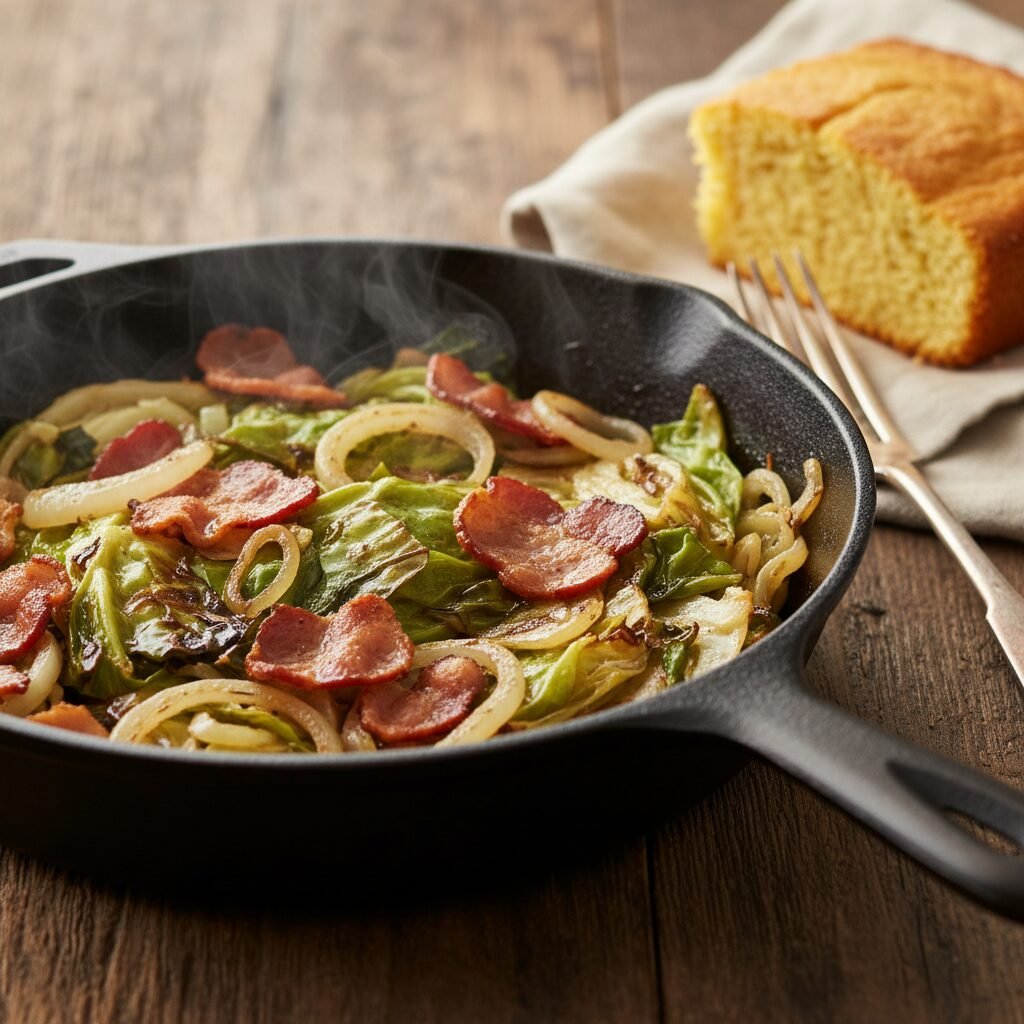

Fried Cabbage Recipe
If you think you don’t like cabbage, get ready to have your mind changed forever! This Southern-style fried cabbage is tender, buttery, and loaded with crispy bacon—it is the absolute best way to eat your greens.
10 minutes
20 minutes
30 minutes
6 Servings
Side Dish
Stovetop / Sauté
Southern American
Gluten Free
Hey there, friends! Welcome back to my kitchen. Today, we are dusting off the cast iron skillet for a recipe that is near and dear to my heart: Southern Fried Cabbage with Bacon. Now, I know what some of you might be thinking. Cabbage? Really? Is that exciting? Let me tell you, if you grew up in the South, or if you just appreciate good, honest, soul-warming food, you know that fried cabbage is absolute gold.
There is something magical that happens when you take a simple, budget-friendly head of green cabbage and sauté it down in savory bacon renderings. It transforms from a crunchy, somewhat bland vegetable into a sweet, tender, flavor-packed dish that honestly steals the show from the main course. It is the kind of comfort food that reminds me of Sunday suppers at Grandma’s house, where the food was simple but cooked with so much love (and usually a little bit of bacon grease).
This isn’t that boiled, sulfur-smelling cabbage you might be afraid of. This is caramelized goodness. It is salty, it is savory, and it has just a hint of sweetness from the onions and the natural sugars in the cabbage. Plus, it is incredibly fast to throw together on a busy weeknight. Whether you are following a Keto diet, looking for a gluten-free side, or just trying to get your kids to eat a vegetable without complaining, this recipe is a total game-changer. My husband asks for this weekly, and even my pickiest eater cleans his plate!
History & Origins
Fried cabbage is a staple of Southern cuisine and Soul Food, deeply rooted in the agricultural history of the American South. While cabbage itself has been cultivated for thousands of years, originating in Europe, its journey to the Southern table is a story of adaptation and resourcefulness.
In the Appalachian mountains and the rural South, cabbage was a reliable, hardy crop that could survive cooler weather and be stored for long periods in root cellars. It was affordable and abundant, making it a crucial source of nutrition for working-class families. The method of “frying” or sautéing the cabbage in animal fat—typically bacon grease, salt pork, or ham hocks—was born out of necessity and flavor. The fat provided essential calories for laborers and infused the vegetables with a rich, smoky depth that water boiling simply couldn’t achieve.
This dish also shares DNA with Irish and German traditions (think Colcannon or sautéed sauerkraut), brought over by immigrants who settled in the mountains. Over generations, these influences blended with African American culinary traditions to create the savory, seasoned skillet cabbage we know and love today.
Why This Recipe Works
So, why is this simple combination so incredibly delicious? It comes down to a few culinary principles, primarily fat rendering and caramelization.
First, we start by rendering the fat from the bacon. This liquid gold is packed with smoky, salty flavor. By using this fat to sauté the onions and cabbage, we are ensuring that every single bite is infused with that savory essence, rather than just coating the veggies in neutral oil. It bridges the gap between the vegetable and the meat.
Second, unlike boiling, which leaches flavor out into the water, frying (or sautéing) uses dry heat. As the cabbage cooks down in the skillet, its natural sugars begin to break down and caramelize. This Maillard reaction brings out a nutty sweetness that balances perfectly with the salty bacon and the sharp bite of the onion and garlic. The result is a texture that is tender but not mushy, with crispy edges that are purely addictive.
Why You’ll Love This Recipe
- ✓Ready in under 30 minutes
- ✓Keto, Low Carb, and Gluten-Free
- ✓Budget-friendly (feeds a crowd for cheap!)
- ✓One-pan cleanup
- ✓Packed with nutrients like Vitamin C and K
Equipment You’ll Need
- ✓Large Cast Iron Skillet or Heavy Bottomed Pan
- ✓Chef’s Knife
- ✓Cutting Board
- ✓Tongs or Wooden Spoon
Ingredients
- ✓1 large head of green cabbage (approx. 2-3 lbs), cored and roughly chopped
- ✓6 slices thick-cut bacon, chopped into 1-inch pieces
- ✓1 large yellow onion, diced
- ✓2 cloves garlic, minced
- ✓1 tablespoon unsalted butter (optional, for extra richness)
- ✓1 teaspoon Cajun seasoning or Creole seasoning (like Tony Chachere’s)
- ✓1/2 teaspoon smoked paprika
- ✓1/2 teaspoon salt (adjust to taste depending on bacon saltiness)
- ✓1/2 teaspoon freshly cracked black pepper
- ✓1 pinch red pepper flakes (optional, for a little kick)
Instructions
- Prep the veggies: Start by removing any damaged outer leaves from your cabbage. Cut the cabbage in half, remove the tough core, and then chop it into 1-inch squares or ribbons. Dice your onion and mince the garlic. Set aside.
- Fry the bacon: Place your chopped bacon in a large, cold cast iron skillet. Turn the heat to medium-high and cook until the bacon is brown and crispy, usually about 5-7 minutes. Using a slotted spoon, remove the bacon bits and set them on a paper towel-lined plate. Do not drain the grease! Leave all that flavorful fat in the pan.
- Sauté the aromatics: Lower the heat to medium. Add the diced onion to the hot bacon grease. Cook for about 3-4 minutes until the onions are soft and translucent. Add the minced garlic and cook for just 30 seconds until fragrant (be careful not to burn it!).
- Add the cabbage: Add the chopped cabbage to the skillet. It might look like a mountain of greens that won’t fit, but don’t worry—it shrinks down significantly! You may need to add it in two batches, letting the first batch wilt slightly before adding the rest.
- Season and cook: Sprinkle the Cajun seasoning, smoked paprika, salt, pepper, and red pepper flakes over the cabbage. Toss well with tongs to coat the leaves in the bacon grease and spices. If using the extra tablespoon of butter, toss it in now.
- Simmer down: Reduce heat to medium-low. Cover the skillet with a lid and let it cook for about 10-15 minutes. Stir occasionally to prevent sticking. You want the cabbage to be tender but still have a slight bite (al dente). If you prefer it softer, cook a few minutes longer.
- Finish and serve: Once the cabbage is cooked to your liking, remove the pan from the heat. Stir the crispy bacon bits back into the cabbage. Taste and adjust salt and pepper if needed. Serve immediately while hot!
Expert Cooking Tips
- ✓Don’t skip the core: Make sure to cut out the tough white core of the cabbage before chopping. It is woody and doesn’t cook down as nicely as the leaves.
- ✓Cast iron is king: If you have a cast iron skillet, use it! It distributes heat evenly and helps get those little caramelized brown edges on the cabbage leaves.
- ✓Watch the salt: Bacon varies in saltiness, and Cajun seasoning usually contains salt. Taste your cabbage before adding the final 1/2 teaspoon of salt to avoid over-salting.
- ✓Texture preference: If you like ‘fried’ cabbage with crispy edges, leave the lid off and cook on slightly higher heat, stirring frequently. If you prefer softer, ‘steamed’ style cabbage, keep the lid on as directed.
Substitutions and Variations
Bacon Alternatives: If you don’t eat pork, you can use turkey bacon or beef bacon. However, these have less fat, so you will need to supplement with 2 tablespoons of olive oil or butter to fry the cabbage.
Vegetarian/Vegan: Skip the bacon entirely. Use 2-3 tablespoons of olive oil or coconut oil to sauté the onions. Add a splash of liquid smoke or smoked paprika to mimic the bacon flavor.
Cabbage Types: While green cabbage is traditional, you can absolutely use Savoy cabbage (which is more tender) or red cabbage (which is slightly sweeter but will turn the dish pink).
Seasoning Swaps: If you don’t have Cajun seasoning, a mix of onion powder, garlic powder, and a dash of cayenne pepper works wonders.
Common Mistakes to Avoid
The biggest mistake people make is overcooking the cabbage until it turns into mush. Cabbage should still have a little bit of structural integrity. Keep an eye on it and test a piece around the 10-minute mark.
Another common issue is burning the garlic. Garlic burns very quickly in hot bacon grease, turning bitter. Always add the garlic after the onions have softened, right before you pile on the cabbage.
Serving Suggestions
This Southern Fried Cabbage is a versatile side that pairs beautifully with almost any protein. Here are my favorite ways to serve it:
- Alongside pan-seared pork chops or a glazed ham.
- With a slice of buttery cornbread to soak up the juices.
- As a side for roast chicken or meatloaf.
- Mixed with sliced sausage or kielbasa for a complete one-pan meal.
- Served with black-eyed peas and rice for a traditional New Year’s Day luck feast!
Storage and Reheating Tips
Fridge: Store leftovers in an airtight container in the refrigerator for up to 3-4 days. Honestly, the flavors meld together even better the next day!
Reheating: The best way to reheat is in a skillet over medium heat until warmed through. You can use the microwave, but the texture might get a bit softer.
Freezing: I do not recommend freezing fried cabbage. Cabbage has a high water content, and when it freezes and thaws, the texture becomes very soggy and unappealing.
Nutrition Facts (Estimated)
| Serving Size | 1 cup |
| Calories | 185 kcal |
| Fat | 14g |
| Saturated Fat | 5g |
| Unsaturated Fat | 8g |
| Trans Fat | 0g |
| Cholesterol | 25mg |
| Sodium | 450mg |
| Carbohydrates | 9g |
| Fiber | 3g |
| Sugar | 4g |
| Protein | 6g |
Frequently Asked Questions
Is fried cabbage keto-friendly?
Yes, absolutely! Cabbage is a low-carb vegetable and the added fat from bacon makes this a perfect side dish for Keto and low-carb diets.
Can I add sausage to this recipe?
100% yes! Sliced smoked sausage, kielbasa, or andouille sausage makes this a hearty main dish. Just brown the sausage with the bacon or right after removing the bacon.
How do I cut the cabbage for frying?
I prefer cutting the cabbage into 1-inch squares (chopped) rather than thin shreds (slaw style). The squares hold up better to the heat and provide a better mouthfeel.
Why is my cabbage watery?
Cabbage releases water as it cooks. If you leave the lid on too long, it steams in its own juices. To fix this, simply remove the lid for the last few minutes of cooking and increase the heat slightly to evaporate the excess liquid.
Can I use a bag of coleslaw mix?
In a pinch, yes! It will cook much faster (probably 5-8 minutes total) because the pieces are so small. It’s a great time-saver for busy nights.
Is this dish spicy?
It has a tiny kick from the Cajun seasoning and red pepper flakes, but it’s very mild. If you are sensitive to spice, just omit the red pepper flakes and use regular salt and pepper instead of Cajun seasoning.
Do I have to use a cast iron skillet?
No, you can use any large, heavy-bottomed skillet or even a Dutch oven. However, cast iron provides the best sear and flavor development.
Can I make this ahead of time?
Yes, it reheats well! It’s a great option for meal prepping lunches for the week.
Conclusion
I hope this Southern Fried Cabbage recipe brings a little bit of comfort and soul to your dinner table this week. It really is one of those “hidden gem” recipes that turns vegetable skeptics into believers with just one bite. The combination of salty bacon, sweet onions, and tender greens is just impossible to beat.
If you give this recipe a try, I’d love to hear about it! Leave a comment below, rate the recipe, or snap a photo and tag me on Instagram or Pinterest. I love seeing what you’re cooking up in your kitchens. Happy cooking, y’all!