
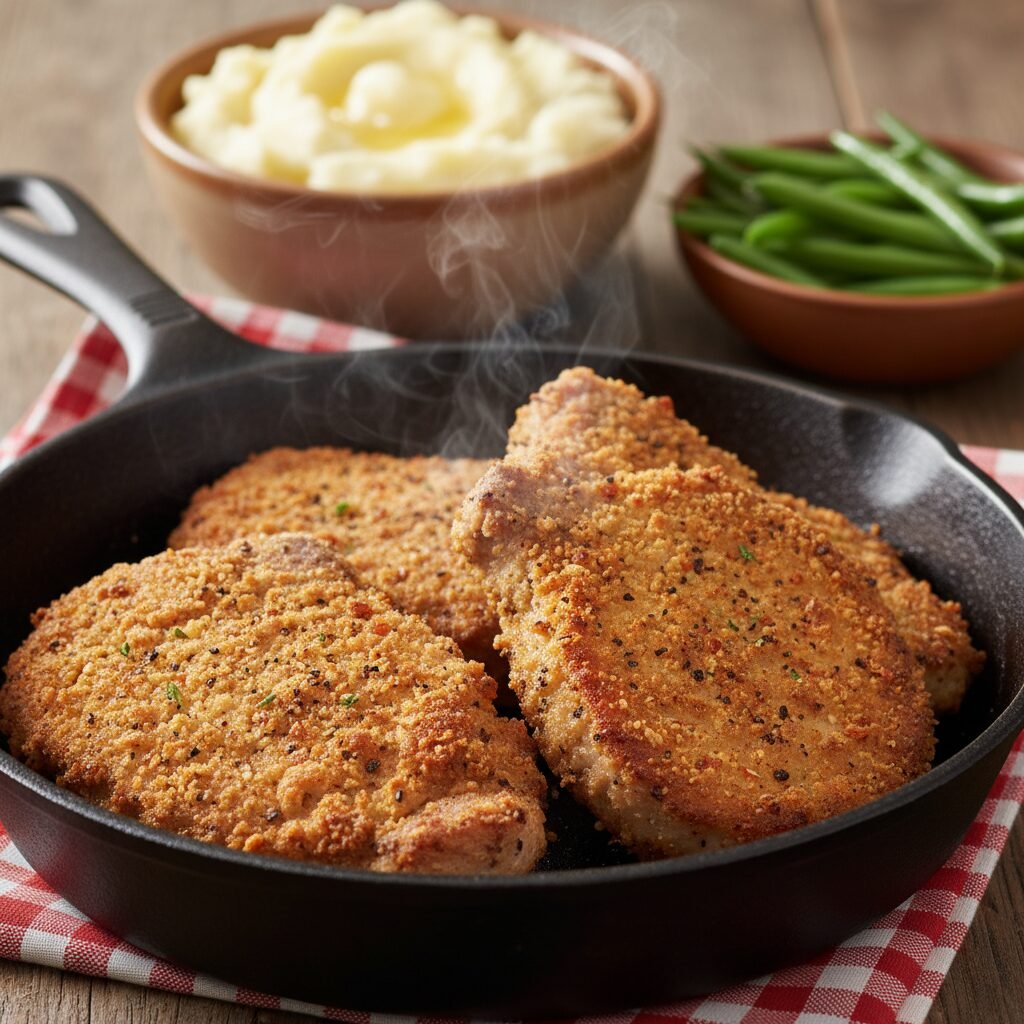

Fried Pork Chops
There is nothing quite like the comfort of a golden, pan-fried pork chop sizzling in the skillet. This recipe guarantees a crispy seasoned crust on the outside and tender, juicy meat on the inside—no dry pork chops allowed here!
15 minutes
20 minutes
35 minutes
4 Servings
Main Course
Pan Fry
Southern American
Omnivore
Hey friends! Welcome back to my kitchen. If there is one meal that instantly transports me back to my grandmother’s Sunday table, it is Southern Fried Pork Chops. You know the kind I’m talking about—where the aroma fills the whole house, and you can hear the crackle of the skillet from the living room. For the longest time, I was actually intimidated by pork chops. I felt like every time I tried to make them, they turned into something resembling a hockey puck—dry, tough, and flavorless. Can you relate? It is the worst feeling when you spend time cooking dinner only to have the kiddos chew endlessly on a piece of meat!
But, I refused to give up. I wanted to recreate that magic I remembered from my childhood. After years of testing (and a few failures), I finally cracked the code. The secret lies in a simple buttermilk soak and a specific flour blend that ensures that crave-worthy crunch. This isn’t just a recipe; it is a hug on a plate. It is the kind of meal that makes everyone put down their phones and actually talk at the dinner table. Whether you are looking for a hearty weeknight meal or a special Sunday supper, these chops are going to be a total game-changer for your family.
So, grab your favorite cast-iron skillet (you know, the heavy one that weighs a ton!), and let’s get cooking. I promise, once you try this method, you will never cook pork chops any other way. It is husband-approved, kid-approved, and honestly, it is just good for the soul.
History & Origins
Fried pork chops are a cornerstone of American Southern cuisine and Soul Food, deeply rooted in a history of making the most out of accessible ingredients. Historically, pork was a primary protein source in the South because pigs were easier to raise and cure than cattle. While the tenderloin might have been reserved for special occasions or sold, the chops were a hearty cut that needed a little love to shine.
The tradition of frying these chops dates back generations. The technique of dredging meat in seasoned flour and frying it in hot fat (often lard in the old days, though we usually use vegetable oil now) was a way to seal in moisture and add calories and flavor to the meal. It was the ultimate comfort food for working families. Over time, this dish migrated from rural farmhouses to city diners, becoming a beloved staple across the country. Every family seems to have their own twist—some use an egg wash, some use crushed crackers—but the heart of the dish remains the same: simple, honest ingredients cooked with care.
Why This Recipe Works
So, why is this specific recipe the best? It comes down to science, even if Grandma didn’t call it that! First, we use bone-in chops. The bone insulates the meat near it, preventing it from overcooking too quickly and adding a depth of flavor you just don’t get with boneless cuts. Second, we utilize a quick buttermilk brine. Buttermilk is slightly acidic, which helps break down the protein structures in the pork, tenderizing it while infusing moisture. This is the insurance policy against dry meat.
Finally, the breading mixture includes a secret weapon: cornstarch mixed with the flour. Pure flour can sometimes get soggy or heavy. Adding cornstarch inhibits gluten formation, creating a coating that is lighter and shatteringly crispy. When this hits the hot oil, the moisture on the surface evaporates instantly, leaving behind that golden, crunchy shell that protects the meat inside, allowing it to steam gently in its own juices. It creates the perfect contrast of textures!
Why You’ll Love This Recipe
- ✓Ready in under 35 minutes
- ✓Uses a secret buttermilk marinade for tenderness
- ✓Cornstarch addition guarantees a crispy crust
- ✓Budget-friendly family meal
- ✓Perfect for cast-iron skillet cooking
- ✓Kid-friendly and picky-eater approved
Equipment You’ll Need
- ✓Large Cast Iron Skillet or Heavy Bottomed Pan
- ✓Meat Thermometer
- ✓Shallow Bowls for Dredging
- ✓Wire Rack
- ✓Baking Sheet
- ✓Tongs
- ✓Whisk
Ingredients
- ✓4 Bone-in Pork Chops (about 1-inch thick)
- ✓1 cup Buttermilk (full fat is best)
- ✓1 1/2 cups All-Purpose Flour
- ✓1/4 cup Cornstarch
- ✓2 teaspoons Seasoned Salt (like Lawry’s)
- ✓1 teaspoon Garlic Powder
- ✓1 teaspoon Onion Powder
- ✓1 teaspoon Smoked Paprika
- ✓1/2 teaspoon Black Pepper
- ✓1/4 teaspoon Cayenne Pepper (optional, for a little kick)
- ✓Vegetable or Canola Oil for frying
Instructions
- Prep the Meat: Remove your pork chops from the fridge about 20 minutes before cooking to take the chill off. Pat them completely dry with paper towels. This is crucial for the breading to stick!
- Marinate (Optional but Recommended): Place the chops in a shallow dish and pour the buttermilk over them. Let them sit for 15-30 minutes while you prep the rest. If you are in a rush, dip them in buttermilk right before dredging.
- Mix the Dry Rub: In a large shallow bowl or pie plate, whisk together the flour, cornstarch, seasoned salt, garlic powder, onion powder, paprika, black pepper, and cayenne.
- Heat the Oil: Pour about 1/2 inch of oil into your cast iron skillet. Heat over medium-high heat until the oil reaches 350°F. If you don’t have a thermometer, drop a pinch of flour in; if it sizzles immediately, it is ready.
- Dredge: Lift a pork chop out of the buttermilk, letting the excess drip off. Press it firmly into the flour mixture, coating both sides and the edges. Shake off any loose flour.
- Fry: Carefully place the chops into the hot oil. Do not crowd the pan (fry in batches of 2 if necessary). Fry for 4-5 minutes on the first side until deep golden brown. Flip and fry for another 3-4 minutes on the other side.
- Check Temp: The internal temperature should reach 145°F near the bone. Do not overcook!
- Rest: Transfer the fried chops to a wire rack set over a baking sheet. Do not put them on paper towels, or they will steam and get soggy. Let them rest for 5 minutes before serving.
Expert Cooking Tips
- ✓Room Temperature Meat: Never fry cold meat! It drops the oil temperature too fast and leads to greasy chops.
- ✓Don’t Crowd the Pan: Give the chops room to breathe. Crowding steams the meat instead of frying it.
- ✓Use a Wire Rack: Resting on a rack keeps air circulating so the bottom doesn’t get soggy.
- ✓The Bone Matters: Bone-in chops stay juicier than boneless. If you use boneless, reduce the cooking time by 1-2 minutes per side.
Substitutions and Variations
If you don’t have buttermilk, you can make a quick substitute by adding a tablespoon of lemon juice or white vinegar to a cup of regular milk and letting it sit for 5 minutes. For a Gluten-Free version, swap the all-purpose flour for a high-quality 1:1 GF baking flour blend—the cornstarch will still help it crisp up nicely! If you want to avoid vegetable oil, you can fry these in lard for a truly traditional flavor, or peanut oil for a high smoke point.
Common Mistakes to Avoid
The biggest mistake is overcooking the pork. Pork does not need to be cooked until it is grey and dry! The FDA says 145°F is safe, and it leaves the meat slightly blush pink and juicy. Another common error is low oil temperature. If your oil isn’t hot enough (350°F), the breading will soak up the oil like a sponge, and you’ll end up with greasy, heavy chops. Lastly, skipping the resting period is a no-no. Cutting into the meat immediately lets all those precious juices run out onto the plate instead of staying in the chop.
Serving Suggestions
These chops scream for comfort food sides! My absolute favorite pairing is creamy mashed potatoes with a little bit of country gravy (use the pan drippings!). They are also incredible with Southern green beans (cooked with bacon, of course), macaroni and cheese, or some sweet cornbread. For a lighter summer meal, serve them with a fresh coleslaw or a cucumber salad to cut through the richness.
Storage and Reheating Tips
Leftover fried pork chops can be stored in an airtight container in the refrigerator for up to 3 days. However, the crust will lose its crunch. To reheat, do not microwave them! Place them on a wire rack on a baking sheet and heat in a 350°F oven or an air fryer for about 10 minutes until heated through and crispy again. You can also freeze cooked chops for up to 2 months, but fresh is always best.
Nutrition Facts (Estimated)
| Serving Size | 1 Pork Chop |
| Calories | 450 kcal |
| Fat | 26g |
| Saturated Fat | 6g |
| Unsaturated Fat | 18g |
| Trans Fat | 0g |
| Cholesterol | 95mg |
| Sodium | 680mg |
| Carbohydrates | 18g |
| Fiber | 1g |
| Sugar | 1g |
| Protein | 32g |
Frequently Asked Questions
Why does the breading fall off my pork chops?
This usually happens if the meat was too wet before dredging or if the oil wasn’t hot enough. Make sure to pat the pork dry before the buttermilk dip, and let the excess buttermilk drip off before flouring. Also, don’t flip the meat more than once!
Can I use boneless pork chops?
Yes, absolutely! Boneless chops are great, but they cook much faster. Keep a close eye on them and reduce the cooking time to prevent them from drying out.
How do I know when the oil is ready without a thermometer?
You can stick the handle of a wooden spoon into the oil. If little bubbles form around the wood and float up, the oil is ready for frying.
Can I bake these instead of frying?
You can, but the texture will be different. To bake, place the breaded chops on a greased wire rack on a baking sheet. Spray the tops with cooking spray and bake at 400°F for about 20-25 minutes, flipping halfway.
What is the best oil for frying pork chops?
You need an oil with a high smoke point. Vegetable oil, canola oil, peanut oil, or corn oil are all excellent choices. Avoid olive oil or butter as they burn at high temperatures.
Why are my pork chops tough?
Tough chops are almost always a result of overcooking. Pork is a lean meat (even with the bone), and once it passes 145°F, it tightens up rapidly. Use a meat thermometer for the best results.
Can I make the breading spicy?
Oh yes! Increase the cayenne pepper to 1 teaspoon or add a dash of hot sauce to the buttermilk marinade for a spicy kick.
Do I have to use cornstarch?
You don’t have to, but I highly recommend it. It creates a lighter, crispier coating than flour alone.
Conclusion
I hope your family loves these Southern Fried Pork Chops as much as mine does. There is something so satisfying about mastering a classic dish, and seeing the smiles on everyone’s faces makes the minimal cleanup totally worth it. Remember, cooking is all about love and patience. Don’t rush the process, watch that heat, and enjoy every bite!
If you try this recipe, please snap a photo and tag me on Pinterest or Instagram! I love seeing your creations. And don’t forget to pin this recipe to your ‘Sunday Dinner’ or ‘Comfort Food’ boards so you can find it easily next time. Happy cooking, mamas!