
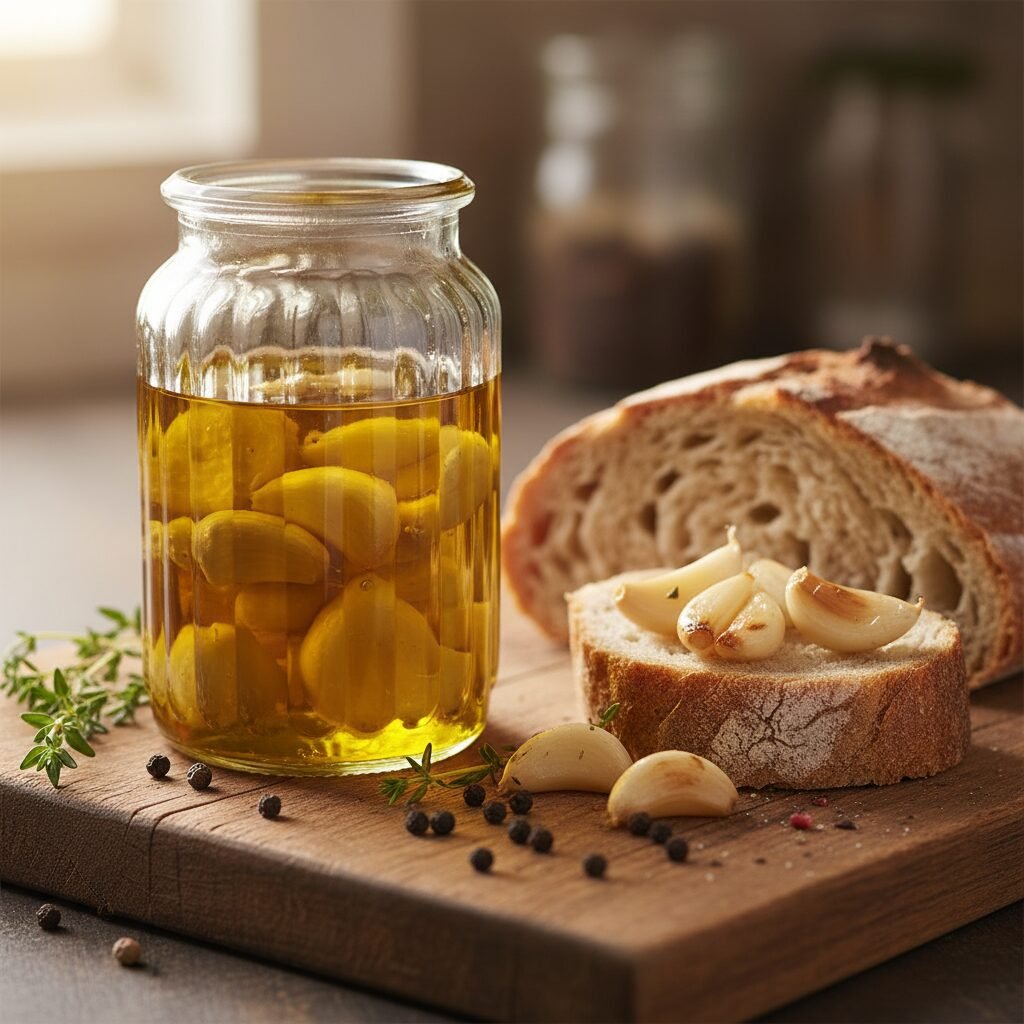

Garlic Confit Recipe
If you have ever dreamed of garlic that spreads like soft butter and tastes like pure roasted heaven, you have found your new obsession. This ‘liquid gold’ is the single easiest way to make your kitchen smell like a 5-star restaurant and elevate your everyday cooking instantly.
10 minutes
2 hours
2 hours 10 minutes
2 cups (approx. 40-50 cloves)
Condiment
Oven Roast / Confit
French / Mediterranean
Vegan
Let’s talk about a little kitchen magic that completely changed the way I cook: Garlic Confit. If you spend any time scrolling through food Pinterest or Instagram, you have likely seen those mesmerizing videos of soft, golden garlic cloves being squeezed out of their skins or spread onto crusty sourdough bread. It looks decadent, fancy, and honestly, a little intimidating. But here is the secret I am dying to share with you: it is incredibly easy to make.
We are talking about two main ingredients—garlic and oil—and a little bit of patience. That is it. The result is what I affectionately call ‘liquid gold.’ The process of slow-cooking garlic in oil transforms it from a sharp, pungent bulb into something sweet, nutty, and incredibly mellow. The texture becomes creamy and spreadable, perfect for smearing on toast, whipping into mashed potatoes, or whisking into vinaigrettes.
As a busy mom, I am always looking for ‘flavor bombs’—things I can prep on a Sunday that will make my Tuesday night pasta taste like it came from a bistro. This is it. Plus, you get a two-for-one deal: the tender garlic cloves and the incredible garlic-infused oil. Both are staples in my fridge. Grab your apron, because your house is about to smell better than it ever has before!
History & Origins
While ‘confit’ sounds like a fancy French term reserved for Michelin-star chefs, its roots are actually quite humble and practical. The word confit comes from the French verb confire, which means ‘to preserve.’ Historically, before the age of refrigerators, preserving food was a survival necessity. The method originated in the southwest of France, primarily as a way to preserve meats like duck or goose by cooking them slowly in their own rendered fat and then storing them covered in that same fat to create an airtight seal.
Over centuries, this preservation technique evolved from a survival tactic into a culinary delicacy. Chefs realized that cooking anything low and slow in fat—whether it is meat, vegetables, or aromatics like garlic—tenderizes the texture and deepens the flavor profile in a way that boiling or roasting simply cannot match. When we make garlic confit today, we are channeling that old-world French wisdom, using olive oil instead of animal fat to create a silky, preserved masterpiece that bridges the gap between ancient preservation and modern gourmet cooking.
Why This Recipe Works
So, why does drowning garlic in oil and baking it make it taste so good? It comes down to the science of heat transfer and chemical reactions. Raw garlic contains a compound called allicin, which gives it that sharp, spicy bite that can sometimes be overwhelming. When you roast garlic at a high temperature, you risk burning it, which turns it bitter. However, the confit method uses oil as a buffer.
By submerging the cloves completely in fat and cooking them at a low temperature (usually around 250°F or 120°C), you are gently poaching them. This slow heat breaks down the cell walls of the garlic, turning it soft and creamy without evaporating all the moisture. Simultaneously, the harsh allicin breaks down into sweeter, more complex flavor compounds. The oil acts as a flavor carrier, absorbing the fat-soluble aromatics from the garlic (and any herbs you add), resulting in a flavored oil that is just as valuable as the cloves themselves. It is a perfect symbiosis of flavor exchange!
Why You’ll Love This Recipe
- ✓Creates two products: spreadable garlic cloves and infused oil
- ✓Mellows the harsh bite of raw garlic into a sweet, nutty flavor
- ✓Requires only 5 minutes of hands-on prep time
- ✓Makes a beautiful, thoughtful homemade gift for foodies
- ✓Versatile ingredient that upgrades pasta, toast, and veggies instantly
- ✓Can be made in bulk and stored for quick weeknight flavor
Equipment You’ll Need
- ✓Oven-safe baking dish or small Dutch oven
- ✓Sharp knife
- ✓Clean glass jars with airtight lids
- ✓Baking sheet (to catch drips)
Ingredients
- ✓3 to 4 whole heads of garlic (or 2 cups pre-peeled garlic cloves)
- ✓1.5 to 2 cups Extra Virgin Olive Oil (enough to fully submerge cloves)
- ✓3-4 sprigs fresh thyme (optional)
- ✓2 sprigs fresh rosemary (optional)
- ✓1 tsp whole black peppercorns (optional)
- ✓1 pinch red pepper flakes (for a kick, optional)
Instructions
- Preheat the Oven: Preheat your oven to 250°F (120°C). We want a low temperature to ensure the garlic cooks gently without frying or burning.
- Prep the Garlic: Separate the cloves from the heads and peel them completely. Mom Hack: To save time and your fingernails, buy a bag of pre-peeled garlic cloves from the produce section. If peeling by hand, smash them lightly with the flat of a knife to loosen the skins.
- Assemble the Dish: Place the peeled garlic cloves into an oven-safe baking dish or a small pot. Ensure the cloves are not stacked too high; a single or double layer is best.
- Add Aromatics: Tuck the fresh thyme, rosemary, peppercorns, and red pepper flakes in between the garlic cloves. This infuses the oil with extra layers of flavor.
- Submerge in Oil: Pour the olive oil over the garlic until the cloves are completely submerged. If any tips are sticking out, they might burn, so add more oil if necessary.
- Bake: Place the dish in the oven and bake for 1.5 to 2 hours. You are looking for the garlic to turn a deep golden tan color and become very soft when pierced with a fork. The oil should be gently bubbling, not furiously boiling.
- Cool Down: Remove from the oven and let the confit cool completely in the baking dish. Do not rush this step; the garlic continues to soften as it cools.
- Store Safely: Using a clean spoon, transfer the garlic and oil into a clean, airtight glass jar. Ensure the garlic is fully covered by the oil. Place in the refrigerator immediately.
Expert Cooking Tips
- ✓Don’t skimp on the oil: Use a good quality olive oil, but you don’t need the most expensive bottle. A mid-range Extra Virgin Olive Oil works perfectly.
- ✓Peeling hack: If you aren’t buying pre-peeled garlic, put the unpeeled cloves in a metal bowl, place another metal bowl on top (rim to rim), and shake vigorously for 30 seconds. The skins will fly right off!
- ✓Check for doneness: The garlic is done when it is the color of light caramel and squishes easily. If it is still pale, give it another 15-20 minutes.
- ✓Use a neutral oil: If you find olive oil too heavy, you can use grapeseed oil or avocado oil for a more neutral flavor profile.
Substitutions and Variations
If you do not have fresh herbs on hand, you can absolutely make this with just garlic and oil—it is still delicious! For the oil, while Extra Virgin Olive Oil is the classic choice for flavor, you can use avocado oil or grapeseed oil if you plan to use the confit for high-heat cooking later, as they have higher smoke points. If you don’t have fresh thyme or rosemary, dried herbs can work, but use them sparingly as they are more potent and can sometimes burn if they float to the top.
Common Mistakes to Avoid
The biggest mistake people make is rushing the process by turning up the heat. High heat will fry the garlic, making it crispy and bitter rather than soft and sweet. Keep it low! Another common mistake is improper storage. Leaving garlic confit at room temperature is a major safety risk (see the FAQ section). Always, always refrigerate. Lastly, ensure your cloves are fully submerged; exposed garlic will dry out and burn in the oven.
Serving Suggestions
Oh, the possibilities are endless! Smear the soft cloves onto toasted sourdough and sprinkle with flaky sea salt for the best appetizer ever. Mash a few cloves into your mashed potatoes for instant gourmet status. Whisk the oil into vinegar for a garlic-infused salad dressing. Use the oil to sauté vegetables or fry eggs. I also love stirring the mushy cloves into pasta sauces or mixing them with softened butter to create an epic compound butter for steaks.
Storage and Reheating Tips
SAFETY WARNING: This is the most important part of the recipe. Garlic in oil creates an anaerobic environment (no oxygen), which can foster the growth of Clostridium botulinum (the bacteria that causes botulism) if left at room temperature.
To store safely:
1. Transfer to a clean, airtight jar immediately after cooling.
2. Store in the refrigerator at all times.
3. Consume within 2 to 3 weeks. If you cannot finish it by then, freeze it!
4. To freeze: Puree the garlic and oil together and freeze in ice cube trays. Pop out a cube whenever you need instant flavor!
Nutrition Facts (Estimated)
| Serving Size | 1 tbsp (cloves and oil) |
| Calories | 120 |
| Fat | 13g |
| Saturated Fat | 2g |
| Unsaturated Fat | 10g |
| Trans Fat | 0g |
| Cholesterol | 0mg |
| Sodium | 0mg |
| Carbohydrates | 1g |
| Fiber | 0g |
| Sugar | 0g |
| Protein | 0g |
Frequently Asked Questions
Is garlic confit safe to make at home?
Yes, absolutely! However, you must follow food safety guidelines. Because garlic is a low-acid vegetable grown in soil, it can harbor botulism spores. When covered in oil (no oxygen) and left at room temperature, these spores can produce toxins. You MUST store garlic confit in the refrigerator and eat it within 2-3 weeks. Never leave it on the counter.
Can I reuse the oil?
Yes! The oil is almost as valuable as the garlic itself. It is infused with garlic and herb flavors. Use it for dipping bread, making vinaigrettes, roasting vegetables, or drizzling over pizza.
Why did my garlic turn blue or green?
Don’t panic! This is a natural chemical reaction between the enzymes in the garlic, amino acids, and sulfur compounds. It usually happens if the garlic is old or if there is acid present. It is completely safe to eat, even if it looks a little funny.
Can I do this on the stovetop?
Yes, you can. Simmer the garlic and oil in a small saucepan over the very lowest heat setting possible. It requires more supervision to ensure the oil doesn’t get too hot and fry the garlic. Simmer for about 45 minutes to 1 hour.
Do I have to peel the garlic?
Yes, for confit, the garlic must be peeled. If you leave the skins on, you are essentially making roasted garlic, which is delicious but different. For the creamy, spreadable texture submerged in oil, the skins must go.
Can I use elephant garlic?
You can! Elephant garlic is much larger and milder. You may need to increase the cooking time slightly to ensure the heat penetrates to the center of the large cloves.
How do I know when it is done?
The visual cue is a light golden-brown color (like peanut butter). The tactile cue is that the clove should offer zero resistance when pierced with a knife or squished with a fork.
Can I preserve this by canning it?
No. Home canning of garlic in oil is strongly discouraged by food safety authorities because home canners typically cannot reach the temperatures required to kill botulism spores in a low-acid environment. Stick to the fridge or freezer.
Conclusion
Making garlic confit is one of those high-reward, low-effort kitchen projects that makes you feel like a culinary genius. It turns a sharp, inexpensive ingredient into something luxurious and deeply flavorful. Once you have a jar of this ‘liquid gold’ sitting in your fridge, you will find yourself reaching for it constantly—adding a clove here, a drizzle of oil there—and wondering how you ever cooked without it. Just remember the golden rule: keep it in the fridge! Happy cooking, my friends!