
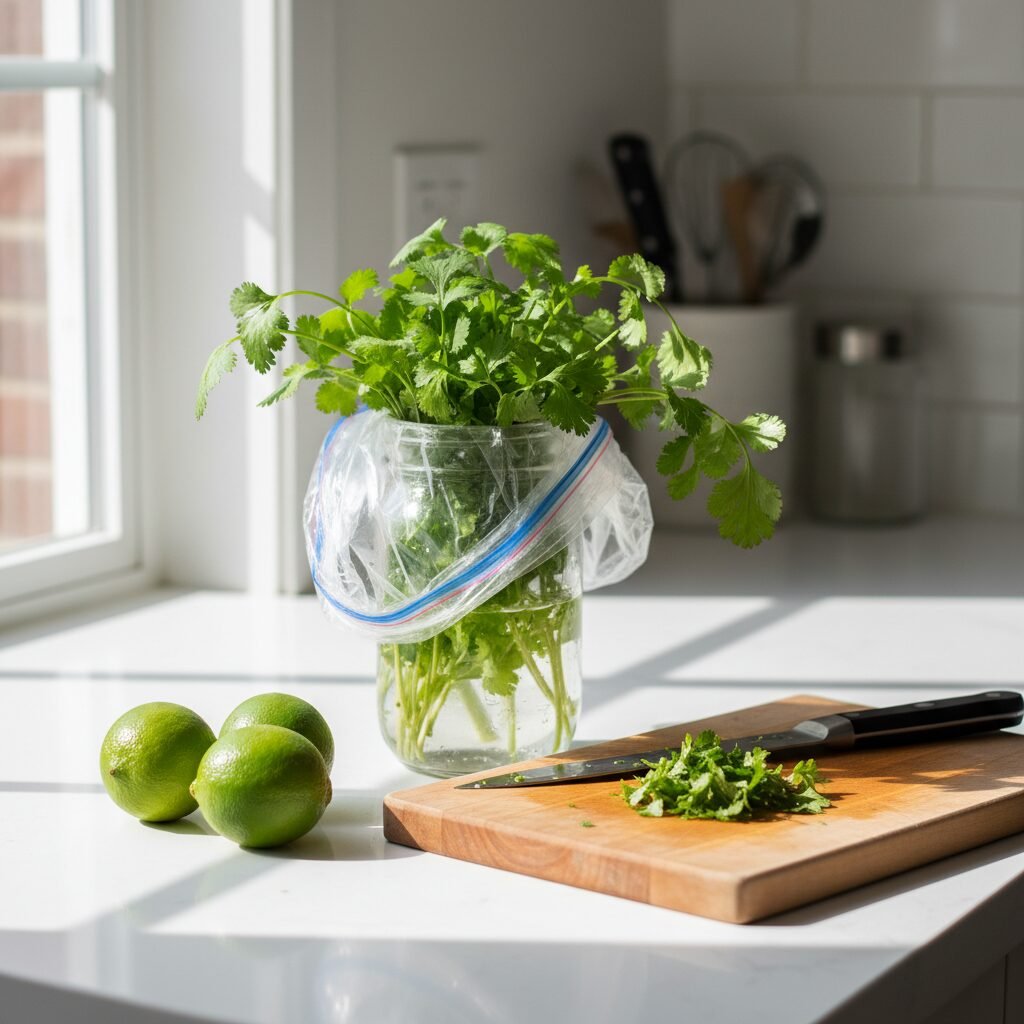

How To Store Cilantro
Tired of buying a beautiful bunch of cilantro only to find a sad, slimy mess in your crisper drawer two days later? I have found the holy grail of herb storage that will save you money and keep your greens gorgeous.
10 mins
0 mins
10 mins
1 bunch
Kitchen Hacks
Refrigeration
Global
Vegan
Let’s have a heart-to-heart, mamas. Is there anything more frustrating than the Cilantro Conundrum? You know exactly what I’m talking about. You have grand plans for a Taco Tuesday feast, a fresh batch of homemade salsa, or a zesty lime rice bowl. You pick up a vibrant, fragrant bunch of cilantro at the grocery store, feeling like a domestic goddess. But then, life happens. You toss it in the produce drawer, and when you finally reach for it three days later… it’s a tragedy. It’s wilted, dark, and let’s be honest, a little bit slimy. Into the trash it goes, along with your hard-earned money and your dinner garnish dreams.
For years, I treated cilantro as a single-use item. I assumed that if I didn’t use the whole bunch within 24 hours, it was destined for the compost bin. But with grocery prices climbing and my desire to reduce food waste growing, I decided enough was enough. I tested every method out there—wrapping it in foil, drowning it in water, swaddling it like a baby in paper towels—and I finally found the method that actually works.
Today, I am sharing my absolute favorite kitchen hack: How to store cilantro so it lasts for weeks (yes, weeks!). We are talking about keeping those leaves perky and bright green for up to a month. This simple trick takes less than five minutes of prep time but saves so much hassle later. Say goodbye to the guilt of food waste and hello to fresh herbs whenever you need them!
History & Origins
While we are focusing on how to keep it fresh in our modern refrigerators, cilantro actually has a fascinatingly ancient history that makes me appreciate this delicate herb even more. Did you know that cilantro (the leaves of the Coriandrum sativum plant) is one of the oldest known herbs used by mankind? Archaeologists have even found coriander seeds in caves in Israel that date back to 6,000 B.C. and in King Tut’s tomb!
Throughout history, from the Hanging Gardens of Babylon to the ancient kitchens of Rome, cooks have valued this herb not just for its bright, citrusy flavor, but for its digestive properties. Historically, keeping herbs fresh without refrigeration was a daily struggle. Ancient cooks often had to use herbs immediately after picking them from the garden or rely on drying them (which, let’s be real, just isn’t the same for cilantro). Unlike hardy herbs like rosemary or thyme which dry beautifully, cilantro loses almost all its signature flavor when dried. This makes the quest for keeping it fresh in its raw state absolutely vital for culinary success. We are lucky to have modern refrigeration, but as we all know, the fridge can be a dehydrating environment that kills soft herbs if we don’t protect them properly.
Why This Recipe Works
You might be wondering, why does cilantro turn to mush so quickly in the bag, but wilt instantly if left out? It all comes down to finding the perfect balance of hydration and humidity. Think of cilantro less like a vegetable and more like a cut flower bouquet. When you buy roses, you wouldn’t toss them in the fridge drawer without water, right? They would wilt immediately.
Cilantro behaves the same way. The stems need access to water to keep the cells in the leaves turgid (that’s the science word for crisp and perky!). However, the leaves themselves are very delicate. If the leaves sit in water, they rot and turn to slime. If they are exposed to the dry air of the fridge, they dehydrate and droop.
The storage method I’m teaching you today creates a micro-climate. By placing the stems in water, the plant can drink. By loosely covering the leaves with a bag, you create a humid greenhouse environment that prevents evaporation but allows enough airflow to stop mold from growing. It is the perfect ecosystem for your herbs to thrive!
Why You’ll Love This Recipe
- ✓Keeps cilantro fresh for 3-4 weeks
- ✓Reduces food waste and saves money
- ✓Ensures crisp, bright green leaves
- ✓Works for parsley and mint too
- ✓Takes less than 5 minutes to prep
- ✓Makes your fridge look organized and fresh
Equipment You’ll Need
- ✓Mason jar or heavy-bottomed drinking glass
- ✓Clean plastic bag (Ziploc or produce bag)
- ✓Kitchen shears or knife
- ✓Paper towels
- ✓Rubber band (optional)
Ingredients
- ✓1 large bunch of fresh Cilantro
- ✓Cold water
Instructions
- Step 1: The Inspection. Before you do anything, remove the rubber band or twist tie holding the bunch together. Sift through the cilantro and pick out any leaves that are already slimy, yellow, or black. One bad leaf can spoil the whole bunch, so be ruthless here!
- Step 2: To Wash or Not to Wash? There is a debate here! For the absolute longest storage, do not wash the leaves until you are ready to use them. Excess moisture on the leaves promotes rot. However, if you prefer to wash upfront for convenience, you must spin it dry in a salad spinner and then let it air dry completely on paper towels. The leaves must be bone dry.
- Step 3: Trim the Stems. Take your kitchen shears and snip off about one inch from the bottom of the stems. This exposes fresh tissue and helps the cilantro drink up the water effectively.
- Step 4: The Jar Setup. Fill a mason jar or a sturdy glass with about 2-3 inches of cold water. Place the cilantro bouquet into the jar, ensuring the cut stems are submerged but the leaves are above the water line. If leaves touch the water, they will rot.
- Step 5: The Greenhouse Effect. Take a clean plastic bag (the produce bag from the store works perfectly) and loosely place it over the top of the leaves. Do not seal it! You want to trap humidity but allow a little airflow. If you want to secure it, you can loosely place a rubber band around the jar rim, but I usually just let it drape.
- Step 6: Storage. Place the jar in a spot in your fridge where it won’t get knocked over. I like the top shelf or the door (if it fits). Change the water every few days if it starts to look cloudy.
Expert Cooking Tips
- ✓Freshness Check: When buying cilantro, look for perky stems that stand up on their own. If the bunch is already drooping at the store, no amount of storage magic can save it.
- ✓Change the Water: Just like a vase of flowers, the water can get murky. Changing it every 2-3 days will extend the life of your herbs significantly.
- ✓Avoid the Coldest Spot: Don’t push the cilantro to the very back of the fridge where things tend to freeze. Frostbite will turn your cilantro to black mush instantly.
- ✓Use this for other herbs: This ‘bouquet method’ works wonders for flat-leaf parsley, mint, and even asparagus!
Substitutions and Variations
If you don’t have a mason jar, any heavy cup or even a clean deli container will work. If you are completely out of fridge space for a standing jar, you can use the Paper Towel Method: Wash and dry the cilantro, wrap it loosely in dry paper towels, place it in a Ziploc bag, squeeze out the air, and seal. This works well for about a week, but the jar method is superior for longevity.
Common Mistakes to Avoid
The biggest mistake people make is washing the cilantro and putting it away wet. Moisture on the leaves is the enemy! Another common mistake is overcrowding the jar. If you cram two bunches into one small jar, there isn’t enough airflow between the stems, and mold can develop. Give your herbs room to breathe! Finally, leaving the tight rubber band from the grocery store on the stems can restrict water flow and bruise the stems, leading to faster decay.
Serving Suggestions
Now that you have an abundance of fresh cilantro, use it generously! It’s the perfect finishing touch for Carne Asada Tacos, a bright addition to Homemade Guacamole, or chopped into a Thai Crunch Salad. I also love blending a huge handful into a vinaigrette or making a zesty Cilantro Lime Rice to go with burrito bowls.
Storage and Reheating Tips
If you notice the water in the jar turning yellow or brown, change it immediately and rinse the stems. If you see a leaf turning yellow in the bunch during the week, pluck it out gently so it doesn’t spread decay to its neighbors. If you have kept it for 3 weeks and it’s finally starting to look tired, don’t toss it! Chop it up and freeze it in an ice cube tray with some olive oil for future cooking bases.
Nutrition Facts (Estimated)
| Serving Size | 1/4 cup |
| Calories | 1 |
| Fat | 0g |
| Saturated Fat | 0g |
| Unsaturated Fat | 0g |
| Trans Fat | 0g |
| Cholesterol | 0mg |
| Sodium | 1mg |
| Carbohydrates | 0.1g |
| Fiber | 0g |
| Sugar | 0g |
| Protein | 0.1g |
Frequently Asked Questions
Why does my cilantro turn to slime so fast?
Slime is usually caused by excess moisture on the leaves combined with cold temperatures. This promotes bacterial growth. The jar method keeps the leaves dry while hydrating the stems, preventing the slime factor.
Should I wash cilantro before storing it?
Ideally, no. Washing adds moisture to the leaves which speeds up decay. It is best to wash it right before you use it. If you must wash it first, ensure it is 100% dry before storing.
Can I freeze cilantro?
Yes, but the texture will change. You can’t use frozen cilantro as a fresh garnish, but it works great in cooked dishes. Puree it with a little oil and freeze in ice cube trays.
How long will cilantro last with this method?
If your cilantro was fresh when you bought it, this method can keep it fresh for 2 to 4 weeks!
Does this work for basil?
No! Basil hates the cold. Treat basil like a flower bouquet but keep it on the countertop at room temperature, not in the fridge. The fridge turns basil black.
Is the stem of the cilantro edible?
Absolutely! The stems actually pack more flavor and crunch than the leaves. Finely chop them for salsas or curry pastes—don’t throw them away!
Why is my cilantro turning yellow?
Yellowing usually indicates the plant is aging or suffering from oxidation. Pick out the yellow leaves to keep the rest fresh. If the whole bunch goes yellow, it’s time to compost it.
Can I use a paper towel instead of a plastic bag on top?
You can, but the plastic bag creates a better humidity dome. A paper towel might allow too much moisture to escape, causing the leaves to wilt faster.
Conclusion
There you have it, friends! The secret to ending the cycle of herb waste in your kitchen. Once you switch to the bouquet method, you will never go back to tossing bags in the crisper drawer. It is such a small change that makes a huge difference in your meal prep routine. Plus, opening the fridge to see a vibrant, happy bouquet of greens just makes you feel like a professional chef!
Give this a try after your next grocery run and let me know in the comments how long your cilantro lasted. I bet you’ll be amazed! Happy cooking!