
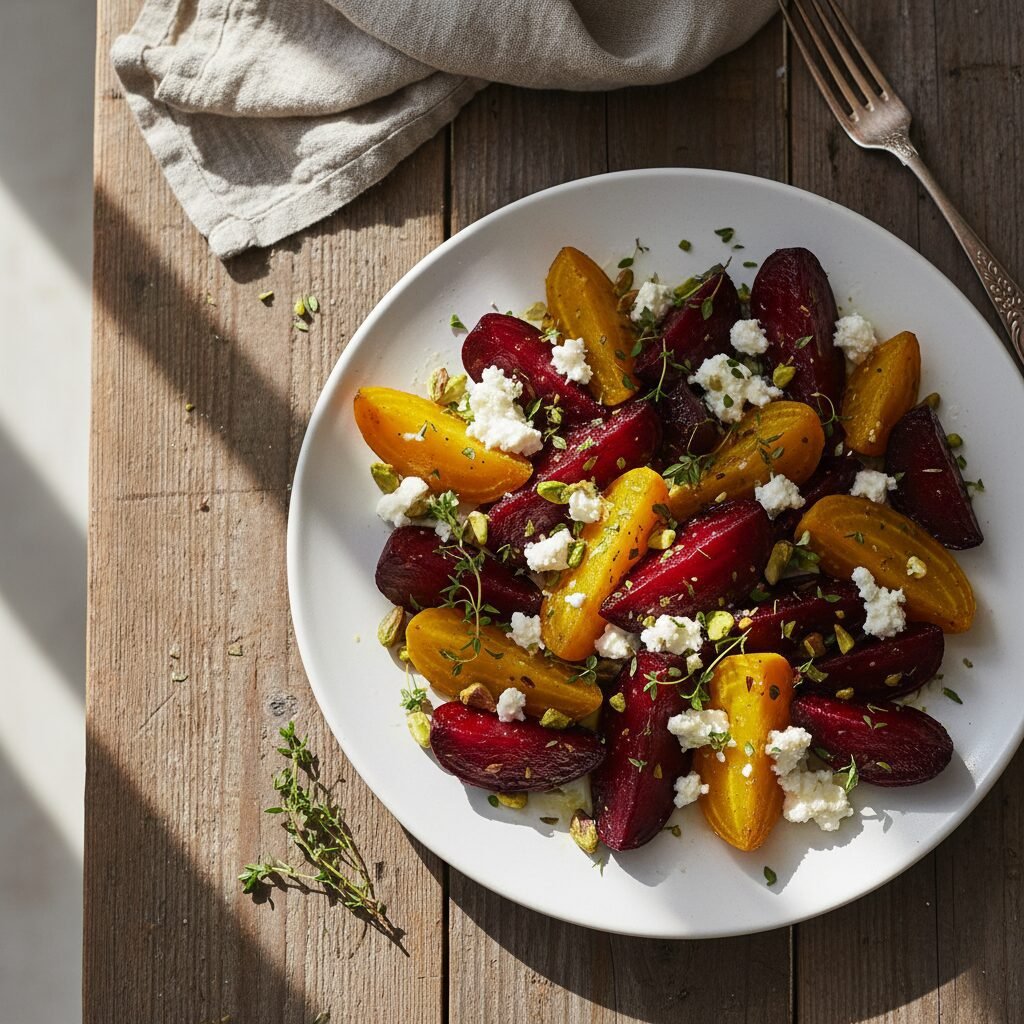

Roasted Beets Recipe
If you think you don’t like beets, you just haven’t had them roasted yet! This foolproof method turns those earthy roots into sweet, caramelized jewels that melt in your mouth—no mess, no fuss, and absolutely delicious.
10 minutes
50 minutes
1 hour
4 Servings
Side Dish
Roasting
American / Mediterranean
Vegan
Hi friends! Welcome back to my kitchen. Today, we are tackling a vegetable that often gets a bad rap: the humble beet. I know, I know—some of you might be having flashbacks to those mushy, metallic-tasting slices from a can that appeared at school lunches. But trust me on this one: fresh roasted beets are an entirely different experience. When you roast a beet, magic happens. The intense heat concentrates their natural sugars, turning that earthy flavor into something incredibly sweet, rich, and tender. It is literally nature’s candy!
As a mom trying to get more colorful veggies onto the dinner table, beets are a total superhero. They are vibrant, loaded with nutrients, and when prepared this way, they are actually delicious enough that my kids will eat them (especially if there is a little goat cheese involved, let’s be honest). Plus, the color! Whether you are using deep ruby red beets or sunny golden beets, they make any plate look like a gourmet meal.
In this post, I am going to share my absolute favorite way to cook beets. We are going to roast them whole in foil packets. Why? because it steams them in their own juices, keeping them moist, and makes the skins slip right off without a peeler. No more battling with a vegetable peeler and staining your kitchen pink! Grab your apron, and let’s turn these roots into rubies.
History & Origins
Beets, or Beta vulgaris, have a surprisingly deep history that goes way back before they became a trendy salad topper. Originally, in ancient times along the Mediterranean, people actually only ate the leafy greens (which we now call beet greens or chard) and tossed the root! Can you imagine? It wasn’t until Roman times that people started appreciating the bulbous root part. The Romans were actually huge fans and believed beets had romantic properties—legend has it that if a man and a woman eat from the same beet, they will fall in love. How cute is that?
Throughout history, beets became a staple in Northern and Eastern Europe because they grow so well in colder climates and store perfectly through long winters—hello, Borscht! Today, we know them as a nutritional powerhouse, but it is nice to know we are enjoying a veggie that has been gracing tables for thousands of years.
Why This Recipe Works
There is a little bit of culinary science behind why roasting is superior to boiling. When you boil a beet, some of the flavor and nutrients leach out into the water. You are essentially diluting the vegetable. However, when you roast beets—especially wrapped in foil or parchment—you are creating a mini steam oven. The dry heat of the oven encourages caramelization of the natural sugars found in the root, while the wrapping keeps the moisture trapped inside so they don’t dry out and become leather.
This method works because it breaks down the tough cellular structure of the root slowly, resulting in a texture that is buttery and smooth, not watery. Furthermore, roasting loosens the skin from the flesh. Once they cool slightly, the skins just slip right off with a gentle rub of your thumb. It is the most low-effort, high-reward way to cook them!
Why You’ll Love This Recipe
- ✓Transforms earthy flavors into sweet caramel notes
- ✓Mess-free peeling method using steam
- ✓High in fiber, folate, and potassium
- ✓Beautiful jewel tones brighten up any meal
- ✓Perfect for meal prepping salads for the week
- ✓Naturally Gluten-Free, Vegan, and Paleo
Equipment You’ll Need
- ✓Baking Sheet
- ✓Aluminum Foil (or parchment paper with a lid)
- ✓Paring Knife
- ✓Paper Towels
- ✓Kitchen Gloves (optional, to prevent staining)
Ingredients
- ✓4-6 Medium Beets (Red, Golden, or Chioggia)
- ✓2 Tablespoons Extra Virgin Olive Oil
- ✓1 Teaspoon Kosher Salt
- ✓1/2 Teaspoon Black Pepper
- ✓Optional: Fresh Thyme or Rosemary sprigs
- ✓Optional: Balsamic Vinegar for drizzling
Instructions
- Preheat the Oven: Start by preheating your oven to 400°F (200°C). You want a nice high heat to roast the veggies efficiently.
- Prep the Beets: Wash the beets thoroughly under cold water to remove any dirt. If the greens are still attached, slice them off, leaving about 1 inch of stem attached (this prevents the beets from ‘bleeding’ too much juice while cooking). Do not peel them yet!
- Season: Place the washed beets on a large piece of aluminum foil. Drizzle them generously with the olive oil and sprinkle with kosher salt and black pepper. If you are feeling fancy, toss in a sprig of fresh thyme.
- Wrap and Roast: Fold the foil up to create a sealed packet. Place this packet on a baking sheet (just in case any juices leak). Roast in the oven for 45 to 60 minutes. The time depends heavily on the size of your beets.
- Check for Doneness: After 45 minutes, carefully open the foil (watch out for steam!). Pierce the largest beet with a paring knife. If it slides through easily with no resistance—like butter—they are done. If it’s hard, seal them back up and roast for another 10-15 minutes.
- Cool and Peel: Remove from the oven and open the packet to let them vent. Let them cool until you can handle them without burning your fingers. Now for the fun part: hold a beet under a paper towel and gently rub the skin. It should slip right off! Discard the skins.
- Serve: Slice the peeled beets into rounds or wedges. Drizzle with a little more fresh olive oil or balsamic glaze and serve warm or cold.
Expert Cooking Tips
- ✓Size Matters: Try to buy beets that are roughly the same size so they finish cooking at the same time. If you have huge ones and tiny ones, wrap them in separate foil packets.
- ✓Save the Greens: Don’t throw away the beet tops! They are delicious sautéed with garlic and lemon, similar to spinach or Swiss chard.
- ✓No Foil?: If you prefer not to use foil, you can place the beets in a Dutch oven or a baking dish with a tight-fitting lid. Add a splash of water to the bottom to create steam.
- ✓Avoid the Stain: Red beets stain everything—your hands, your cutting board, your clothes. I recommend wearing latex gloves while peeling them, and washing your cutting board immediately after slicing.
- ✓Golden Beets: If you are worried about stains or want a milder flavor, try Golden Beets. They are sweeter, less earthy, and won’t dye your salad pink.
Substitutions and Variations
This recipe is super versatile! If you don’t have olive oil, avocado oil or melted coconut oil works beautifully. If you are out of fresh herbs, dried thyme or oregano adds a nice savory touch. For a citrusy twist, try adding a strip of orange zest inside the foil packet while they roast—orange and beet is a classic flavor combination that feels very fancy but is so easy to do!
Common Mistakes to Avoid
The biggest mistake people make is roasting at too low of a temperature. Beets are dense root vegetables; they need that 400°F heat to soften up in a reasonable amount of time. Another common oopsie is cutting the root end off completely before roasting. If you cut into the bulb before cooking, red beets will bleed out all their beautiful juices, leaving them dry and less flavorful. Leave the tails on until after they are cooked!
Serving Suggestions
Oh, the possibilities are endless! My personal favorite way to eat these is in a Roasted Beet and Goat Cheese Salad with walnuts and a balsamic vinaigrette. They are also fantastic simply sliced with a sprinkle of feta cheese and fresh mint. For a hearty dinner side, toss the warm beet wedges with a little butter and dill. You can even blend roasted beets into hummus for a bright pink dip that kids go crazy for!
Storage and Reheating Tips
Roasted beets are the ultimate meal prep champion. Once roasted and peeled, they can be stored in an airtight container in the refrigerator for up to 5 days. In fact, I think they taste even better the next day after marinating in their own juices. You can also freeze roasted beets! Slice them up, freeze them flat on a tray, and then transfer to a freezer bag for up to 3 months. Just thaw and toss into salads or smoothies.
Nutrition Facts (Estimated)
| Serving Size | 1 cup |
| Calories | 75 kcal |
| Fat | 3g |
| Saturated Fat | 0.5g |
| Unsaturated Fat | 2.5g |
| Trans Fat | 0g |
| Cholesterol | 0mg |
| Sodium | 120mg |
| Carbohydrates | 13g |
| Fiber | 3.5g |
| Sugar | 9g |
| Protein | 2g |
Frequently Asked Questions
Do I have to peel the beets?
Technically, beet skin is edible! However, it can be a bit tough and bitter, and it often holds onto grit. I highly recommend peeling them for the best texture and sweetness, especially since roasting makes the skin slip off so easily.
Why did my beets stain everything pink?
Red beets contain a powerful natural pigment called betalain. It is water-soluble and very strong. To minimize the mess, peel them over the sink or on a piece of parchment paper, and rinse your cutting board immediately.
Can I roast cut beets instead of whole?
Yes! If you want them to cook faster (about 30-35 minutes), you can peel them raw, chop them into cubes, toss with oil, and roast uncovered. This gives you crispy edges but requires the messy work of peeling them raw.
How do I get beet stains off my hands?
If you forgot the gloves, don’t panic! Rub your hands with a little lemon juice and salt, then wash with soap and warm water. The acidity helps break down the pigment.
Are beets high in sugar?
Beets have a higher sugar content than many vegetables (hence the sweetness!), but it is all natural sugar accompanied by fiber, which helps regulate blood sugar absorption. They are a very healthy carbohydrate source.
Why is my urine red after eating beets?
This is totally normal! It’s called beeturia. About 10-14% of the population experiences this. The red pigment passes through the body harmlessly. Don’t be alarmed—it’s just the beets!
Can I use this method for other root vegetables?
Absolutely. This foil-packet roasting method works great for carrots, parsnips, and sweet potatoes, though cooking times will vary depending on the density of the vegetable.
What herbs pair best with beets?
Beets love earthy and bright herbs. Thyme, dill, parsley, mint, and chives are all excellent choices. For spices, cumin and coriander pair surprisingly well.
Conclusion
I really hope you give these roasted beets a try! It is one of those basic recipes that you will find yourself using over and over again, whether for a holiday dinner or just a Tuesday night salad. The transformation from a dirty root to a sweet, tender delicacy is so satisfying. If you make this, please snap a picture and tag me on Pinterest or Instagram—I love seeing your beautiful creations! Happy roasting, mamas!