
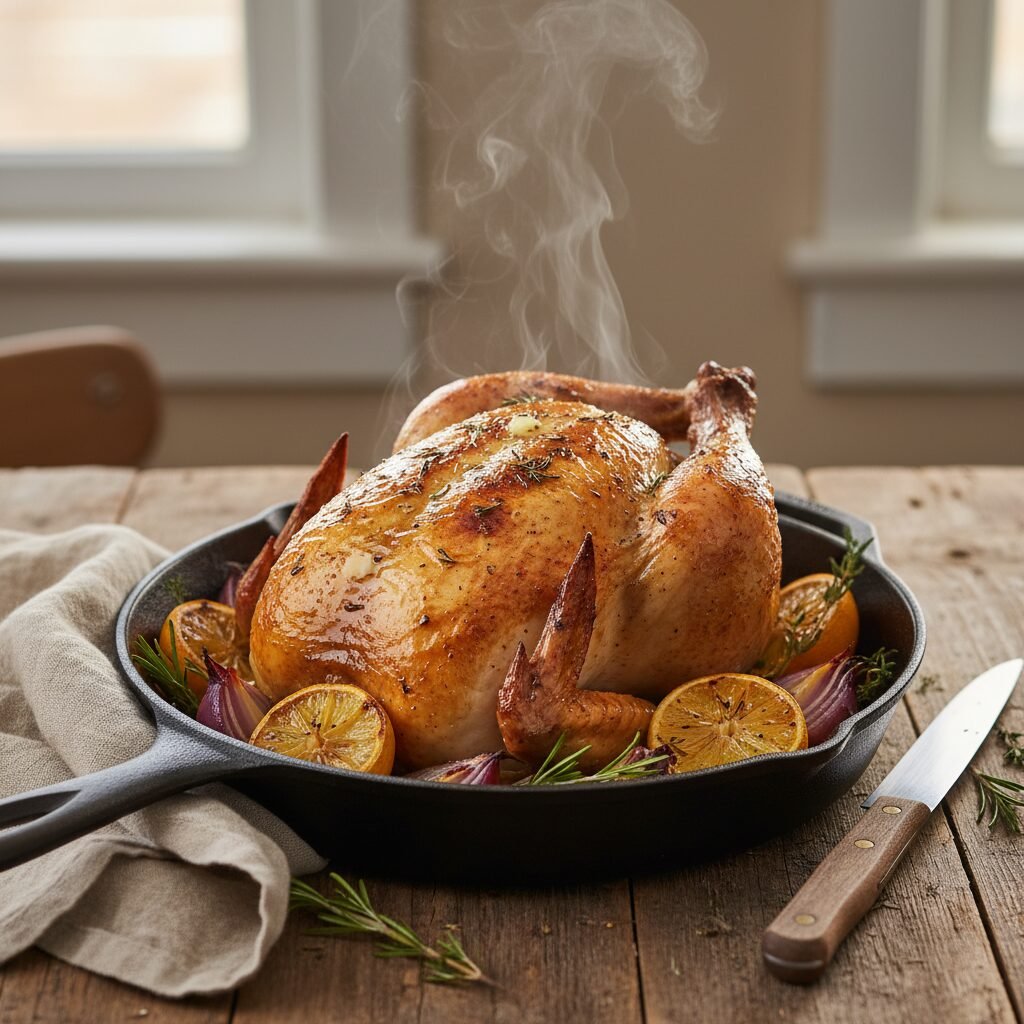

Roasted Citrus Chicken
If you are looking for a meal that screams ‘comfort’ but tastes like a bright summer day, this Roasted Citrus Chicken is it! With crispy golden skin and meat so tender it falls off the bone, this has become our family’s absolute favorite Sunday tradition.
20 minutes
1 hour 30 minutes
1 hour 50 minutes
4-6 servings
Dinner
Roasting
American / Mediterranean Fusion
Gluten Free
Hey there, beautiful mamas! Let’s be real for a second—there is something incredibly therapeutic about roasting a whole chicken. I know, I know, looking at a raw whole bird can be a little intimidating if you are used to boneless, skinless breasts. But trust me on this one: once you master the simple art of the roast chicken, you will feel like a total domestic goddess! There is just no candle in the world that smells as good as fresh herbs, garlic, and citrus roasting away in your oven. It fills the whole house with this warm, inviting aroma that just pulls everyone into the kitchen.
This Roasted Citrus Chicken recipe is my go-to ‘reset’ meal. You know those weeks where you’ve been living off nuggets and takeout? This is the antidote. It is wholesome, it is fresh, and it is surprisingly easy. We are talking about minimal prep for maximum payoff. The combination of bright lemon, sweet orange, and earthy herbs creates a flavor profile that is sophisticated enough for a dinner party but approachable enough for the kiddos. Plus, the leftovers? Oh my goodness, they make the best chicken salad for school lunches the next day. So, grab your apron and let’s make some magic happen!
History & Origins
While roasting meat over a fire is as old as time itself, the specific pairing of citrus and poultry has deep roots in Mediterranean and Middle Eastern cuisines. Historically, fruits like lemons and bitter oranges were not just used for flavor; they were essential for preservation and tenderizing meats in warmer climates. In culinary history, the concept of stuffing a bird with aromatics dates back to Roman times, where Apicius (a collection of Roman cookery recipes) details various methods of flavoring fowl.
In the American home, the ‘Sunday Roast’ became a staple of mid-20th-century domestic life, symbolizing family unity and a day of rest. Over the decades, as global flavors became more accessible, the classic butter-and-salt roast evolved. Cooks began incorporating the bright acids of lemons and oranges to cut through the richness of the chicken fat, creating the modern, zesty version we adore today. This recipe is a nod to those Mediterranean roots, adapted for the modern American mom’s kitchen.
Why This Recipe Works
There is some serious food science happening in this roasting pan! First, let’s talk about the acid. The citric acid from the lemons and oranges helps to break down the tough fibers in the meat, acting as a natural tenderizer before the heat even does its work. This ensures the chicken stays incredibly moist.
Secondly, we are using a technique called compound butter under the skin. By mixing butter with herbs and citrus zest and rubbing it under the skin (directly on the meat), we are basting the chicken from the inside out as it cooks. The fat renders, keeping the breast meat juicy, while the water content in the butter evaporates, helping to separate the skin from the meat for that coveted crispiness.
Finally, the aromatics inside the cavity (the onion, garlic, and fruit halves) steam the bird from the inside, infusing flavor deep into the carcass, while the high-heat finish triggers the Maillard reaction, giving us that gorgeous, golden-brown skin that everyone fights over.
Why You’ll Love This Recipe
- ✓Crispy, golden-brown skin that crackles
- ✓Juicy, tender meat that falls off the bone
- ✓One-pan meal for easy cleanup
- ✓Naturally gluten-free and keto-friendly
- ✓Perfect for meal prepping lunches
- ✓Makes the house smell amazing
Equipment You’ll Need
- ✓Large roasting pan or cast-iron skillet
- ✓Kitchen twine (for trussing)
- ✓Meat thermometer
- ✓Small mixing bowl
- ✓Chef’s knife
- ✓Paper towels
Ingredients
- ✓1 (4-5 lb) Whole Chicken, giblets removed
- ✓2 large Lemons (1 zested/juiced, 1 quartered)
- ✓1 large Navel Orange (quartered)
- ✓6 tbsp Unsalted Butter, softened (room temp)
- ✓4 cloves Garlic, minced
- ✓1 head Garlic, top sliced off
- ✓1 tbsp Fresh Rosemary, chopped
- ✓1 tbsp Fresh Thyme leaves
- ✓1 large Yellow Onion, cut into thick wedges
- ✓2 tbsp Olive Oil
- ✓Kosher Salt (generous amount)
- ✓Freshly Cracked Black Pepper
Instructions
- Preheat and Prep: Preheat your oven to 425°F (220°C). While the oven warms up, take your chicken out of the fridge and let it sit for about 20 minutes to take the chill off—this helps it cook evenly!
- Dry the Bird: This is the secret step! Pat the chicken completely dry with paper towels. Get in all the nooks and crannies. Dry skin equals crispy skin. Season the cavity generously with salt and pepper.
- Make the Citrus Herb Butter: In a small bowl, mash together the softened butter, minced garlic, lemon zest, chopped rosemary, thyme, 1 teaspoon of salt, and half a teaspoon of pepper.
- Stuff and Rub: Carefully loosen the skin from the breast meat using your fingers. Rub half of that delicious herb butter under the skin. Rub the remaining butter all over the outside of the bird. Stuff the cavity with the quartered lemon, orange wedges, and the head of garlic.
- Truss (Optional but Recommended): Tie the legs together with kitchen twine. This keeps the bird compact and helps it cook evenly, plus it looks super professional!
- The Bed of Veggies: Scatter the onion wedges (and any other veggies you might want, like carrots or potatoes) in the bottom of your roasting pan or skillet. Drizzle them with olive oil and salt. Place the chicken on top of the veggies.
- Roast: Place the pan in the oven. Roast at 425°F for 15 minutes to blast the skin with heat. Then, reduce the temperature to 375°F (190°C) and continue roasting for about 1 hour and 15 minutes, or until a meat thermometer inserted into the thickest part of the thigh reads 165°F (74°C).
- Rest: I know you want to dig in, but wait! Transfer the chicken to a cutting board and tent it loosely with foil. Let it rest for at least 15 minutes. This lets the juices redistribute so they don’t run out when you slice it.
- Serve: Carve that beautiful bird and serve it with the roasted onions and pan juices spooned over the top. Enjoy!
Expert Cooking Tips
- ✓Room Temperature is Key: Never put a cold chicken straight into a hot oven; it seizes the meat. Let it sit on the counter for 30 minutes before cooking.
- ✓Don’t Skimp on Salt: Chicken loves salt. If you think you’ve salted enough, add just a pinch more to the skin for that restaurant-quality flavor.
- ✓Invest in a Thermometer: Ovens vary wildly. The only way to ensure juicy, safe chicken is to cook to temperature, not just time.
- ✓The Citrus Trick: If you want extra lemon flavor, squeeze the roasted lemon wedges over the meat right before serving.
Substitutions and Variations
Don’t have everything on hand? No panic, mama! Here are some easy swaps:
- Citrus: If you don’t have oranges, just use two lemons or swap in some limes for a different twist. Clementines work great too!
- Herbs: Dried herbs can be used if you don’t have fresh. Use 1 teaspoon of dried for every tablespoon of fresh called for. Sage and oregano are also delicious alternatives.
- Butter: For a dairy-free version, use a high-quality vegan butter block or mix olive oil with the herbs (though the skin might not be quite as crisp).
- The Bird: You can use this same marinade/rub on bone-in, skin-on chicken thighs or breasts, just adjust the cooking time down to about 35-40 minutes.
Common Mistakes to Avoid
We have all been there, but let’s avoid these pitfalls! The biggest mistake is roasting a wet chicken. If you don’t pat it dry, the skin steams instead of roasts, and you’ll miss out on that crunch. Another common error is cutting into the bird too soon. If you slice it immediately, all those precious juices run out onto the board, leaving you with dry meat. Give it that 15-minute rest! Lastly, be careful not to overcrowd the pan with too many veggies around the base; air needs to circulate to roast properly.
Serving Suggestions
This chicken is the star of the show, so keep the sides simple! I love serving this with:
- Garlic Mashed Potatoes: Perfect for soaking up those pan juices.
- A Crisp Green Salad: An arugula salad with a vinaigrette cuts the richness perfectly.
- Roasted Asparagus or Green Beans: You can toss them in the oven during the last 20 minutes of cooking.
- Crusty French Bread: You will want something to mop up that citrus-butter sauce!
Storage and Reheating Tips
Fridge: Store leftovers in an airtight container for up to 3-4 days. I like to shred the meat from the bone before storing to make it easier to use later.
Freezer: You can freeze the cooked meat for up to 3 months. Thaw overnight in the fridge before using.
Reheating: To reheat without drying it out, place the chicken in a baking dish with a splash of broth, cover with foil, and warm in a 350°F oven until heated through.
Nutrition Facts (Estimated)
| Serving Size | 6 oz meat with skin |
| Calories | 420 |
| Fat | 24g |
| Saturated Fat | 7g |
| Unsaturated Fat | 12g |
| Trans Fat | 0g |
| Cholesterol | 135mg |
| Sodium | 380mg |
| Carbohydrates | 4g |
| Fiber | 1g |
| Sugar | 1g |
| Protein | 45g |
Frequently Asked Questions
Do I need to rinse the chicken before cooking?
No! The USDA actually recommends against washing raw poultry because it spreads bacteria around your sink and counters. Just pat it dry with paper towels.
Why is my chicken skin not crispy?
It was likely too wet when it went in, or the oven wasn’t hot enough. Make sure to pat it very dry and start with that high heat blast (425°F).
How do I know when the chicken is done without a thermometer?
While a thermometer is best, you can pierce the thickest part of the thigh with a knife. If the juices run clear (not pink), it is usually done. The legs should also wiggle freely.
Can I make this in a slow cooker?
You can, but you won’t get the crispy skin. If you use a slow cooker, cook on low for 6-7 hours, but expect a ‘poached’ texture rather than a roast.
Do I have to tie the legs (truss) the chicken?
It is not strictly necessary, but it helps the chicken cook more evenly and prevents the breasts from drying out before the legs are done. Plus, it looks prettier!
What can I do with the carcass afterwards?
Don’t throw it away! Put the bones in a pot with water, carrots, celery, and onion, and simmer for 4 hours to make incredible homemade bone broth.
Can I use margarine instead of butter?
I don’t recommend it. Margarine has a high water content and different flavor profile. Real butter or olive oil will give you the best result.
Is the alcohol in wine necessary for gravy?
This recipe uses natural juices, but if you make a gravy, you can use chicken broth instead of wine to deglaze the pan.
Conclusion
And there you have it, friends! The most delightful, sunny, and savory Roasted Citrus Chicken you will ever make. I hope this recipe brings a little bit of warmth to your kitchen and a lot of smiles to your dinner table. It really is one of those meals that feels like a hug on a plate. If you try this out, please snap a picture and tag me on Instagram or leave a comment below—I absolutely love seeing your creations! Now, go pour yourself a glass of wine while that chicken roasts; you deserve it!