
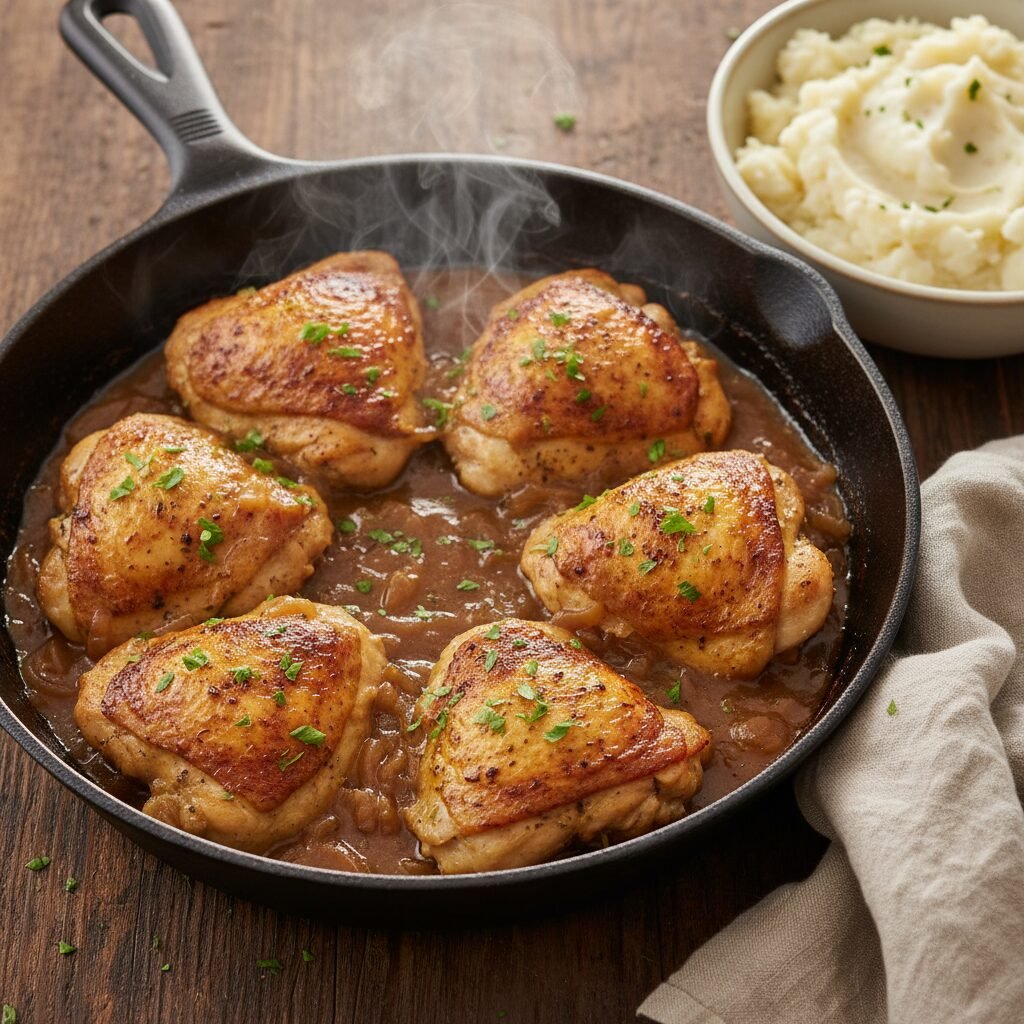

Smothered Chicken
Get ready to make your kitchen smell like heaven with this classic Southern Smothered Chicken recipe. We are talking about fork-tender chicken thighs swimming in a rich, savory onion gravy that tastes just like a warm hug from Grandma.
15 minutes
45 minutes
1 hour
4-6 servings
Dinner
Stovetop / Braising
Southern American
Omnivore
Hey there, sweet friends! Welcome back to my kitchen. Today, we are diving deep into the heart of Southern comfort food with a recipe that is near and dear to my heart: Southern Smothered Chicken. If you have been looking for that one dish that instantly makes a bad day better, or brings the whole family running to the table without you having to yell ‘dinner’s ready’ twice, this is it.
There is something truly magical about a cast-iron skillet bubbling away on the stove. This dish isn’t just about sustenance; it is about love. It is about taking simple, humble ingredients—chicken, onions, flour, and broth—and transforming them into a masterpiece. The chicken skin gets beautifully golden and crisp before it is submerged in a gravy so flavorful you will want to drink it with a straw (no judgment here!).
I remember the first time I made this for my husband. It was a rainy Tuesday, the kind that chills you to the bone. One bite of this tender chicken and savory gravy over a bed of fluffy mashed potatoes, and he looked at me like I was a Michelin-star chef. It has since become a staple in our meal rotation, especially when we need a little extra comfort. Whether you are a seasoned cook or a beginner in the kitchen, this recipe is incredibly forgiving and guaranteed to impress. So, grab your apron and let’s get cooking!
History & Origins
Let’s chat a little bit about where this deliciousness comes from. Smothered Chicken is a cornerstone of Soul Food and Southern cuisine, with roots that run deep in American history. The term ‘smothering’ is actually a cooking technique derived from the French Cajun and Creole method called étouffée, which literally means ‘to stifle’ or ‘to smother.’ It involves cooking a protein in a covered pan with a little liquid over low heat for a long period.
Historically, this method was a brilliant way to make tougher, less expensive cuts of meat incredibly tender. By browning the meat first to develop flavor and then braising it slowly in a gravy made from the pan drippings, home cooks could turn modest ingredients into a feast fit for a king. It is a testament to the ingenuity of Southern cooks who knew how to stretch a dollar without sacrificing an ounce of flavor. While it started as a practical way to prepare dinner, it has evolved into a beloved Sunday supper tradition across the South and beyond.
Why This Recipe Works
You might be wondering, what makes this specific recipe work so well? It all comes down to the science of flavor building, specifically the Maillard reaction and the magic of fond. When we sear the chicken thighs initially, we aren’t just cooking the meat; we are creating a caramelized crust that adds depth and texture. That browning process leaves behind sticky, brown bits on the bottom of the pan called fond.
Instead of washing that flavor away, we use it as the base for our gravy. By sautéing the onions in the rendered chicken fat and scraping up those brown bits, we infuse the gravy with an intense, meaty savoriness that you just cannot get from a bouillon cube. Furthermore, using bone-in, skin-on chicken thighs is crucial here. The bone helps the meat retain moisture during the simmer, and the collagen in the dark meat breaks down slowly, adding a natural richness and silkiness to the sauce. It is a one-pan symphony where every step builds upon the last.
Why You’ll Love This Recipe
- ✓One-pan meal for easy cleanup
- ✓Budget-friendly ingredients
- ✓Incredible savory onion gravy
- ✓Fork-tender meat falls off the bone
- ✓Perfect for Sunday supper or weeknight comfort
- ✓Reheats beautifully for lunch leftovers
Equipment You’ll Need
- ✓Large Cast Iron Skillet (12-inch recommended)
- ✓Tongs
- ✓Whisk
- ✓Measuring Cups and Spoons
- ✓Chef’s Knife
- ✓Cutting Board
- ✓Plate (for resting chicken)
Ingredients
- ✓6 bone-in, skin-on chicken thighs
- ✓2 teaspoons kosher salt, divided
- ✓1 teaspoon coarse black pepper
- ✓1 teaspoon garlic powder
- ✓1 teaspoon onion powder
- ✓1 teaspoon smoked paprika
- ✓1/2 cup all-purpose flour (for dredging)
- ✓3 tablespoons vegetable oil or bacon grease
- ✓2 tablespoons unsalted butter
- ✓2 large yellow onions, thinly sliced
- ✓3 cloves garlic, minced
- ✓3 tablespoons all-purpose flour (for the roux)
- ✓2 cups chicken broth (low sodium preferred)
- ✓1/2 cup heavy cream (optional, for extra richness)
- ✓1 tablespoon fresh parsley, chopped (for garnish)
Instructions
- Prep the Chicken: Pat the chicken thighs completely dry with paper towels. This is crucial for getting that crispy skin! In a small bowl, mix the salt, pepper, garlic powder, onion powder, and paprika. Season the chicken generously on both sides.
- Dredge: Place the 1/2 cup of flour in a shallow dish. Lightly press the chicken into the flour to coat it, shaking off any excess. We want a light dusting, not a thick batter.
- Sear the Chicken: Heat the oil in your large cast-iron skillet over medium-high heat. Once shimmering, place the chicken thighs skin-side down. Cook for 5-6 minutes without moving them until the skin is deep golden brown and crispy. Flip and cook for another 3-4 minutes. Remove chicken to a plate and set aside (it won’t be fully cooked yet).
- Sauté the Onions: Lower the heat to medium. Add the butter to the skillet with the rendered chicken fat. Toss in the sliced onions and cook for about 10-15 minutes, stirring occasionally, until they are soft and caramelized. Add the minced garlic and cook for 1 minute until fragrant.
- Make the Roux: Sprinkle the 3 tablespoons of flour over the onions. Stir constantly for 2-3 minutes to cook out the raw flour taste. The mixture should turn a light tan color.
- Build the Gravy: Slowly pour in the chicken broth while whisking constantly to prevent lumps. Be sure to scrape up all those delicious brown bits from the bottom of the pan. Bring the mixture to a gentle simmer. If using heavy cream, stir it in now.
- Smother the Chicken: Return the chicken thighs to the skillet, nestling them skin-side up into the gravy. Pour any juices from the plate back into the pan.
- Simmer: Reduce heat to low, cover the skillet, and let it simmer for 20-25 minutes. The chicken should reach an internal temperature of 165°F and be fork-tender.
- Serve: Taste the gravy and adjust salt and pepper if needed. Garnish with fresh parsley and serve hot over mashed potatoes or rice.
Expert Cooking Tips
- ✓Room Temp Chicken: Let your chicken sit on the counter for 20 minutes before cooking. Cold chicken hits the hot pan and lowers the temp, making it steam instead of sear.
- ✓Don’t Crowd the Pan: If your skillet isn’t big enough, sear the chicken in batches. Crowding leads to soggy skin.
- ✓Warm Broth: If possible, warm your chicken broth before adding it to the roux. This helps the gravy thicken smoother and faster.
- ✓The Onions Matter: Don’t rush the onions! Letting them caramelize brings out a natural sweetness that balances the savory gravy.
- ✓Cast Iron is King: While you can use any heavy-bottomed pan, cast iron retains heat the best and gives the best crust.
Substitutions and Variations
We all have those moments where we are missing one ingredient, right? Here is how you can swap things out. If you aren’t a fan of chicken thighs, you can use chicken breasts, but keep in mind they cook faster and dry out easier—reduce the simmering time to about 10-15 minutes. For a dairy-free version, simply skip the butter (use more oil) and omit the heavy cream; the gravy will still be delicious. If you are gluten-free, swap the all-purpose flour for a high-quality 1:1 gluten-free flour blend for both the dredging and the roux. You can also use bacon grease instead of vegetable oil for an extra smoky, Southern kick!
Common Mistakes to Avoid
The biggest mistake I see is burning the garlic. Garlic burns very quickly and turns bitter, so always add it after the onions are done, just a minute before adding the flour. Another common issue is soggy skin. While ‘smothered’ implies wet, we try to keep the skin side up during the simmer so it retains some texture. If you completely submerge the chicken, the skin will be soft (which is traditional, but some prefer it crispier). Lastly, undercooking the roux leaves a raw flour taste. Make sure you stir that flour and onion mixture for a good 2 minutes before adding broth.
Serving Suggestions
This meal is rich, so it needs sides that can stand up to that glorious gravy. My absolute favorite pairing is creamy mashed potatoes—they act like a little crater for the extra sauce. White rice is another classic Southern choice. To balance the richness, I love serving this with some collard greens, garlic roasted green beans, or a simple crisp salad with vinaigrette. And, of course, no Southern meal is complete without a piece of cornbread or a fluffly biscuit to sop up every last drop!
Storage and Reheating Tips
Leftovers? Yes, please! This dish tastes even better the next day as the flavors meld. Store the chicken and gravy in an airtight container in the refrigerator for up to 3-4 days. To reheat, place it in a skillet over low heat with a splash of water or broth to loosen the gravy, as it will thicken in the fridge. You can also freeze this dish! Place cooled chicken and gravy in a freezer-safe container for up to 3 months. Thaw overnight in the fridge before reheating.
Nutrition Facts (Estimated)
| Serving Size | 1 chicken thigh with gravy |
| Calories | 480 |
| Fat | 32g |
| Saturated Fat | 12g |
| Unsaturated Fat | 15g |
| Trans Fat | 0g |
| Cholesterol | 145mg |
| Sodium | 850mg |
| Carbohydrates | 14g |
| Fiber | 1g |
| Sugar | 3g |
| Protein | 28g |
Frequently Asked Questions
Can I make this in the oven?
Absolutely! After adding the broth and returning the chicken to the pan, you can transfer the oven-safe skillet to a preheated oven at 375°F for about 25-30 minutes.
My gravy is too thin, how do I fix it?
If your gravy is too runny, remove the chicken and let the gravy boil rapidly for a few minutes to reduce. You can also mix 1 teaspoon of cornstarch with 1 tablespoon of cold water and whisk it in.
Can I use boneless skinless thighs?
Yes, you can. They will cook faster, so check them after 15 minutes of simmering. You won’t get the same depth of flavor from the bone and skin, but it will still be tasty.
Is this dish spicy?
Not at all. The paprika and black pepper add warmth, but not heat. If you want it spicy, add a pinch of cayenne pepper to the seasoning mix.
Can I use water instead of chicken broth?
Technically yes, but I highly recommend broth. Water will dilute the flavor significantly, resulting in a bland gravy.
Do I have to use cast iron?
No, a stainless steel sauté pan or a dutch oven works great too. Just avoid flimsy non-stick pans if you want a good sear.
Can I add mushrooms?
Oh, that sounds delicious! Add sliced mushrooms in with the onions; they will add a wonderful earthiness to the dish.
What is the difference between smothered chicken and chicken fricassee?
They are very similar! Fricassee is a French stew usually made with a white sauce and wine, while Southern Smothered Chicken typically uses a brown gravy based on pan drippings and broth.
Conclusion
There you have it, friends—my go-to recipe for Southern Smothered Chicken. I hope this dish brings as much warmth and joy to your family table as it does to mine. It is the perfect reminder that sometimes the best things in life are the simplest. Don’t forget to take a picture of your masterpiece and tag me on Instagram or Pinterest; I absolutely love seeing what you are cooking up! Now, go grab that skillet and make some magic happen. Happy cooking, y’all!